
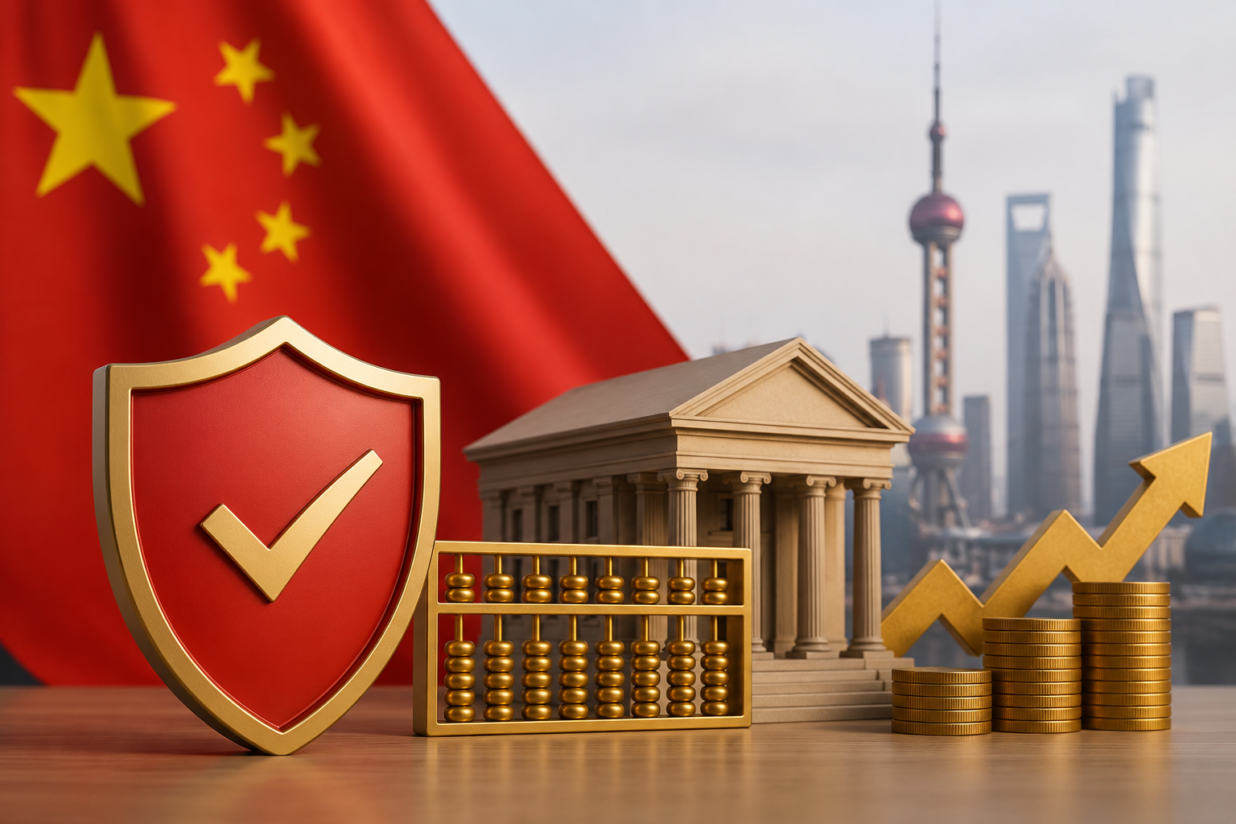
China Financial Regulation : China’s top financial regulator has committed to provide support for growing businesses while adopting tighter measures against risks in the banking industry, real estate market, and local government debt. The decision was made during the 2026 Lujiazui Forum in Shanghai, one of China’s most prominent financial events, as policymakers strive to strike a balance between economic growth and financial stability.
Ding Xiangqun, the recently appointed head of China’s National Financial Regulatory Administration (NFRA), stated that authorities will focus on minimizing systemic financial risks while allocating greater financial resources to industries deemed important to the country’s long-term development. Her comments come at a time when China is attempting to increase innovation-driven growth while dealing with the challenges of a slowing economy and mounting debt.
Officials believe that sophisticated manufacturing, technology, and emerging industries will play an important role in China’s next phase of economic growth. Increased financial support is expected to encourage enterprises to invest in research, production, and innovation.
China Financial Regulation Focuses on Stability and Growth
According to Ding, authorities would try to reduce risks from smaller financial institutions while continuing to address issues in the real estate sector and local government debt. These sectors have been identified as major weaknesses in China’s financial system in recent years.
China’s housing market collapse has harmed investor confidence and put pressure on regional finances. Local governments, which rely heavily on land sales and borrowing for development projects, have also experienced increased financial difficulty. Policymakers are thus attempting to mitigate financial risks without hindering economic activity.
The government has previously implemented various regulatory measures to improve control of banks, investment funds, and other financial organizations. Recent initiatives include stricter oversight of private investment firms and broader ambitions to overhaul the country’s financial regulatory structure.
Analysts believe the regulator’s latest comments show that Beijing is still dedicated to maintaining market stability while ensuring that capital flows into sectors that serve government interests. The strategy reflects a larger attempt to improve the quality of economic growth, rather than depending primarily on traditional investment-driven expansion.
Strategic Industries Become Key to China Financial Regulation Agenda
Support for critical industries has emerged as a key subject in China’s economic planning. Authorities increasingly see innovation, advanced technology, artificial intelligence, and high-end manufacturing as critical to remaining competitive in a fast changing global economy.
Earlier this month, securities regulators asked fund managers to allocate more cash to innovative enterprises while cautioning against excessive speculation and short-term investment trends. The message is consistent with the government’s overarching goal of generating long-term financial support for future sectors.
Market analysts believe that stronger financial backing might help Chinese enterprises speed technical development and lessen reliance on foreign technologies in critical sectors. At the same time, regulators must ensure that additional investment does not result in new financial bubbles or undue risk.
The latest policy direction emphasizes Beijing’s dual goal of supporting innovation-led growth while preserving the financial system from volatility. As global economic uncertainty persists, China’s ability to balance these objectives will be closely monitored by investors and authorities around the world.
- Join our whatsapp channel for daily updates.
- Follow tazatimesnews Telegram Channel for latest news alerts.
- Follow TazaTimesNews on TruthSocial for exclusive updates
- Also reads : New Expressway: Beginning in February, vehicles on the Delhi-Dehradun Expressway will go at full speed.