
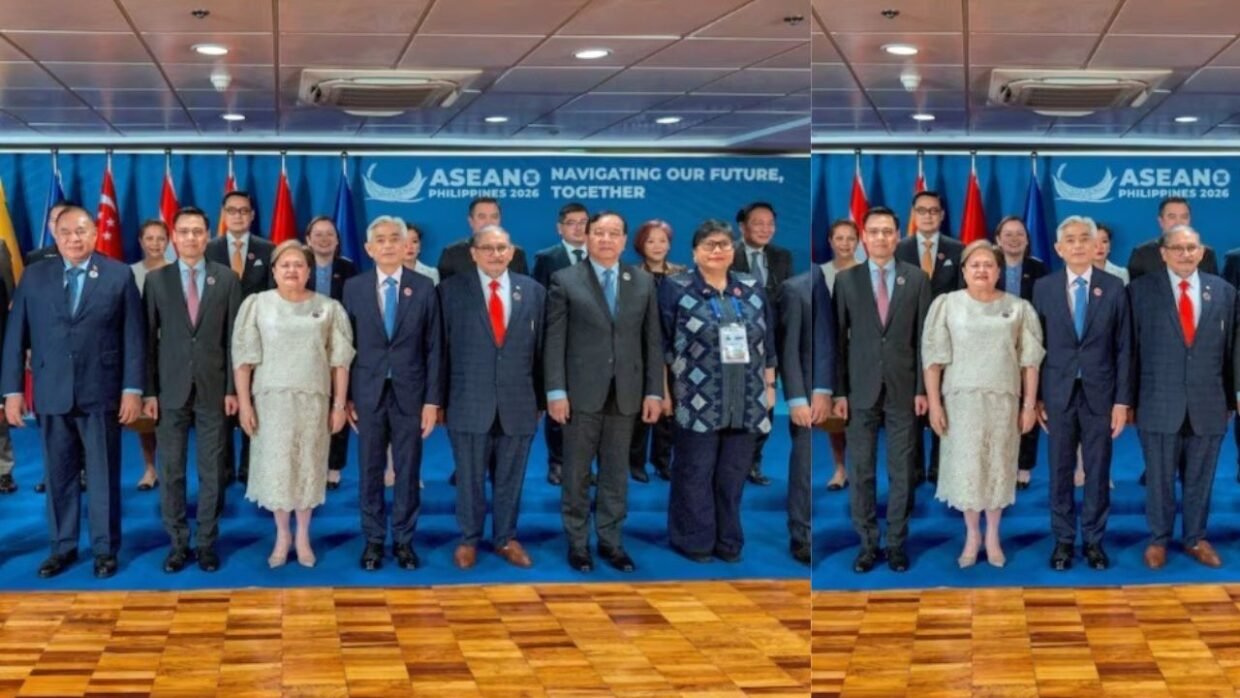
ASEAN Top Diplomats Meet : Southeast Asian foreign ministers gathered in Manila on Monday for critical diplomatic consultations organized by the Association of Southeast Asian Nations (ASEAN), with the rising dispute between the United States and Iran emerging as a major source of concern. The crisis has increased uncertainty in discussions about regional security, energy stability, commerce, and global economic conditions.
The ASEAN meetings are taking place in the Philippine capital from July 21 to 24, and they will bring together foreign ministers from the bloc’s ten member states as well as senior representatives from major world powers. Officials from the United States, China, Russia, Japan, Australia, and the European Union are also slated to join in the discussions.
As global tensions rise, ASEAN countries strive to sustain regional cooperation while tackling the broader consequences of international conflicts.
ASEAN Meeting Faces Pressure From US-Iran Conflict and Energy Risks
Because of the potential disruptions to global energy markets, rising tensions between Washington and Tehran have become a major concern for Southeast Asian states. Many ASEAN countries rely on imported oil and gas supplies that travel through vital trade routes such as the Strait of Hormuz.
Any disruption in regional shipping might raise fuel prices, disrupt supply chains, and pose economic issues for countries that rely on international trade.
ASEAN foreign ministers are expected to urge moderation and support diplomatic options to keep the dispute from spreading further. Officials have cautioned that ongoing military tensions could have an impact on global markets and hinder Asia’s economic growth.
The Manila gathering also allows for separate discussions between important powers. Senior diplomats, including US Secretary of State Marco Rubio, Chinese Foreign Minister Wang Yi, and Russian Foreign Minister Sergei Lavrov, are anticipated to participate in talks on regional and international concerns.
Analysts say ASEAN’s longstanding stance of neutrality and discussion would be put to the test again as global power struggle heats up. Despite member states’ disagreements, the bloc has frequently supported peaceful negotiations and cooperation.
ASEAN Leaders Discuss Myanmar, South China Sea and Regional Stability
While the US-Iran confrontation remains a hot topic, ASEAN leaders are also focused on major issues closer to home. The current political situation in Myanmar remains a concern, with member countries looking for methods to promote dialogue and humanitarian operations.
The South China Sea dispute is another important topic of discussion at the sessions. ASEAN nations and China are discussing a draft code of conduct to reduce tensions and improve stability in disputed waters.
Maintaining peace in the South China Sea is critical for regional security since it is one of the world’s busiest marine trading routes.
Economic cooperation, digital security, supply chain resilience, and disaster management are among the topics expected at the conference. ASEAN countries are striving to enhance ties as the region deals with geopolitical uncertainties and shifting global economic realities.
According to diplomatic analysts, the Manila summits may have an impact on ASEAN’s attitude to future international crises. Although the regional group has no direct authority over disputes outside of Southeast Asia, a concerted appeal for discussion and respect for international law could bolster broader diplomatic efforts.
As global tensions rise, ASEAN’s capacity to strike a balance with big powers while defending regional interests will remain a crucial priority. The outcomes of these negotiations will be eagerly watched by governments, corporations, and investors throughout Asia-Pacific.
Follow TazaTimesNews
- Join our whatsapp channel for daily updates.
- Follow tazatimesnews Telegram Channel for latest news alerts.
- Follow TazaTimesNews on TruthSocial for exclusive updates
Also reads