
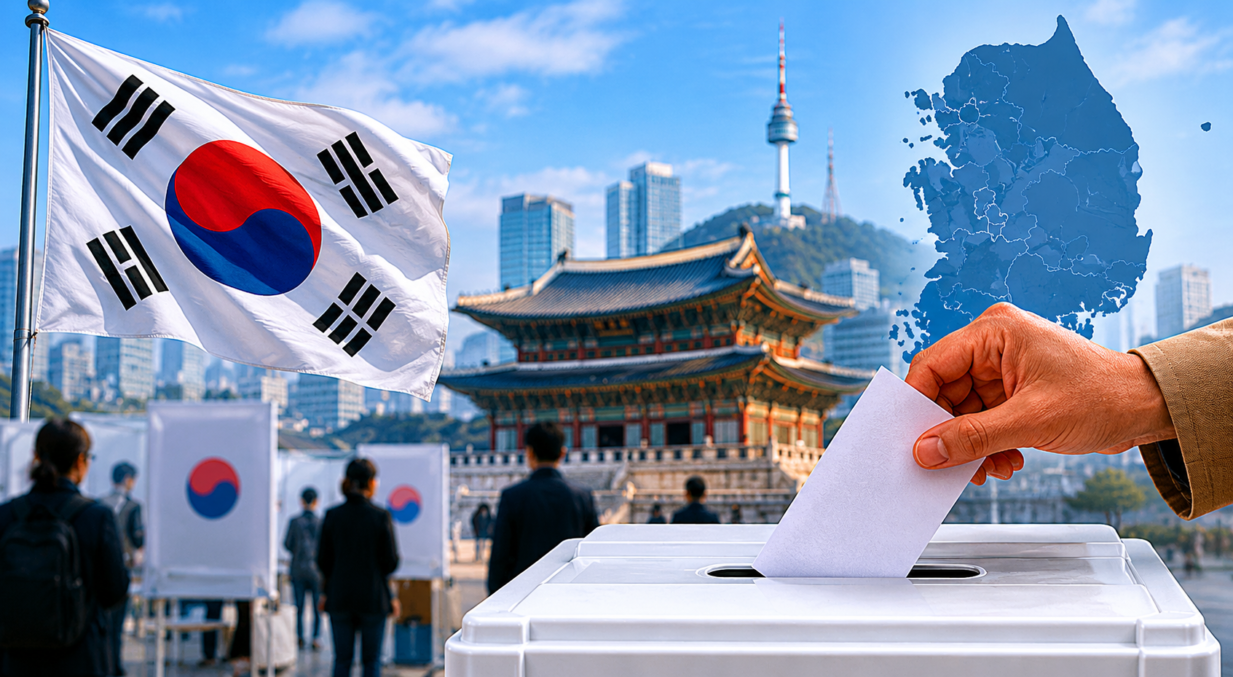
South Korea Local Elections : South Koreans went to the polls on Wednesday for a key round of municipal elections that could either bolster President Lee Jae Myung’s political position or reveal signs of voter displeasure following his first year in power. The vote is being widely followed around the country since it is the first nationwide electoral test since Lee gained the presidency in a quick election in 2025.
In 16 cities and provinces, citizens are electing mayors and governors, as well as many parliamentary by-elections. Political observers see the results as a key measure of public trust in Lee’s administration and the future course of South Korean politics.
South Korea Local Elections Reflect Support for Lee Government
According to recent opinion polls, Lee’s Democratic Party could outperform the conservative People Power Party (PPP), which has battled to regain public trust following the political scandal involving former President Yoon Suk Yeol. Since Yoon’s fall from power following a contentious martial law event in 2024, the conservative party has struggled with internal conflicts and diminishing support.
Political analysts believe that the extent of the Democratic Party’s victory will be more important than whether it wins. Key contests in big cities such as Seoul and Busan are receiving special attention since they are viewed as representations of national political sentiments. A strong performance in these regions would give Lee’s government more momentum and strengthen its hold on local and national politics.
Voter turnout has also received notice, with early voting figures reaching historic levels. Analysts believe the high participation demonstrates the public’s great interest in the country’s political orientation after several years of turmoil and heated political debate.
South Korea Local Elections Challenge Conservative Opposition
For the People Power Party, the elections are a critical opportunity to demonstrate that it is still a viable political force. The party presently controls numerous local governments, but it is anticipated to suffer large losses as voters respond to recent political controversies.
The outcome could have an impact on future leadership challenges and redefine South Korea’s political environment ahead of the next presidential election. Several notable political leaders are running in by-elections, and strong results could improve their national reputation.
While observers do not anticipate quick policy changes regardless of the outcome, a resounding victory for Lee’s party would certainly make it easier for the administration to implement economic reforms, market-friendly policies, and its larger domestic agenda. At the same time, lower-than-expected results may embolden opposition organizations and raise concerns about popular support for the administration’s performance.
As vote counting begins, South Korea’s local elections are considered not just as a struggle for regional leadership, but also as an essential indicator of the country’s political climate one year into President Lee’s tenure.
- Join our whatsapp channel for daily updates.
- Follow tazatimesnews Telegram Channel for latest news alerts.
- Follow TazaTimesNews on TruthSocial for exclusive updates
- Also reads : 10 methods to manage high blood pressure without medication.