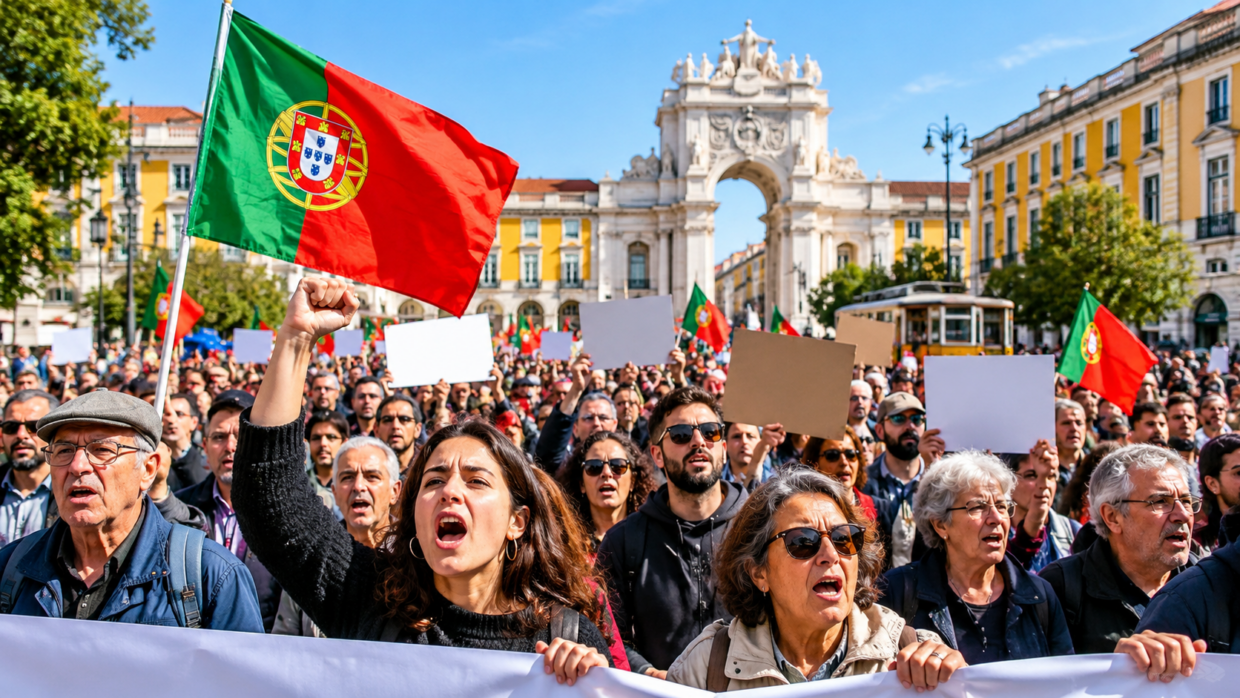
Portugal Housing Crisis: On Saturday, tens of thousands of people participated in demonstrations around Portugal, demanding immediate action to lower the cost of housing. As growing real estate and rental expenses continued to put strain on people, protests took place in over thirty cities and towns.
People of all ages, including pensioners, working professionals, and teenagers, came together for the marches. Protesters claimed that the rising cost of housing was making it harder for regular people to purchase a home or get a reasonably priced rental.
The streets of Lisbon were filled with chanting, drums, and music as protesters marched with flags and big banners. Their primary point was quite clear: housing should not be a luxury that only the rich can afford.
The most recent protests are a part of a larger public outcry about housing expenses that has persisted for a few weeks. Additionally, some activists have established camps in the heart of Portugal’s two biggest cities, Lisbon and Porto.
Portugal Housing Crisis Sparks Nationwide Anger
The scale of the demonstrations shows rising dissatisfaction among those who are trying to manage their housing and other living expenditures.
Susana Pacheco, a 35-year-old data analyst who also works part-time as an astrologer to pay her home, expressed worries about the future of young people. She questioned whether her younger sister would be able to afford her own home when she ultimately left their parents’ house.
Ana Encarnação, 42, expressed her dissatisfaction with the current scenario. She cited rising living costs and a widening gap between rich and low-income households.
The protests have also attracted attention to the dramatic increase in property values over the last decade. According to Eurostat, Portugal had the greatest growth in housing price-to-income ratio in the European Union between 2015 and 2025.
The ratio rose by 61% over that time, with the Netherlands coming in second with a 34% increase.
More recent data reveal that the pressure has not alleviated. The National Statistics Institute of Portugal stated that house prices rose over 20% between the first quarter of last year and the first quarter of 2026. According to government data, rental costs have increased by 68% since 2020.
Portugal Housing Crisis Puts Pressure on Government
A number of reasons have contributed to Portugal’s soaring housing prices. Foreign buyers and investment funds have bought real estate in the nation, driving up demand.
Portugal has also become a popular location for digital nomads, remote workers, and retirees due to its pleasant climate and lengthy coastline. At the same time, rising tourism has prompted property owners in city centers to convert residential units into short-term vacation rentals.
Housing groups are urging the government to take greater action. Their key demands include rent control, stronger legal protection for renters facing eviction, and the development of more cheap dwellings.
The administration has already implemented many measures to solve the issue. These include lower taxes on new development, limits on short-term rentals, and promises to build 145,000 more dwellings.
However, the government has admitted that these actions would take time to yield effects.
António José Seguro, the Portuguese president, has also expressed an interest in the topic. Earlier this month, he summoned the Council of State, an advisory council, to examine the protests. On Friday, he also met with a group of demonstrators.
The protests mirror similar demonstrations in neighboring Spain, where home affordability worries sparked public outrage last month. The demonstrations in Portugal are taking place at a time when there is widespread social dissatisfaction throughout Europe.
Conclusion
Portugal’s housing crisis continues to affect individuals of all ages, with rising property costs and rents making it difficult for families and young people to buy their own houses. The most recent demonstrations demonstrate how passionately citizens demand improvements to housing regulations. Although the government has declared intentions to stimulate building, lower new house taxes, and restrict short-term rentals, these policies are unlikely to provide quick effects. Protesters want stricter rent rights, increased tenant security, and more affordable housing options. With rising housing costs and rents, the government will undoubtedly face continued pressure until people see real gains in their ability to find and buy a house.
- Join our whatsapp channel for daily updates.
- Follow tazatimesnews Telegram Channel for latest news alerts.
- Follow TazaTimesNews on TruthSocial for exclusive updates
- Also Read : Gadi Eisenkot Gets First Chance to Form Israel’s Next Government