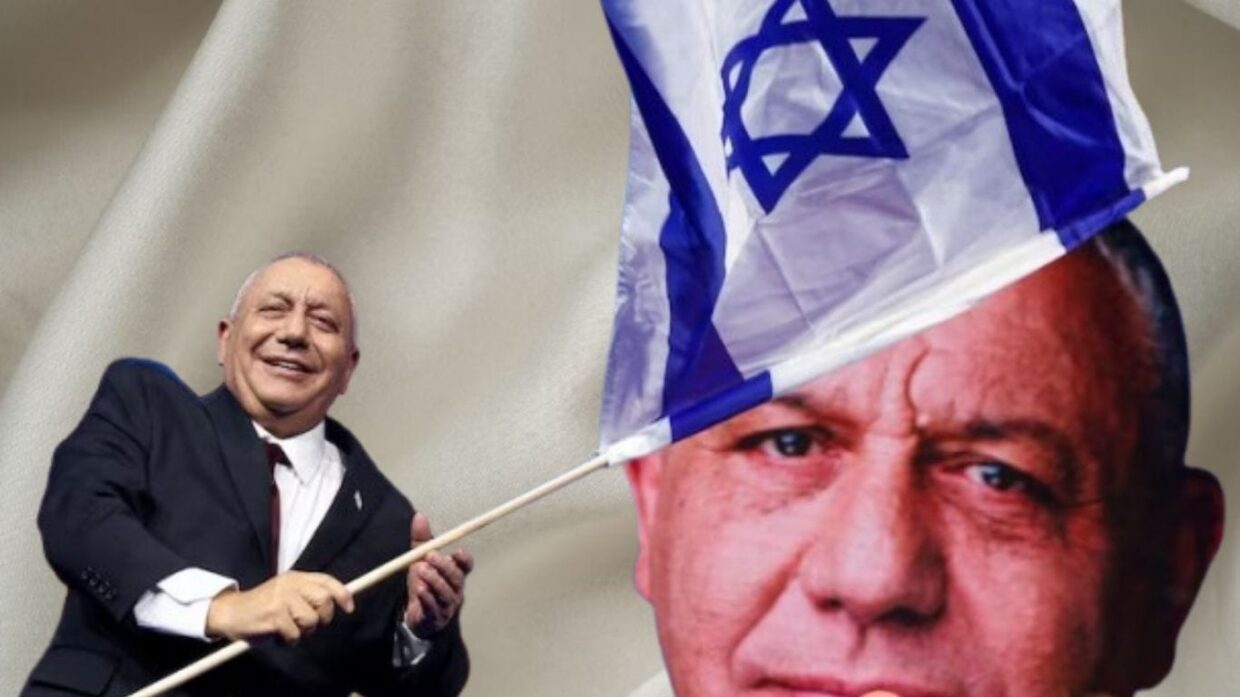
Israel’s political gridlock has provided former military leader Gadi Eisenkot with his first opportunity to build a new government. President Isaac Herzog chose him for the job after an election left Prime Minister Benjamin Netanyahu’s religious-nationalist coalition with insufficient seats to maintain its majority.
Although Netanyahu’s Likud party maintains the largest single party in parliament, its larger coalition fell short of the required numbers to rule. Eisenkot won the most legislative endorsements, including backing from Arab leaders, putting him ahead of Netanyahu in the process of choosing a candidate to form the next government.
According to Herzog’s spokeswoman, Eisenkot has been invited to the President’s Residence, where he will be in charge of creating a cabinet. The president’s participation in the process is mostly ceremonial, although his nomination allows a candidate to initiate coalition discussions.
Eisenkot addressed the problem in a post on X. He declared a national emergency government and promised to do all necessary to ensure that it matched the country’s expectations.
Gadi Eisenkot Faces a Difficult Coalition Challenge
The election results demonstrate how tough the process may be. Netanyahu’s Likud party secured 27 seats in the 120-member Knesset. However, his religious-nationalist combination won only 53 seats, falling eight shy of the 61 needed for a majority.
Eisenkot’s Yashar party finished second, with 21 seats. His larger coalition, which includes four Jewish-led parties ranging from center-left to right, won 48 seats. Meanwhile, two parties representing Israel’s Arab minority won 19 seats, an unparalleled achievement for them.
Arab leaders nominated Eisenkot despite his refusal to join forces with their party. Their backing earned him the most endorsements, despite the fact that he has ruled out a formal cooperation with them.
Now he has 28 days to form a government. The deadline might be extended for an additional 14 days, allowing him more time to strike deals with other political groupings.
There are several different ways available. While leading a minority administration, Eisenkot might seek Arab legislators’ cooperation on critical issues. Another alternative is to engage in negotiations with ultra-Orthodox groups, something he and his allies have hitherto shunned. He may even explore forming a unity government with Netanyahu.
Analysts feel that none of these approaches are likely to succeed. If Eisenkot cannot form a government, another contender may be given the opportunity. If that attempt fails, parliament can designate someone else.
The total procedure has a deadline of around 100 days. If no contender forms a government within that timeframe, Israel will be forced to conduct another election.
Gadi Eisenkot’s Military Record and Political Differences
Eisenkot, 66, had a long military career but just entered politics in 2022. He is the son of Moroccan immigrants and, if elected prime minister, he will be the first leader from Israel’s Mizrahi population, whose Jewish roots extend back to the Middle East and North Africa.
He temporarily served in Netanyahu’s war cabinet after Hamas struck Israel on October 7, 2023. However, he then joined the opposition and became a vocal opponent of the prime minister’s leadership and management of the military assault in Gaza.
Eisenkot has also ruled out participating in a Netanyahu-led cabinet. His family has endured personal losses in the battle, with his son and two nephews slain while fighting in Gaza.
During his presidential campaign, he emphasized his military background and mentioned the “Dahiyeh doctrine”. He employed the strategy as a commander during Israel’s 2006 war in Lebanon against Hezbollah, which is backed by Iran. The theory requires responding to attacks with excessive force.
His political beliefs also distinguished him from Netanyahu’s far-right allies. Eisenkot has condemned settler violence against Palestinians, which has escalated since 2023 and put strain on Israel’s ties with Western countries.
He also opposes Itamar Ben-Gvir and Bezalel Smotrich, both prominent leaders in Netanyahu’s far-right alliance. Some Western nations have imposed sanctions against both for allegedly promoting violence against Palestinians.
Conclusion
Gadi Eisenkot now faces a stiff test as he attempts to create Israel’s next cabinet. His greatest issue is gaining enough legislative support without embracing partnerships he has previously rejected. Netanyahu’s Likud remains the largest party, and Arab legislators have supported Eisenkot’s appointment. However, the election results do not provide a simple path to a majority. If coalition discussions fail, other candidates may have a chance before another election is required.
- Join our whatsapp channel for daily updates.
- Follow tazatimesnews Telegram Channel for latest news alerts.
- Follow TazaTimesNews on TruthSocial for exclusive updates
- Also Read : Iran Nuclear Proposal Sent to US Through Qatar, Talks Face Conditions