
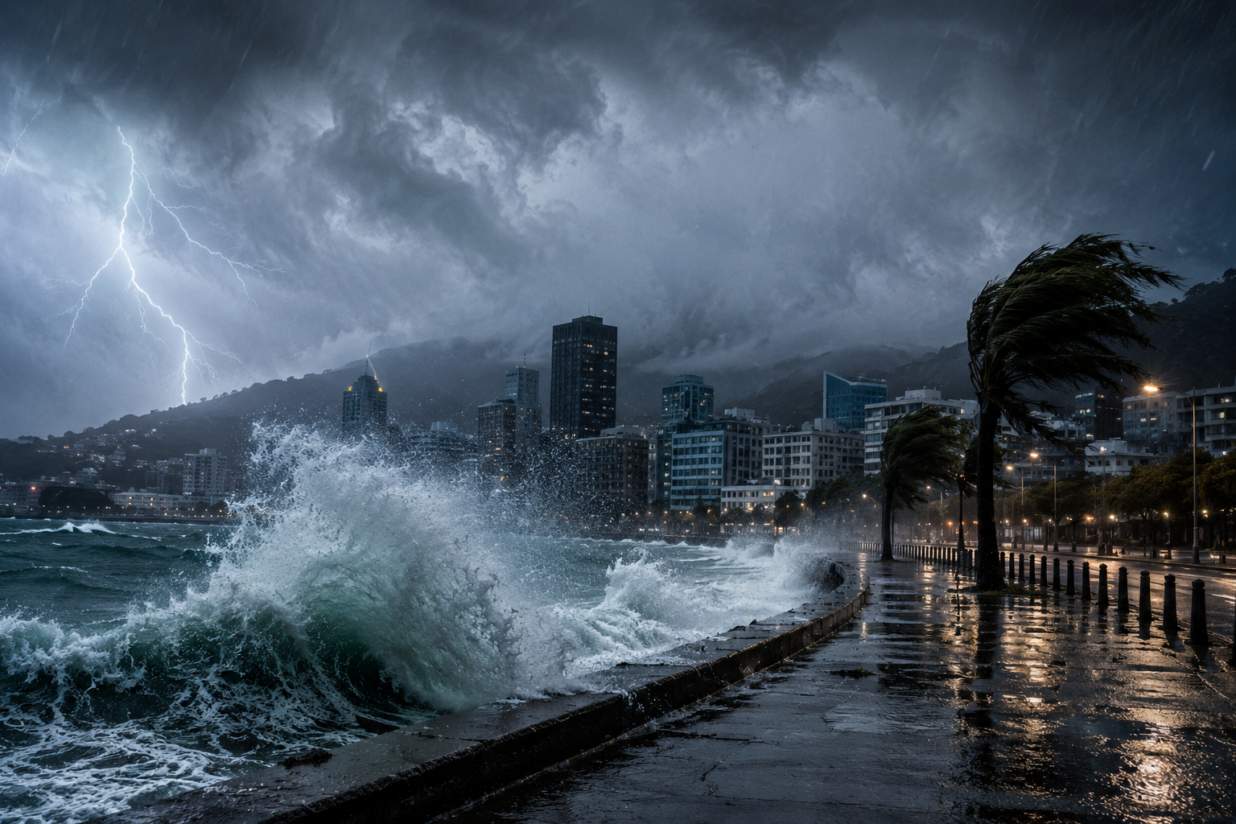
New Zealand Storm Update : On Tuesday, a major weather system rushed across New Zealand’s capital region, disrupting transportation networks, grounding aircraft, and causing ferry cancellations as strong winds and heavy rain pelted the country’s lower North Island.
Authorities issued severe weather warnings for Wellington and the neighboring areas after strong winds and turbulent sea conditions made travel dangerous. Thousands of commuters and travelers were affected by the storm, which also caused significant disruptions to airport operations and inter-island ferry services.
Emergency officials warned citizens to exercise caution as weather conditions worsened throughout the day. Strong winds toppled trees, threw debris across roads, and raised the risk of localized floods in numerous cities.
The storm hit New Zealand during the Southern Hemisphere winter season, which is characterized by intense weather systems moving across the Tasman Sea. However, experts observed that the most recent occurrence delivered exceptionally severe weather to the Wellington region, one of the country’s biggest transportation hubs.
Wellington Weather Disruption Creates Transport Challenges
The extreme weather created extensive problems at Wellington Airport, with multiple flights being delayed or cancelled due to dangerous wind conditions. Airlines attempted to rebook affected passengers while tracking projections for potential improvements.
Multiple ferry crossings across the Cook Strait between the North and South Islands have also been suspended. The waterway is regarded as one of New Zealand’s most significant transport routes, delivering both passengers and freight between the islands. Rough seas and strong gusts rendered operations dangerous, forcing firms to temporarily suspend services.
Road users were encouraged to take caution while emergency crews dealt with fallen branches, damaged infrastructure, and weather-related risks. Some public transportation systems encountered delays as operators changed schedules to prioritize safety.
Meteorologists cautioned that strong gusts might persist in exposed coastal areas, while heavy rainfall raised fears about surface flooding and poor visibility on major roads.
New Zealand Storm Impact Highlights Climate Resilience Concerns
The latest storm has reignited debate over the growing impact of extreme weather on New Zealand’s transportation and public infrastructure.
In recent years, the country has had multiple catastrophic weather events, resulting in aircraft cancellations, power outages, flooding, and significant property damage. According to experts, increasingly severe weather occurrences put additional strain on emergency services, transportation providers, and municipal governments responsible for maintaining critical infrastructure.
Government authorities urged locals to stay updated with official weather updates and avoid needless travel while warnings were in effect. Emergency management teams were on standby to respond to any more incidents caused by the storm.
Despite the interruption, authorities reported no immediate large-scale injuries from the weather event. Cleanup work were scheduled to begin swiftly as conditions improved and transportation services were progressively restored.
Forecasters predicted that the storm system would continue to influence weather patterns in portions of the country before gradually moving away, allowing conditions to normalize later in the week. Before making plans, travelers should contact airlines and ferry companies directly for the most up-to-date information.
- Join our whatsapp channel for daily updates.
- Follow tazatimesnews Telegram Channel for latest news alerts.
- Follow TazaTimesNews on TruthSocial for exclusive updates
- Also reads : Oil Price Surge as US-Iran Tensions Disrupt Strait of Hormuz