
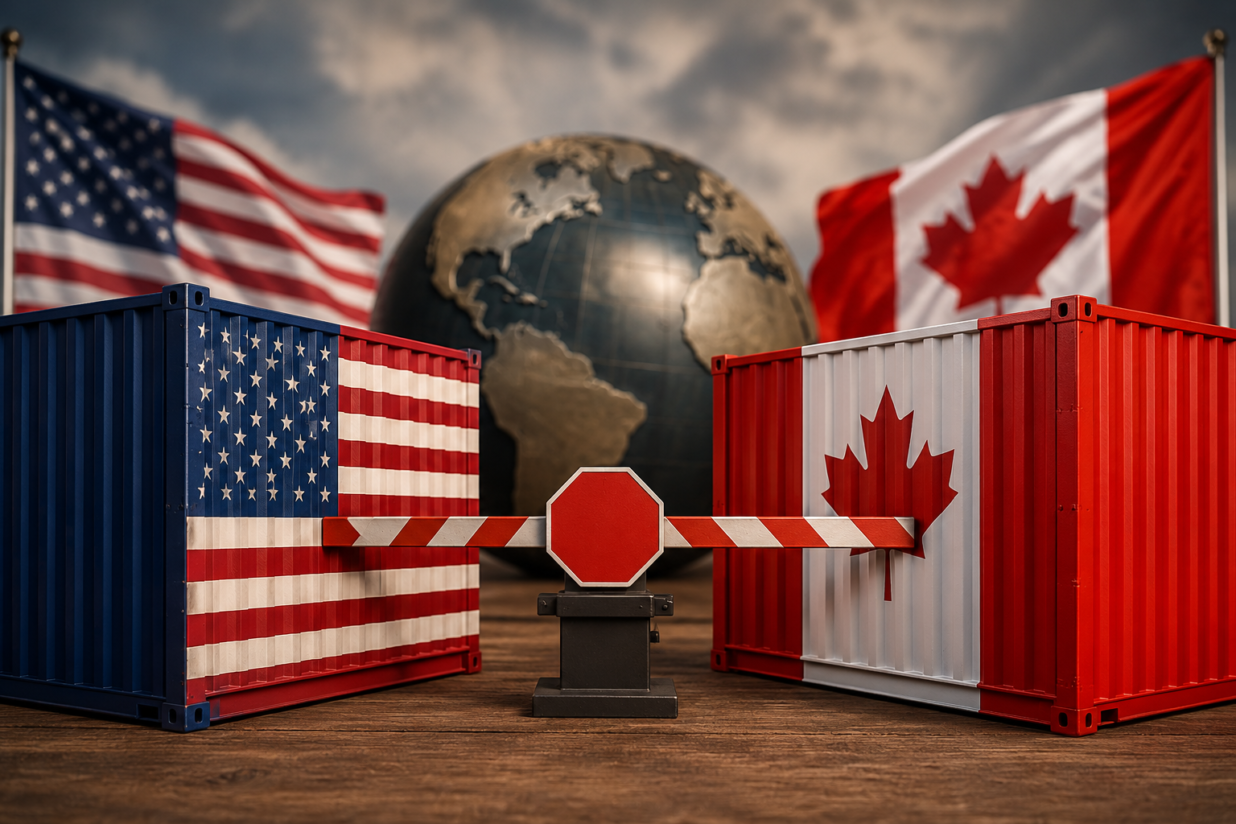
US Imposes 50% Tariffs on Canadian Products: The United States has imposed fresh 50% tariffs on several Canadian exports, heightening trade tensions between the two neighbouring countries. The decision may have an impact on Canadian exporters, but US officials argue that it will help create more equitable trading circumstances.
On July 20, 2026, the U.S. administration announced the new tariffs. Officials stated that Canada’s trade policies had caused challenges for American businesses. As a result, the United States government decided to take action against what it views as unfair treatment of American goods.
US Imposes 50% Tariffs on Canadian Products Amid Growing Trade Dispute
The new tariffs will go into effect after a 30-day period. Meanwhile, both countries might continue to negotiate and seek a solution.
According to US officials, this trade action was carried out under Section 338 of the Tariff Act of 1930. This statute gives the US the authority to respond when it believes another country is engaging in unfair trade practices.
However, the United States has exempted some critical products from the increased taxes. The increased duties will not apply to energy items, potash, essential minerals, or fish. These exemptions will help to protect critical industries and alleviate supply chain issues.
In addition, US authorities stated that the new tariffs are aimed at improving the two countries’ trade balance. They also stated that the policy intends to improve trade circumstances rather than harming long-term economic partnerships.
US Imposes 50% Tariffs on Canadian Products: Impact on Trade and Businesses
The United States and Canada have one of the world’s most extensive trading agreements. As a result, changes in the two countries’ trade policies might have a wide-ranging impact.
The increased tariffs may increase expenses in manufacturing, agriculture, retail, and other sectors. Furthermore, enterprises that rely on cross-border trade may see changes to their supply chains.
Consumers may potentially experience price hikes on certain products if businesses pass along higher expenses to them. However, the final outcome will be determined by future conversations between Washington and Ottawa.
The most recent tariff decision comes at a period of uncertainty in US-Canada economic ties. Meanwhile, companies on both sides of the border are keenly monitoring the situation.
The 30-day timeframe allows both governments the opportunity to negotiate. If they strike a deal, the US may amend or reconsider the proposed tariffs.
Companies throughout North America are currently planning for potential changes. The conclusion of these talks may have an impact on future US-Canadian trade policies, investments, and economic relations.
Follow TazaTimesNews
- Join our whatsapp channel for daily updates.
- Follow tazatimesnews Telegram Channel for latest news alerts.
- Follow TazaTimesNews on TruthSocial for exclusive updates
Also reads
Trump Air Force One to Receive ‘Maxed Out’ Upgrades After Qatar Aircraft Deal