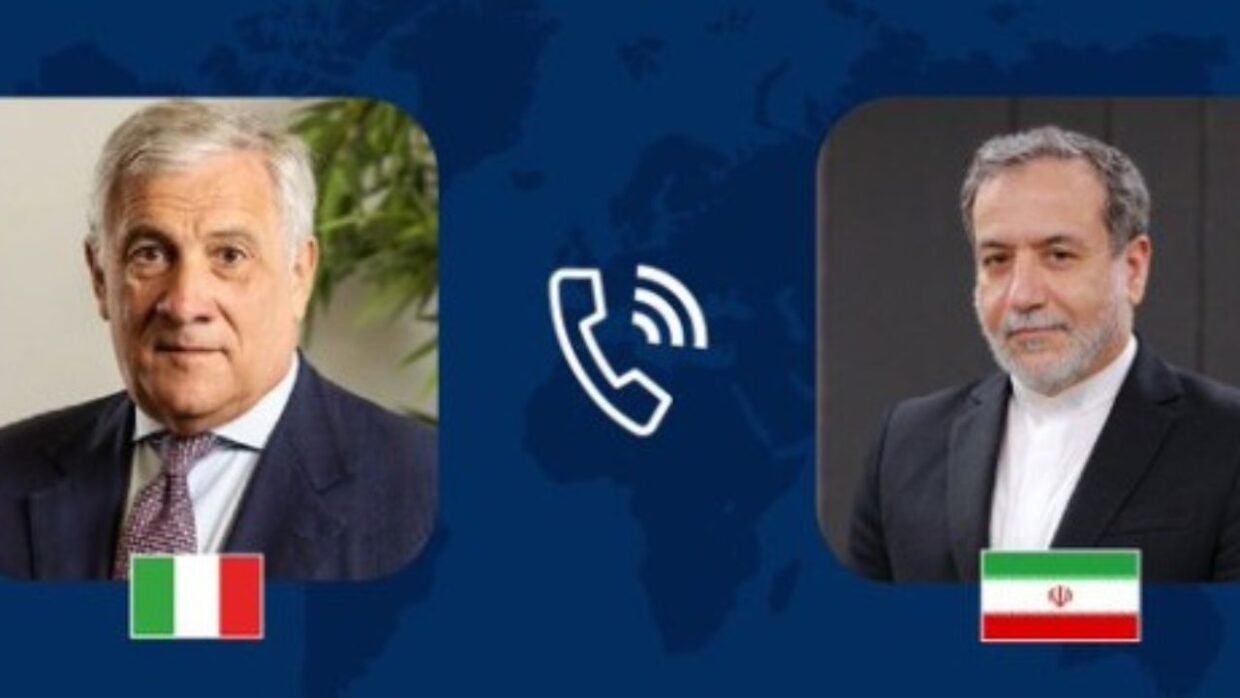
Italy Iran Nuclear Red Line Alert signals : During a phone call with his Iranian counterpart, Abbas Araghchi, Italian Foreign Minister Antonio Tajani expressed serious concern over the Middle East’s growing tensions.
Ho appena avuto un altro colloquio telefonico con il Ministro degli Esteri iraniano ???????? @araghchi per fare il punto sul conflitto in Iran e sulla situazione in Medio Oriente.
Ho voluto evidenziare la forte preoccupazione dell’Italia per l’aumento delle tensioni regionali,… pic.twitter.com/eooKODayLY— Antonio Tajani (@Antonio_Tajani) May 2, 2026
In a statement posted on X on Saturday, Tajani stated that both parties discussed the “ongoing conflict in Iran and the situation in the Middle East,” emphasizing the crucial importance of avoiding a wider escalation.
The Italian minister highlighted the importance of stepping up diplomatic efforts to reach an agreement and urged for the reopening of the Strait of Hormuz.
He warned that continued disruptions to the marine route could harm food supply and regional stability, particularly in Africa.
Tajani said
I clearly underlined that for Italy, the development of an Iranian nuclear program for military reasons marks a red line, with the tangible risk of igniting a disastrous nuclear arms race in the region,” Tajani said.
Furthermore, he urged Tehran to use its influence over Hezbollah to end its attacks on Israel and “to achieve, through negotiation, peace in Lebanon.”
“Italy is increasingly committed to supporting every international effort for peace, keeping channels of dialogue open with all partners and promoting stability in the Middle East,” he said.
According to the Iranian media outlet Tasnim News Agency, in response to these international pleas for caution, the Iranian government has devised a 14-point proposal aiming at constructing an exhaustive structure to “end the war” on all active fronts, including the delicate situation in Lebanon.
Rather of accepting a short-term truce, the idea calls for a long-term settlement within 30 days.
Europe’s warning to Tehran is more than simply another diplomatic statement; it underscores a growing concern that the Middle East issue is at a stage where a miscalculation may redefine global security.
Italy has set a definite “red line,” warning that Iran’s progress toward nuclear capabilities will breach a threshold with far-reaching implications.
Iran peace plan amid nuclear pressure reshapes diplomatic battlefield
The peace proposal is not just about de-escalation. It reflects Iran’s efforts to reshape negotiations on its own terms. Tehran is moving the focus from its nuclear program to broader geopolitical talks by include demands such as reduced foreign military presence and regional security guarantees.
This is significant because global powers—particularly the United States and European nations—have always maintained that nuclear activity remained the primary issue. Analysts add that Tehran desires a conversation focused solely on its nuclear program, despite demands to include missiles or regional alliances.
Italy’s warning directly contradicts this strategy. Rome is warning that nuclear capability and missile reach can no longer be separated. For Europe, the concern is immediate: long-range missile development combined with nuclear capability may bring parts of the continent within reach.
Nuclear escalation risk shaping next phase of global power balance
The wider picture is a change in how power is negotiated. Iran’s nuclear future remains uncertain following military strikes, sanctions, and stalled negotiations. According to reports, enriched uranium stocks and inadequate international control have increased suspicion.
If tensions persist, three consequences are possible. First, a more stringent European alignment with US pressure. Second, regional players wanting stability will become more involved. Third, a prolonged period of controlled confrontation in which diplomacy and threat coexist without resolution.
The risk is in that center ground. Neither full war nor true peace, but rather a precarious balance in which one error could spark a larger conflict.
- you join our whatsapp channel
- you join our tazatimesnews Telegram Channel
- you join our tazatimesnews truthsocial.com Channel
- Also reads : Trump Iran Blockade: US Naval Pressure Reshapes Global Oil Markets and Geopolitics