On Saturday, France saw violent skirmishes amid countrywide rallies, with police detaining 511 people as demonstrations about living costs, inequality, and public services expanded across many towns. Germany also saw clashes between demonstrators and police during youth-led marches on subjects such as education, healthcare, climate action, and affordable housing.
According to France’s Interior Minister Laurent Nuñez, around 320,000 people participated in nationwide demonstrations. Although around 150 scheduled events went off without a hitch, he described the following violence as “extraordinary”.
Police faced attacks in Paris and other cities as some marches became violent towards the evening. Nuñez said security forces remained ready to deal with further confrontations.
France Protests See 511 Arrests and Clashes in Major Cities
According to the French Interior Ministry, there were over 70,000 protestors in Paris. The march followed boulevards in the city’s south-eastern suburbs rather than through the center.
The calm rally began at Porte de Bagnolet, along the city’s ring road. Some participants dressed up in Halloween costumes and held posters denouncing the country’s high living costs and social circumstances.
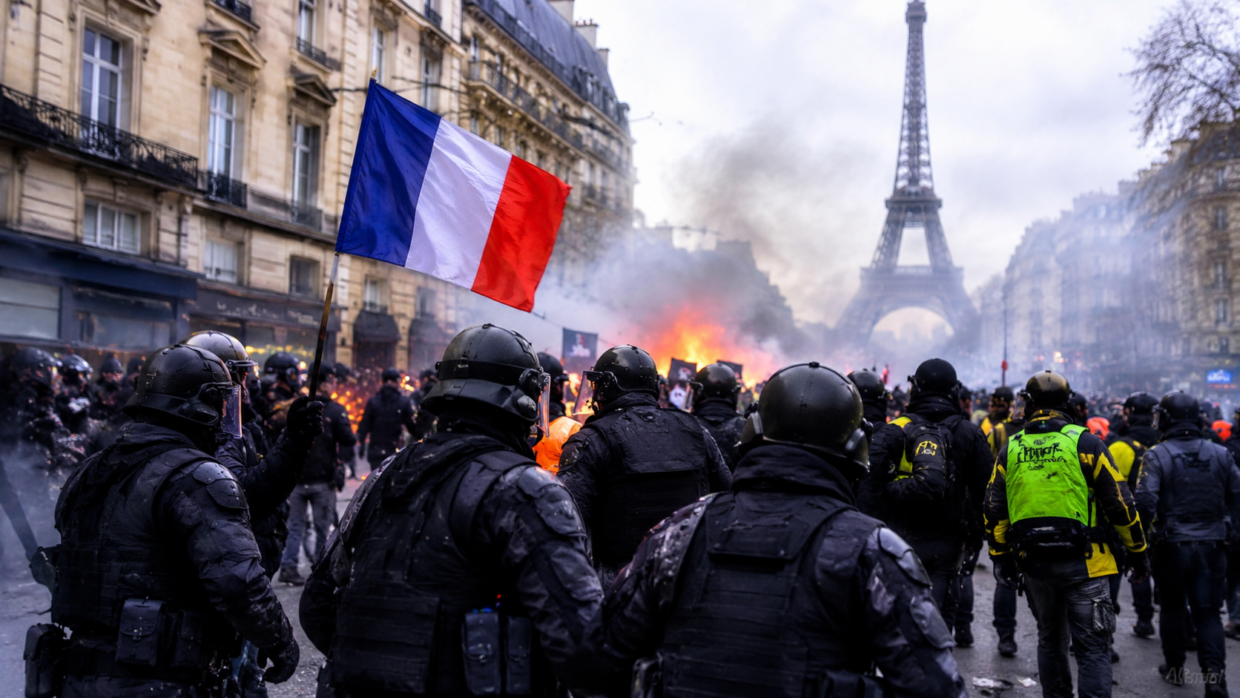
Tensions flared near Porte de Charenton, when masked protestors wearing black allegedly used hammers to remove pavement stones and throw them at police. An incendiary device was also hurled at the security officers.
The police replied with tear gas and baton charges. The Paris police prefecture said that several hundred rioters had assaulted policemen with missiles.
A Molotov cocktail allegedly struck one of Paris’ riot police officers. Nuñez described the event as a “attempted murder” and stated that police were preparing for future violence.
Violence was not exclusive to the capital. Protesters in Lyon hurled items at cops, who replied with tear gas. Police in Toulouse used water cannons to disperse an unlawful assembly of several thousand individuals, the most of whom were youthful activists.
Authorities had deployed 70,000 police officers and gendarmes, including elite units, across France ahead of the protests. Nuñez had previously warned that Saturday would be a “very high risk” day.
Students, members of the Yellow Vests movement, and labour unions came together for the rallies. Concerns about growing costs, inequality, and the policies of President Emmanuel Macron’s administration were expressed by participants.
Compared to the expected 410,000 attendees from the previous weekend, fewer people showed up. Additionally, student organisations have declared plans for additional protests and blockades at colleges and universities on Tuesday and Thursday. Workers and trade unions have also called for a protest on November 5.
Germany Protests Also Face Police Action and Looting
Similar disruptions occurred in Germany during youth-led rallies sponsored by the group “Gen Z regelt!” (which translates as “Gen Z will sort this”). Thousands of police officers were deployed around the country, with rallies taking place in dozens of locations.
The demonstrations centred on calls for better education and healthcare, climate action, and more affordable living circumstances. However, some rallies became hostile, with demonstrators throwing pyrotechnics and other objects at police.
A Reuters witness reported that at least two shops in Frankfurt were plundered and several others were damaged. A march was also briefly halted as fireworks were fired off.
Police in Cologne used water cannons to disperse a crowd after demonstrators allegedly fired fireworks at cops. Protesters in Berlin threw bottles and eggs, and demonstrators in Hamburg set fire to barricades. In some cases, police used pepper spray to disperse crowds, according to German daily Bild.
Authorities around Europe were vigilant. Barcelona police were on high alert after Blocus, an anonymous TikTok network, pushed people to attend more rallies. Italian officials were also keeping an eye on the situation after recent skirmishes in Milan, Turin, and Bologna.
Protests in France and Germany highlighted overwhelming public demands for lower living costs and improved public services, but they also resulted in arrests, property damage, and clashes with police. Authorities in numerous European towns remained vigilant against the threat of fresh demonstrations.
- Join our whatsapp channel for daily updates.
- Follow tazatimesnews Telegram Channel for latest news alerts.
- Follow TazaTimesNews on TruthSocial for exclusive updates
- Also read : Trump Iran War: US President Claims Venezuela Gains Covered Costs