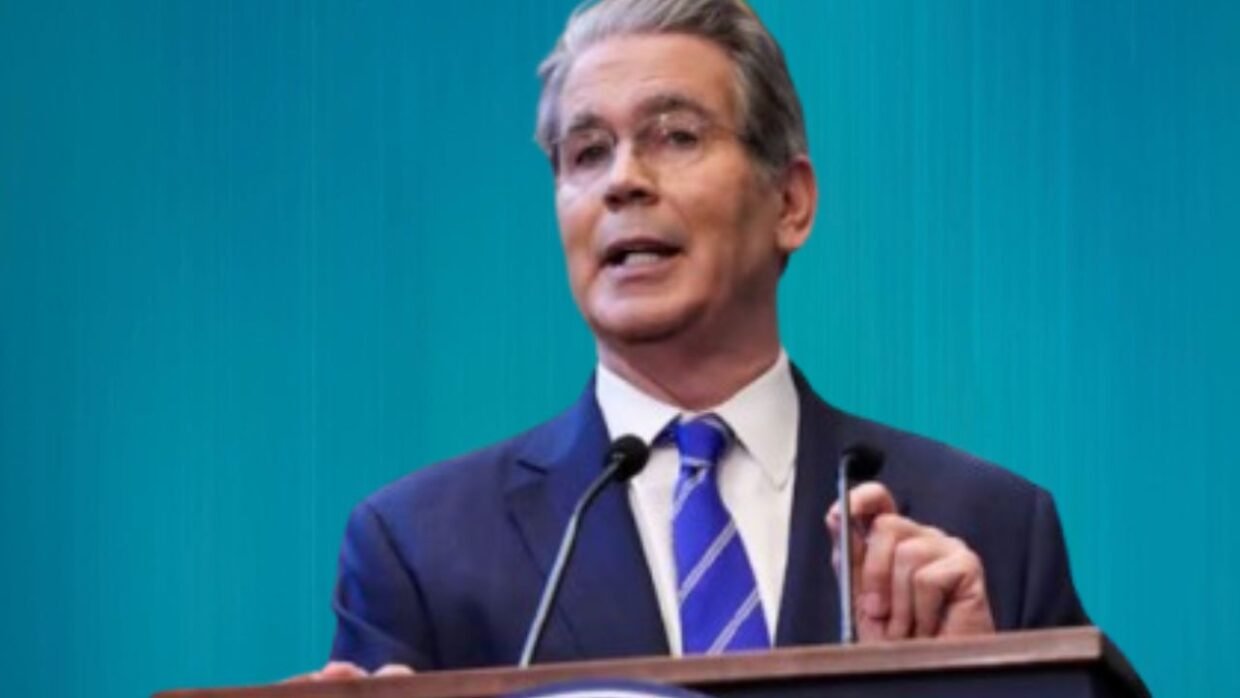
Us-Iran Tensions : US Treasury Secretary Scott Bessent called the Iranian government “rats in a sewer pipe” on Friday , adding that the international community has turned against them and that those in power in Tehran are ignorant of the reality on the ground.
Asserting that the United States had complete control over the Strait of Hormuz, the world’s most important oil chokepoint, he stated that a blockade would remain in place until ‘Freedom of Navigation’ is secured, which was before February 27.
“It’s really difficult for rats in a sewer pipe to understand what’s going on outside. Some color for the Iranian leadership while they literally sit in the dark. 1. The United States completely controls the Strait of Hormuz. 2. There is a hard currency scarcity, specifically the US dollar. 3. Food and gas rationing have been implemented. 4. The entire world community is against you. 5. The BLOCKADE will continue until there is pre-February 27 freedom of navigation,” Bessent said on X in response to a report claiming that the US Navy’s blockade had hampered Tehran’s regional plans.
The Iranian Embassy in South Africa responded to Bessent’s remark, saying, “Everyone knows that you and your pedophile boss lost the war, and the sad screams you make originate from agony, not victory. You lost in the battlefield and in cyberspace. Idiot.”
Everyone knows that you and your pedophile boss lost the war, and those pathetic noises you make come from pain, not victory.
You lost both on the battlefield and in cyberspace.Idiot https://t.co/HpKEBl6r1X
— Iran Embassy SA (@IraninSA) May 1, 2026
The United States slapped a naval blockade on Iran on April 13, following the failure of the Islamabad Talks to end the conflict.
The US Treasury Department warned shipping companies and maritime operators on Friday that they might face sanctions if they pay Iran for safe passage through the key Strait of Hormuz.
The Treasury Department’s Office of Foreign Assets Control (OFAC) has issued an advice, stating that it is aware of Iranian maritime threats and purported demands for “toll” payments in exchange for safe passage through the strategically crucial canal.
Strait of Hormuz Crisis: US–Iran Tensions Hit Global Oil Lifeline
A new wave of strong rhetoric and strategic pressure has escalated tensions between the United States and Iran, this time concentrated on the world’s most vulnerable energy corridor, the Strait of Hormuz.
Scott Bessent is at the core of the dispute, having openly chastised Iran’s leadership, indicating not only diplomatic displeasure but also a deeper economic and military strategy being implemented behind the scenes.
Future Outlook: Controlled Conflict or Dangerous Escalation
The present phase implies a “controlled confrontation” in which both sides apply pressure without exceeding red lines. However, this equilibrium is precarious.
Three such scenarios could occur:
- Negotiation Path – Backchannel talks reduce tensions and restore navigation norms
- Prolonged Standoff – Economic and naval pressure continues without direct conflict
- Accidental Escalation – A miscalculation at sea triggers a larger military response
The third scenario carries the highest risk. In such high-pressure circumstances, even a little incident, such as a tanker interception, can swiftly escalate.
- Join our whatsapp channel for daily updates.
- Follow tazatimesnews Telegram Channel for latest news alerts.
- Follow TazaTimesNews on TruthSocial for exclusive updates
- Also reads : Lost Emirates ID UAE Panic or Easy Fix? UAE Guide Shows Fast Recovery Steps for Residents