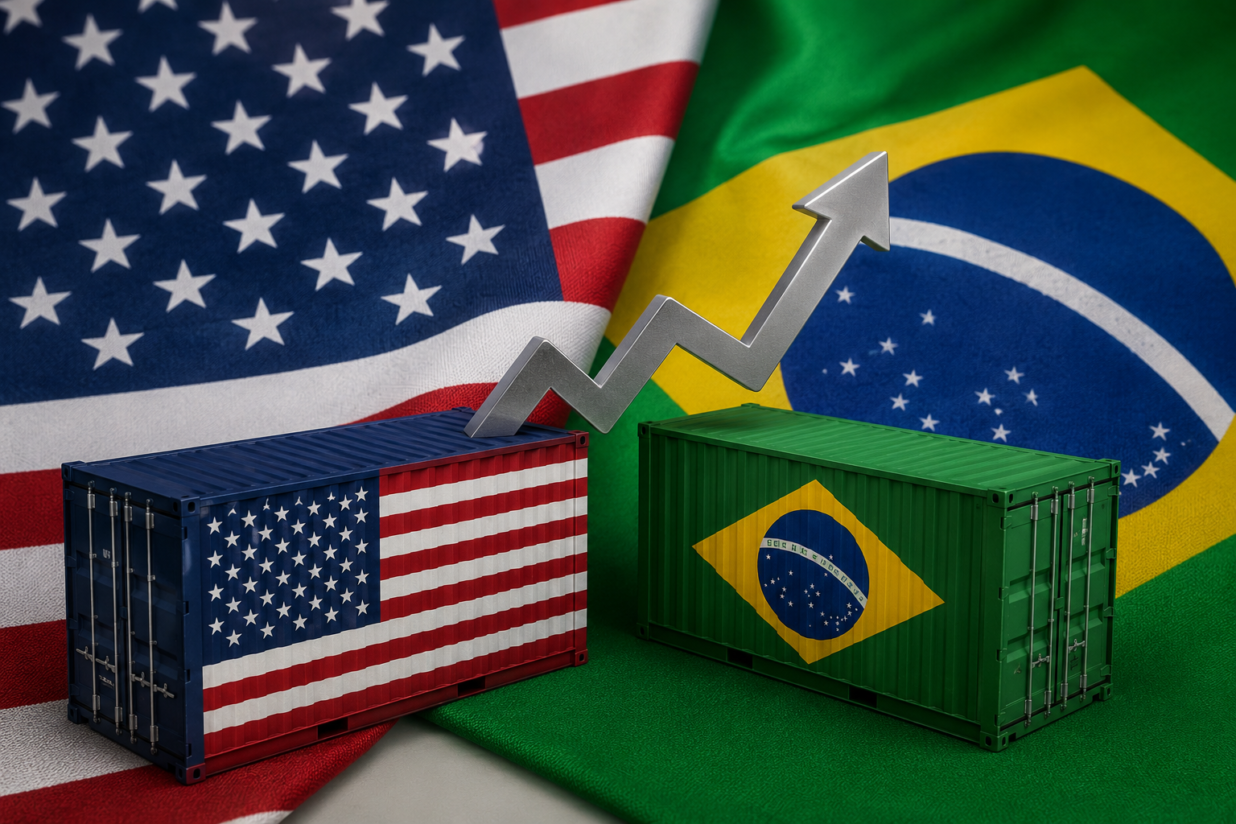
US Brazil Tariff: The United States has put a 25% tariff on certain Brazilian imports, escalating trade tensions between the two countries. While thousands of Brazilian products would be subject to increased levies, major exports such as coffee, beef, airplane parts, and certain energy products have been spared, minimizing the overall impact on bilateral commerce.
The decision was made by US Trade Representative Jamieson Greer, who stated that President Donald Trump imposed the duties under Section 301 of the Trade Act. The decision comes after a year-long inquiry into Brazil’s trade policies, which Washington claims created unfair barriers for American businesses.
According to U.S. authorities, the inquiry raised concerns about digital trade practices, intellectual property protection, ethanol market access, tariff regulations, and environmental issues related to deforestation. The increased import duties are set to take effect on July 22.
Although the levy is another step in the Trump administration’s overall trade strategy, exempting many high-value Brazilian exports demonstrates an effort to protect crucial supply networks and mitigate the impact on American industries that rely on Brazilian products.
US Brazil Tariff Increases Pressure on Trade and Business Relations
The additional tariffs will apply to thousands of Brazilian goods that enter the US market. Exporters of manufactured goods, metals, ethanol, tobacco, sugar, and a variety of other commodities may suffer increased costs when selling to American customers.
Trade experts believe that higher import taxes may impair the competitiveness of affected Brazilian exports in the United States, driving buyers to look for alternative suppliers. If the trade war persists, businesses in both nations may face higher operational expenses and supply chain issues.
However, the tariff list excludes numerous strategically vital products. Green coffee beans, beef, oranges, aircraft components, and certain energy products are still exempt, despite industry warnings that new tariffs could raise prices for American consumers and manufacturers.
According to US authorities, the action was taken in response to trade-related concerns raised during the Section 301 investigation, which looked into a variety of Brazilian trade policy.
US Brazil Tariff May Influence Future Economic Negotiations
Brazil has denied the US claims, claiming that its trade practices are in accordance with local laws and international trade agreements. Brazilian officials have stated that they are considering alternative responses, including countermeasures, if the additional tariffs adversely impact the country’s exporters.
Economists believe that the recent trade disagreement will impact future economic negotiations between the two countries. Although the United States remains an important export market for Brazil, the country has recently extended its commercial links with China and numerous other international partners.
Business organizations are asking both governments to maintain discussion and prevent a protracted trade war that may damage investment, industry, agriculture, and global supply lines. Many observers believe that discussions remain the most effective strategy to resolve trade disputes while preserving stable commercial relations.
With tariffs scheduled to go into effect on July 22, firms on both sides are preparing for the new trade restrictions. Importers, exporters, and investors will closely monitor future negotiations to see if tensions subside or if new trade sanctions are imposed in the coming months.
- Join our whatsapp channel for daily updates.
- Follow tazatimesnews Telegram Channel for latest news alerts.
- Follow TazaTimesNews on TruthSocial for exclusive updates
- Also reads : Islamic State-Linked Women from Australia Face Syria Slavery Charges