
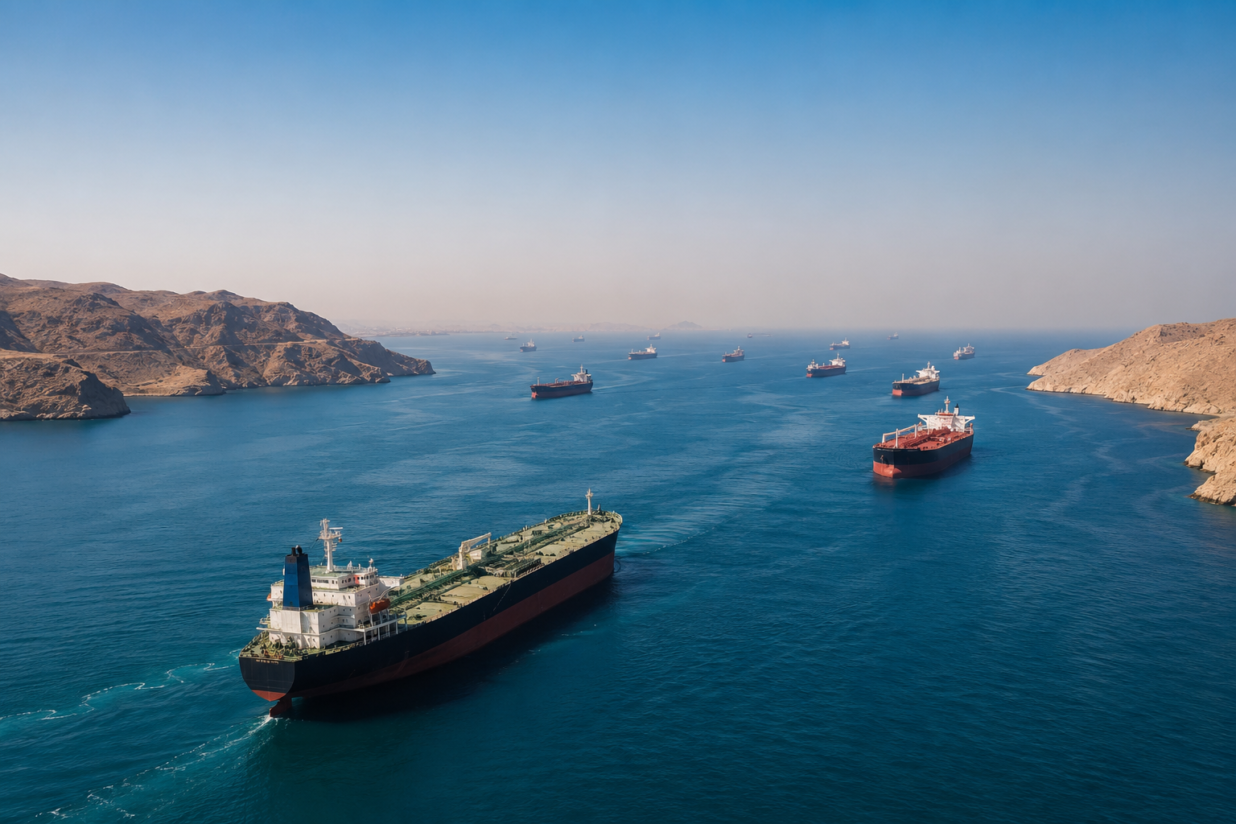
Hormuz Shipping : The number of commercial vessels transiting through the Strait of Hormuz has decreased dramatically as military tensions between the United States and Iran increase. The drop in maritime traffic coincides with increasing military actions in the region, prompting new concerns about global energy supply, shipping security, and international trade.
According to recent shipping data, fewer vessels passed the key waterway during the most recent trading period than at regular traffic levels. Many shipping companies are postponing departures, reevaluating schedules, or taking extra precautions due to rising security dangers along one of the world’s most critical oil transit routes.
The Strait of Hormuz connects the Persian Gulf and the Gulf of Oman, transporting a large portion of the world’s crude oil and liquefied natural gas exports. Any disturbance in this tiny route has the potential to quickly impact gasoline prices, shipping costs, and global supply chains.
US-Iran Conflict Puts Hormuz Shipping Under Fresh Pressure
The latest slowdown follows intensified US military operations against Iranian targets, which exacerbated already high regional tensions. Iran has continued to warn against foreign military operations while maintaining a stance on action along its shore.
Shipping specialists report that vessel operators are constantly monitoring security developments before transporting tankers across the Strait of Hormuz. Marine insurance prices have also risen as insurers recognize the increasing dangers involved with operating in the region.
According to industry insiders, numerous shipping companies are waiting for more information before returning to usual schedules. Some vessels have remained outside the Gulf, while others have changed their courses or delayed transit to lessen their vulnerability to potential threats.
According to energy industry specialists, any lengthy disruption might reduce global oil supply if vessel traffic continues below normal levels. Although shipments continue, sluggish ship movements have raised concern among oil dealers and energy markets.
Global Oil Market Closely Monitors Strait of Hormuz Traffic
Governments and international marine groups continue to monitor the situation, with concerns growing that any escalation might have far-reaching economic ramifications.
According to market analysts, the Strait of Hormuz is one of the world’s most important energy corridors, with millions of barrels of crude oil traveling through it daily. Any protracted disruption could have an impact on fuel prices, transportation costs, and supply chains in Asia, Europe, and other key regions.
Officials have asked commercial shipping operators to be careful and follow the most recent security guidelines when operating in neighboring seas. Maritime security authorities monitor vessel movements throughout the clock to detect potential dangers.
Despite growing tensions, analysts predict most maritime companies will continue to operate cautiously rather than canceling services totally, unless the regional security situation deteriorates more.
Investors are also closely tracking diplomatic events. Any signals of resumed talks between Washington and Tehran could assist to restore confidence in regional shipping and stabilize global oil markets. However, ongoing military exchanges are expected to keep uncertainty high in the foreseeable future.
The new events underline the Strait of Hormuz’s crucial importance in global trade and energy transit. As tensions between the United States and Iran remain high, shipping companies, oil markets, and governments are likely to closely follow any new developments that may threaten one of the world’s busiest and most strategically significant maritime routes.
- Join our whatsapp channel for daily updates.
- Follow tazatimesnews Telegram Channel for latest news alerts.
- Follow TazaTimesNews on TruthSocial for exclusive updates
- Also reads : Goldman Sachs Says Japan Leads Asia’s Buyout Opportunities as Private Equity Activity Grows