
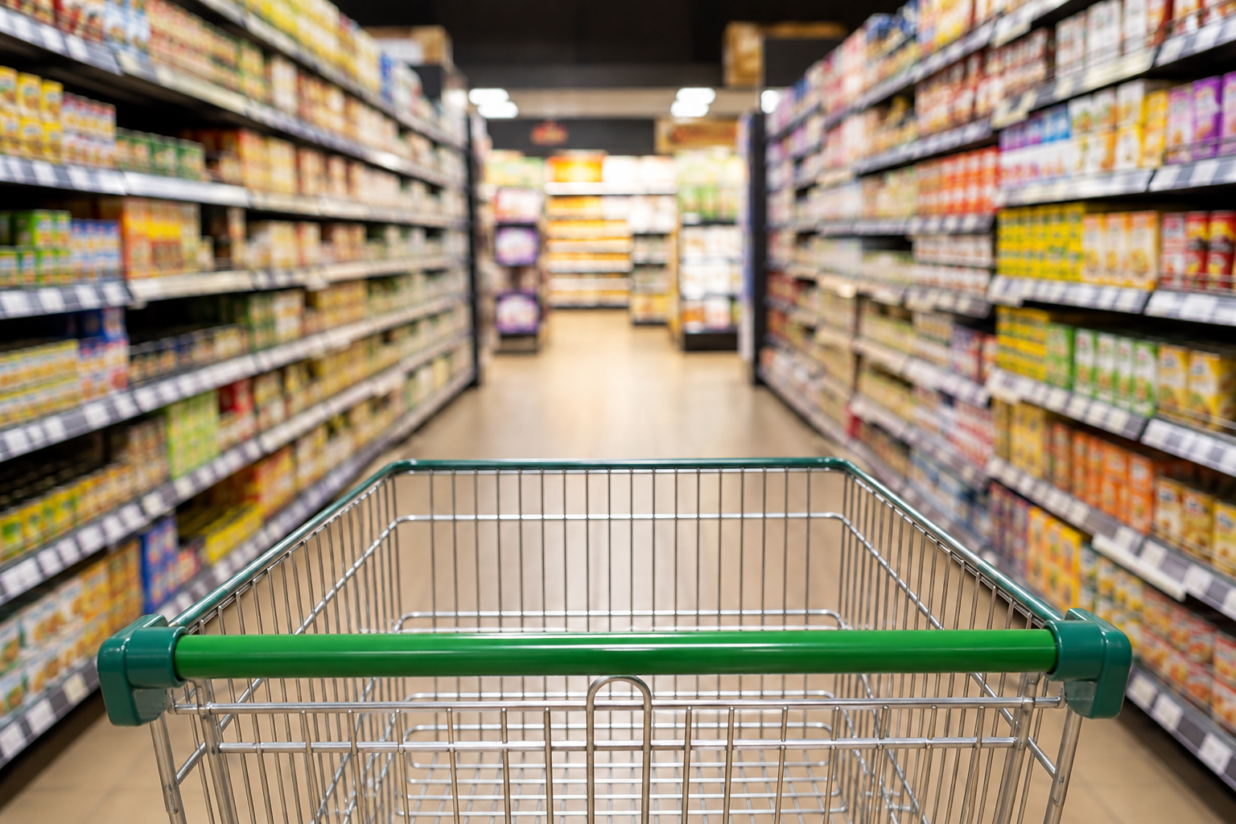
UK Grocery Inflation : British shoppers are relieved that grocery inflation in the UK has decreased to its lowest level since October 2024. Grocery prices, however, continue to rise, putting pressure on many people’ finances.
On August 18, market researcher Worldpanel by Numerator reported that like-for-like grocery inflation stood at 2.1% in the four weeks ending August 9, 2026. This was down from 2.6% in the previous month and 3.0% in the prior report.
According to the most recent data, supermarket price rise is still slowing. However, this does not imply a decrease in food prices. Prices are rising at a slower rate than before.
UK Grocery Inflation Gives Shoppers Some Relief
Worldpanel statistics also showed that overall grocery sales increased 2.5% year on year during the four-week period.
Promotional offers continued to have a significant impact on shopping patterns. Around 31.3% of grocery purchases included some type of promotion, indicating that shoppers continue to seek for better deals.
Many people are still seeking for methods to cut their weekly grocery spend. The competition among Britain’s major supermarkets has also helped to minimize price hikes.
The current hot weather has altered some buying trends. As temperatures rose, people bought more sunscreen and ice cream.
The latest results come after a gradual reduction in grocery inflation in previous months. According to Worldpanel, the rate fell to 2.6% in July from 3.0% the previous month.
UK Grocery Inflation Slows as Supermarket Sales Vary
Sales performance varied throughout Britain’s major grocery chains.
Tesco, the UK’s largest grocery chain, had a 1.8% increase in sales, while losing some market share.
Sainsbury’s did better, with sales up 3.5% during the period.
Marks & Spencer outperformed the other big stores in terms of sales growth, increasing by 15.9%. Ocado, an online supermarket, grew by 13.1%, while bargain store Lidl had an 8.5% increase.
Asda’s sales decreased by 0.2%. Despite the decline, Worldpanel reported that the retailer’s performance was the best since March 2024.
Grocery Prices Remain a Concern for UK Households
Food prices have been a big contributor to the UK’s cost-of-living concerns, so the slowing in grocery inflation is significant.
If grocery inflation continues to fall, people may find relief from rising supermarket bills. However, buyers are still paying more than before because general costs have not begun to fall.
Several things may impact food costs in the next months. Energy costs, global commodity prices, climatic conditions, and geopolitical tensions might all place a strain on food supply systems.
According to Reuters, greater competition among supermarkets and stronger supplier hedging methods have helped to keep UK food costs from rising further this year.
For the time being, the most recent Worldpanel numbers indicate that British consumers are doing well. However, with grocery prices continuing to rise, many households are expected to seek out discounts, promotions, and cheaper options when shopping.
- Join our whatsapp channel for daily updates.
- Follow tazatimesnews Telegram Channel for latest news alerts.
- Follow TazaTimesNews on TruthSocial for exclusive updates
- Also reads : Hero Xtreme 160R 4V Combat Edition Uncovers What’s Inside