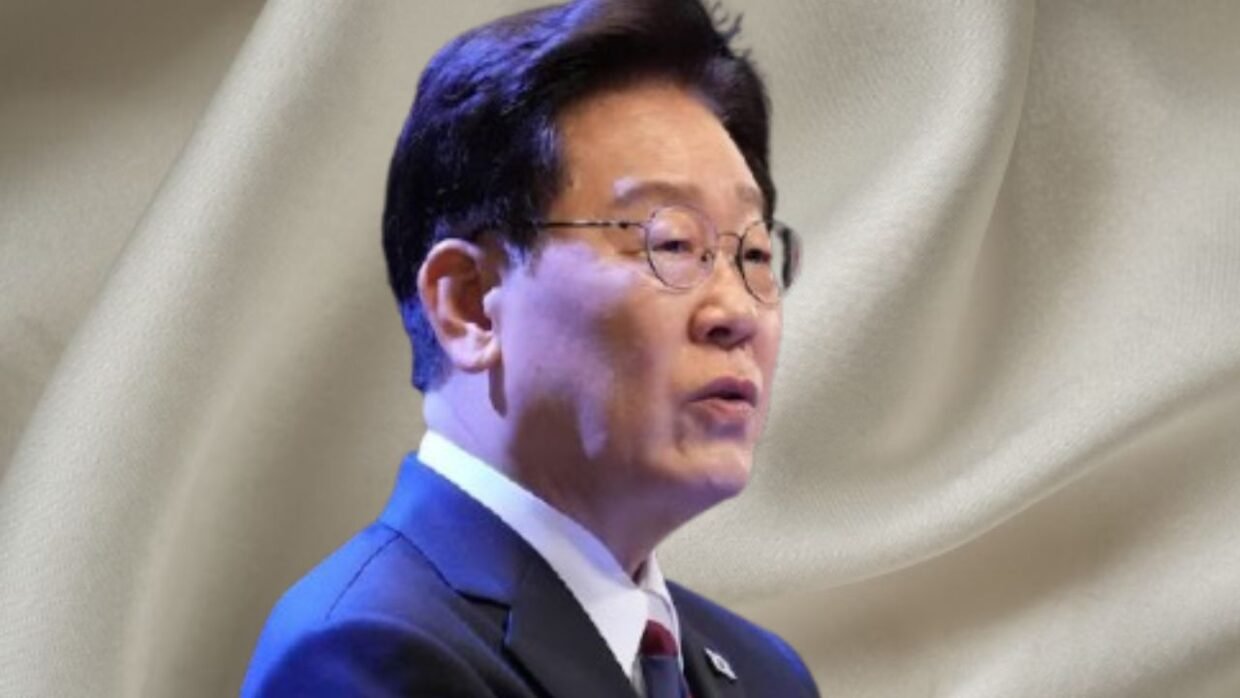
South Korea Defence : South Korean President Lee Jae Myung has advocated for enhanced national defense capabilities while claiming that continuing military drills with the US are defensive in character. He clarified that the drills are not intended to antagonize North Korea.
Lee made the remarks on August 18, 2026, as speculation about the future extent of annual US-South Korean military drills persisted.
The South Korean president stated that his country should strengthen its independent defense capability while keeping a close alliance with Washington. He regarded the two objectives as complementing rather than competing.
The statements come after US President Donald Trump directed the Pentagon to dramatically cut joint military drills with South Korea. Trump has repeatedly attacked the drills for their expense and questioned the necessity of large-scale exercises.
The latest Ulchi Freedom Shield exercise began on August 17 and is slated to last until August 27. Approximately 18,000 South Korean troops are taking part.
The exercise aims to boost the allies’ ability to respond to modern security challenges. These include missile strikes, cyber operations, drone attacks, and GPS disturbances.
South Korea Defence Plans Focus on Greater Self-Reliance
Lee’s security policy has shifted to prioritize stronger independent defense capability.
Lee believes South Korea should play a larger role in securing the Korean Peninsula. He wants the country to rely less on the United States for defense while strengthening its alliance with Washington.
A key component of this strategy is the eventual transfer of wartime operational control from US forces to South Korea.
Lee has stated that he wants the process to proceed further under his administration, which extends through 2030. However, he has also stated that the transfer should take place only if the required military circumstances are met.
The president has also advocated for faster progress in South Korea’s nuclear-powered submarine program. His government wants the military to be better prepared to deal with increasingly complex security threats.
South Korea is still formally at war with North Korea because the 1950-53 Korean War concluded in an armistice rather than a peace treaty.
As a result, the government continues to maintain a substantial military force as well as a security partnership with Washington. Lee’s strategy tries to strike a compromise between the two agendas by expanding South Korea’s military capabilities while retaining strong collaboration with the United States.
South Korea Defence Drills Not Intended to Provoke North Korea
Lee also attempted to allay concerns that the present military exercises will heighten tensions with Pyongyang.
He explained that the drills are aimed to protect South Korean residents and increase defensive readiness. According to Lee, these are not plans for an attack on North Korea.
The matter is still contentious since Pyongyang has regularly opposed US-South Korean military exercises. North Korea has denounced the drills as rehearsals for an invasion.
North Korea has also continued its military actions, including missile launches, raising security worries on the Korean Peninsula.
Tensions rose recently when South Korea said it fired warning shots after North Korean forces breached the military demarcation line. The soldiers eventually returned to North Korean territory.
U.S.-South Korea Military Alliance Faces New Questions
Trump’s call for fewer joint drills has created uncertainty to the US-South Korean partnership.
Washington is evaluating the magnitude of some military operations, while Seoul emphasizes the significance of maintaining military readiness.
Lee’s challenge is to develop South Korea’s own military force without jeopardizing collaboration with the US.
At the same time, his government must avoid acts that could exacerbate tensions with North Korea.
The dispute over military drills is likely to continue to have an impact on regional security. South Korea seeks increased self-defense, Washington is reconsidering the scope of cooperative training, and Pyongyang remains skeptical of ally military cooperation.
The balance of deterrence, military readiness, and dialog may play a crucial role in determining Korean Peninsula security in the coming months.
- Join our whatsapp channel for daily updates.
- Follow tazatimesnews Telegram Channel for latest news alerts.
- Follow TazaTimesNews on TruthSocial for exclusive updates
- Also reads : South Korea landslide Kills One Amid Torrential Rain in Southern Region