UAE Oil Trade Strategy : The United Arab Emirates is developing as a vital pillar of regional energy security, as Gulf nations work to lessen reliance on the Strait of Hormuz, one of the world’s most important oil transportation routes. While billions of dollars being spent in alternative infrastructure, ongoing geopolitical conflicts highlight the threats to global energy markets.
The Strait of Hormuz continues to be an important gateway for crude oil and natural gas exports from the Gulf. Any disruption in the small canal has the potential to significantly impact global energy supplies and pricing. Recent concerns about regional security have prompted Gulf Cooperation Council (GCC) countries to fortify backup export routes and build key infrastructure.
UAE Oil Trade Strategy Strengthens Regional Energy Security
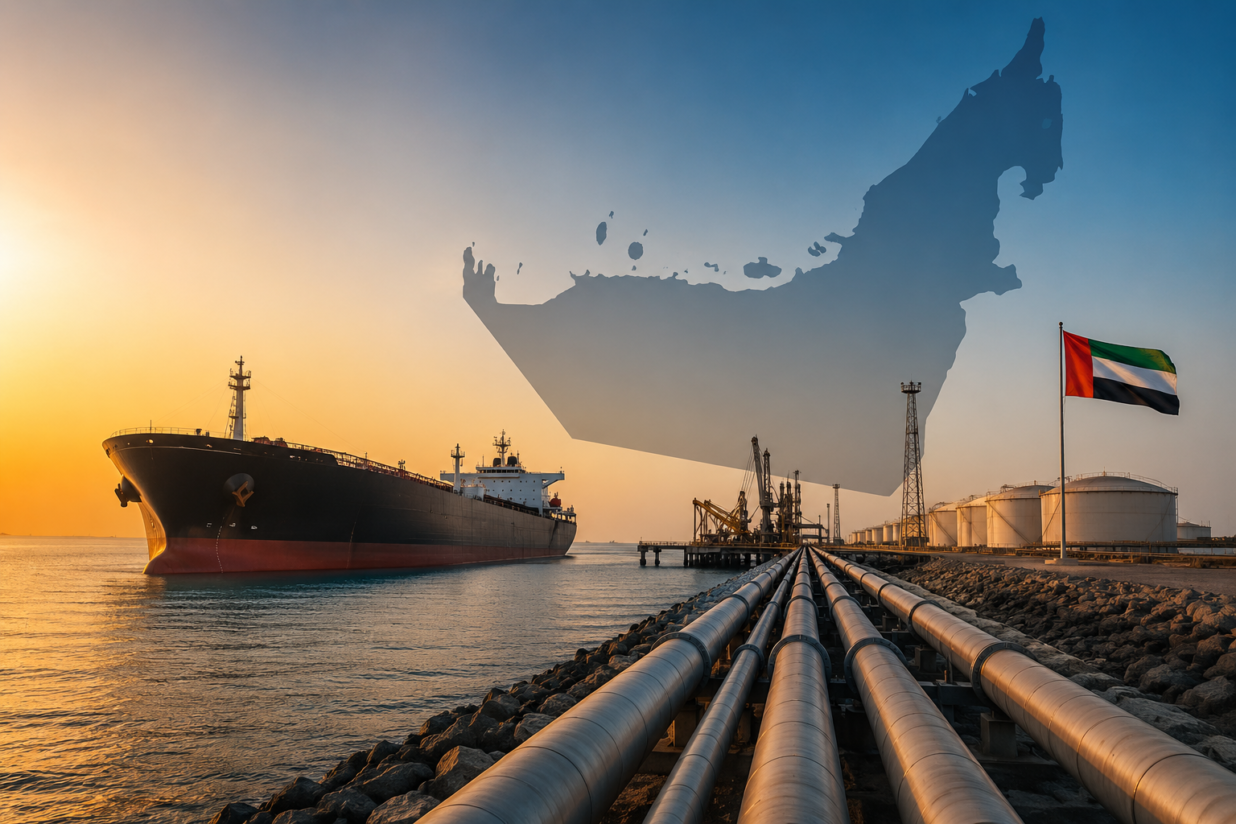
Among Gulf states, the UAE has placed itself at the center of these contingency plans. The country already has a significant crude oil pipeline that connects Abu Dhabi’s oil reserves to the eastern emirate of Fujairah, allowing exports to reach international markets without crossing the Strait of Hormuz. As fears about shipping interruptions mount, so has the value of this infrastructure.
Fujairah has become one of the region’s most important energy hubs. The port, located on the Gulf of Oman, has direct access to international waterways and is a major hub for oil storage, bunkering, and exports. According to energy experts, the UAE benefits significantly from its strategic location during times of regional volatility.
Governments across the Gulf are now looking into further projects that could reduce reliance on Hormuz. New pipelines, bigger storage facilities, and improved logistical networks are all being discussed as ways to assure continuous exports during emergencies. The goal is to develop a more resilient energy system capable of withstanding geopolitical shocks.
UAE Oil Trade Strategy Drives Gulf’s Long-Term Plan B
According to industry analysts, Gulf producers have made energy security a major focus. According to reports, the UAE is looking into new infrastructure to transport refined products including diesel, gasoline, and jet fuel directly to export terminals outside the Strait of Hormuz. These initiatives would increase flexibility and lessen vulnerability to maritime interruptions.
These actions have far-reaching implications beyond the Middle East. A large portion of the world’s oil exports pass through Gulf maritime lanes, supplying major economies in Asia, Europe, and other countries. Any delay might cause anxiety in global markets and price volatility.
Despite continued issues, the UAE’s expenditures in pipelines, storage facilities, and export infrastructure have boosted the trust of energy dealers and foreign purchasers. Fujairah’s expanding importance exemplifies how smart planning can help keep electricity flowing even during times of regional turmoil.
As Gulf countries continue to explore alternative export routes, the UAE is expected to play an important role in establishing the region’s long-term energy security strategy. While the hazards around Hormuz exist, expanding infrastructure and regional collaboration may give better stability to global oil markets in the coming years.
- Join our whatsapp channel for daily updates.
- Follow tazatimesnews Telegram Channel for latest news alerts.
- Follow TazaTimesNews on TruthSocial for exclusive updates
- Also reads : Sadhvi Sail Praises Strength of Goan People After Grand Homecoming