
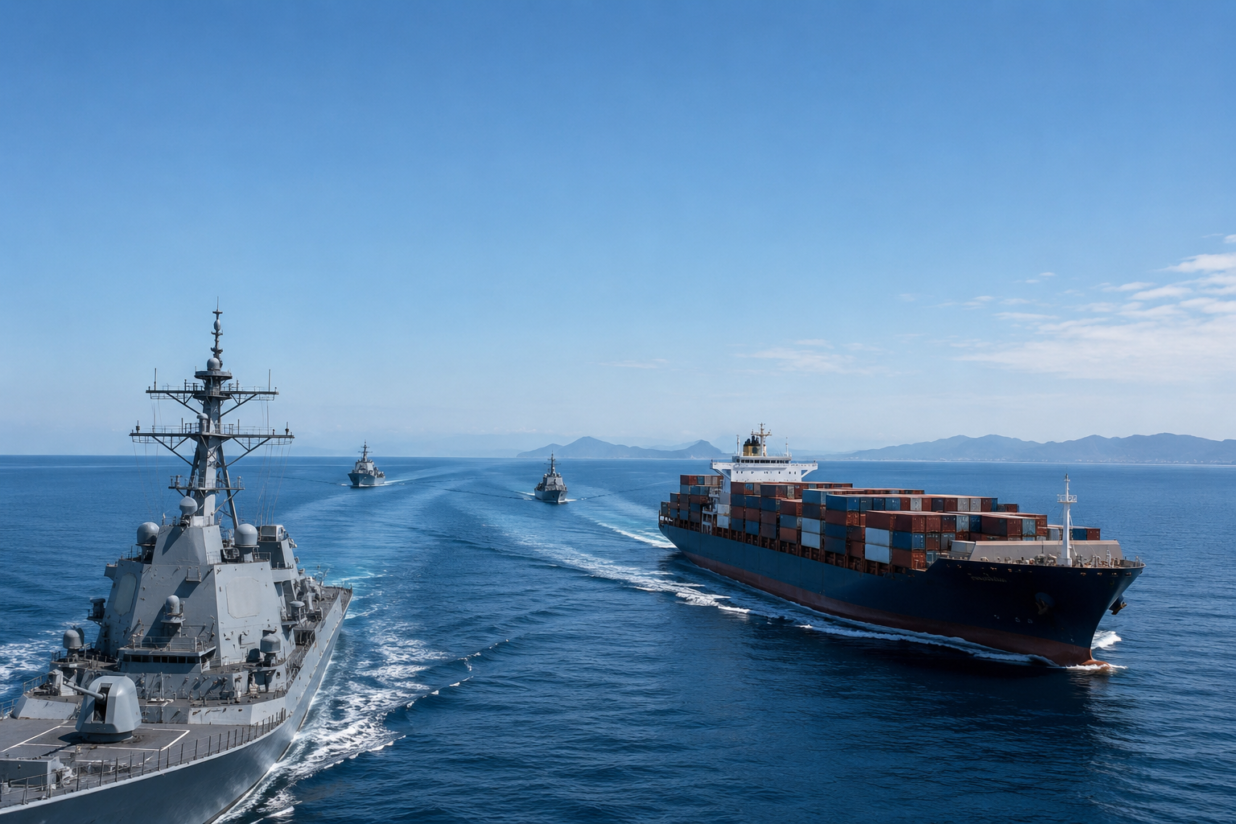
Saudi Arabia Maritime Defence Alliance : Saudi Arabia has formed a new global maritime defence coalition to secure major international commercial corridors in the Red Sea region. As regional threats become more prevalent, the program is designed to bolster maritime security and increase coordination among member countries.
The statement was made on July 30, 2026, at an international security gathering in Riyadh that included representatives from 43 countries including the European Union. According to Saudi Arabia’s Defence Ministry, the proposed alliance will secure commercial ships, energy supply routes, and freedom of navigation on some of the world’s busiest waterways.
Saudi Arabia will be the coalition’s founding and major member, with headquarters in the kingdom. Officials described the alliance as a defensive relationship aimed at strengthening cooperation in the face of threats to international maritime trade.
Saudi Arabia Maritime Defence Alliance Aims to Secure Vital Sea Routes
According to Saudi Arabia’s Defence Ministry, the coalition will improve maritime security in the Bab el-Mandeb Strait, the Red Sea, and the Gulf of Aden. These rivers are among the world’s most vital shipping routes, transporting a large portion of global trade and energy supplies.
According to the government, the alliance will assist ensure safe navigation, preserve international commerce routes, and secure shared maritime interests through increased cooperation among member countries.
Fourteen countries have already voiced their formal support for the idea. Turkey, Pakistan, Egypt, Sudan, and Djibouti are among those who took part in the Riyadh meeting. Saudi Arabia stated that the alliance is still seeking new members that want to contribute to regional marine security.
Officials also stated that the collaboration will promote intelligence sharing, collaborative maritime exercises, and coordinated naval actions to increase the safety of commercial vessels traveling through the region.
Saudi Arabia Maritime Defence Alliance Responds to Growing Regional Threats
The statement comes as attacks on vessels by Yemen’s Iran-aligned Houthi militia intensify. The Houthis have announced a naval blockade against Saudi Arabia and targeted Saudi-linked vessels operating in the Red Sea, increasing fears about the security of one of the world’s most important maritime lanes.
Saudi Arabia has retaliated with airstrikes on Houthi military locations in Yemen, claiming the operations are required to safeguard international navigation and national security. Analysts believe the new marine alliance is part of a larger strategy to avert further disruptions in global trade and energy exports.
The Bab el-Mandeb Strait connects the Red Sea and the Gulf of Aden, acting as a vital link between Europe, Asia, and Africa. Any disturbance in this area has the potential to delay cargo shipments, raise transportation costs, and impact global oil prices.
According to security experts, the coalition has the ability to improve regional coordination and raise international shipping companies’ confidence. They do, however, agree that the present Yemen crisis, as well as greater tensions with Iran, offer significant security challenges.
The European Union has already maintained naval operations in the region to protect commerce vessels, and other international partners have expanded their maritime presence in recent years. Saudi Arabia’s new coalition is intended to bolster these efforts by establishing a specific regional framework for long-term maritime stability.
If the proposed coalition is successful in strengthening collaboration and defending shipping routes, it may boost confidence in one of the world’s most critical commerce corridors. At the same time, experts warn that long-term maritime security would require continuous diplomatic engagement and measures to prevent regional instability.
- Join our whatsapp channel for daily updates.
- Follow tazatimesnews Telegram Channel for latest news alerts.
- Follow TazaTimesNews on TruthSocial for exclusive updates