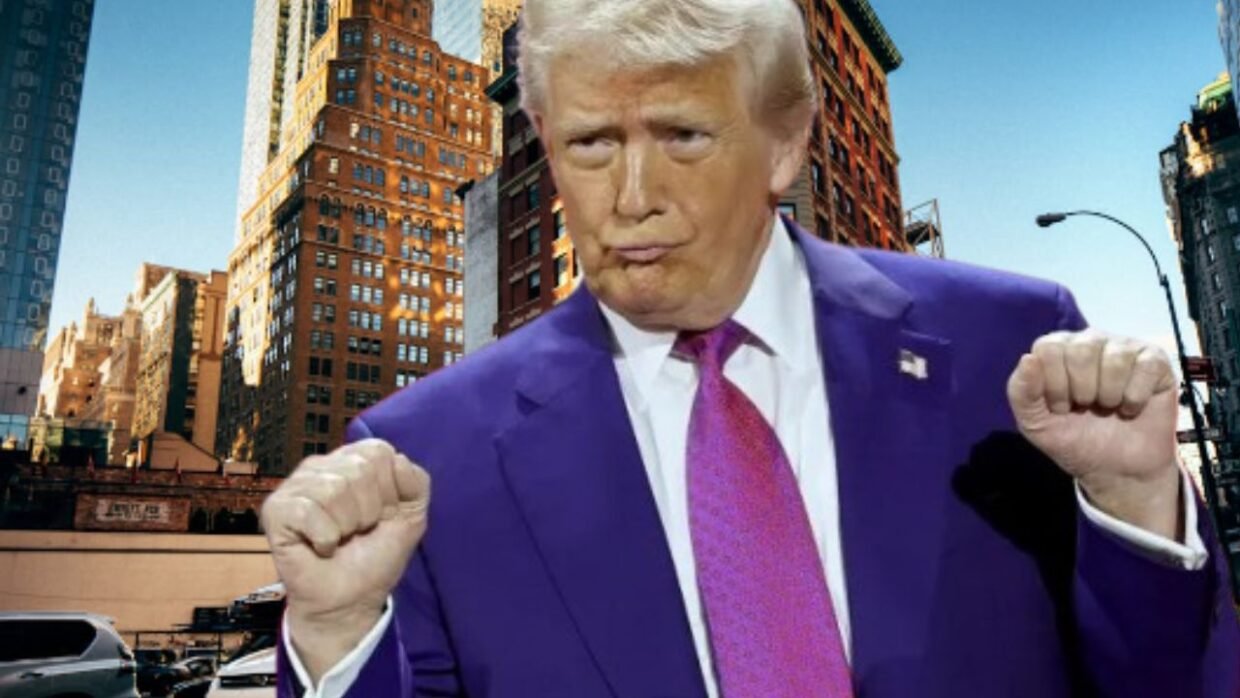
Trump Iran Talks Called Off : On Saturday, US President Donald Trump announced that Special Envoy Steve Witkoff and Senior Adviser Jared Kushner’s travel to Islamabad had been cancelled owing to “tremendous infighting and confusion” within Iran’s leadership.
In a tweet on Truth Social, Trump announced that he had cancelled his representatives’ trip to Islamabad for the second round of peace talks with Iran aimed at establishing a comprehensive resolution to hostilities in West Asia.
Sudden Move Shocks Diplomacy Efforts
In a stunning diplomatic shift, Donald Trump cancelled a scheduled visit by his representatives to Islamabad, where negotiations with Iran were due. The decision occurred at a time when the world was focused on potential peace talks between the United States and Iran.
Officials said the US delegation, which included important envoys, was prepared to travel to Pakistan for indirect discussions. However, the visit was called off at the last minute. According to reports, the cancellation was due to displeasure with slow development and confusing signals from Iran.
The action has sparked concerns about the viability of existing diplomatic efforts and whether both parties are prepared for genuine negotiations.
Trump Iran Talks Cancelled Over Leadership Confusion
According to remarks, Trump cited “confusion and infighting” among Iran’s officials as a primary factor for postponing the trip. He mentioned that it was difficult to determine who was genuinely in command, making discussions less productive.
The scheduled discussions were part of a larger effort to defuse tensions following recent conflicts and cease-fire attempts. Pakistan served as a go-between, facilitating backchannel conversations between the two sides.
However, Iran had already indicated that no direct contact with US officials was scheduled in Islamabad. This caused additional uncertainty, ultimately leading to the cancellation.
Experts feel this demonstrates profound trust issues and a lack of cooperation among the negotiating parties.
Positive Angle: Talks Still Possible Anytime
Despite the cancellation, Trump has made it plain that diplomacy is not completely closed. He emphasized that if Iran is sincere about negotiating, it can reach out at any time.
Interestingly, reports indicate that Iran sent a somewhat better proposal shortly after the cancellation, demonstrating that communication channels are still functioning.
This shows that, while formal discussions were unsuccessful, informal diplomacy may continue in the background.
Negative Impact: Peace Process Faces Major Setback
The decision is considered as a setback to regional peace efforts. The Islamabad meetings were meant to build on previous negotiations, but they ended without a result.
Tensions between the United States and Iran remain high, particularly on nuclear policy and control of major trade routes. Failure to hold negotiations could delay any long-term settlement and exacerbate Middle Eastern unrest.
Pakistan’s role as a mediator has also suffered, as prospects for a diplomatic breakthrough have faded.
Final Insight
The cancellation of the Islamabad visit demonstrates how precarious international diplomacy can be. While misunderstanding within Iran has hampered development, the willingness to maintain open contact is a minor good indication.
For the time being, the world is watching attentively as uncertainty persists—but the prospect of future discussions remains alive.
- Join our whatsapp channel for daily updates.
- Follow tazatimesnews Telegram Channel for latest news alerts.
- Follow TazaTimesNews on TruthSocial for exclusive updates
- Also reads : Netanyahu Confirms Steps Taken Toward Israel-Lebanon Peace Talks