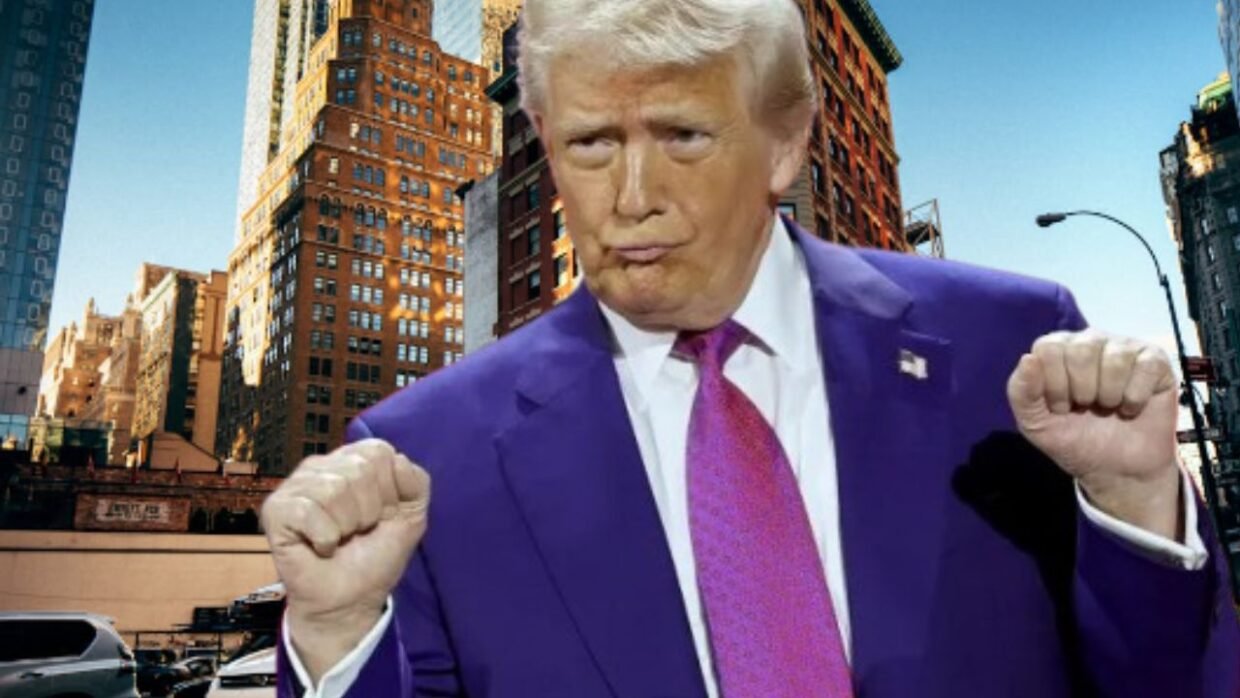

Trump Iran Conflict: On Friday, US President Donald Trump announced that he has no intention of deploying nuclear weapons in the current battle with Iran, arguing that such weapons should not be utilized by any nation.
Addressing the media at the White House, Trump dismissed a question about using the nuclear arsenal against Tehran. “Why would such a foolish question be asked?… I would not utilize it. “No one should ever be allowed to use a nuclear weapon,” he said.
A major advance in the ongoing Iran conflict has sparked global interest. US President Donald Trump has issued two powerful statements: he has ruled out nuclear action while also asserting complete sovereignty over the key Strait of Hormuz.
Trump Iran Conflict: Nuclear Strike Decision — Restraint or Strategic Pressure?
Trump has stated unequivocally that the United States will not use nuclear weapons in the conflict against Iran. He claimed that conventional military might had already caused significant damage, rendering nuclear weapons unnecessary.
He also underscored that nuclear weapons should never be utilized, adopting a milder tone than previous strong warnings. This speech is being interpreted as an attempt to avert global escalation while maintaining pressure on Iran.
At the same time, Trump indicated that military operations remain strong and capable of responding rapidly if Iran’s actions escalate. This balanced approach demonstrates both prudence and control in the conflict.
Strait of Hormuz control claim: real dominance or contested ground?
Trump asserted that the United States had “total control” of the Strait of Hormuz, one of the world’s most critical oil lines.
However, ground reports indicate that the situation is significantly more complex. Iran has continued to threaten US forces by seizing ships and utilizing fast assault boats, causing continuous regional tensions.
The Strait of Hormuz is critical because it transports roughly 20% of world oil, therefore any disruption poses a global economic danger.
Despite US naval operations and blockades, experts continue to debate absolute control, with both sides maintaining military presence.
Rising tension and military actions in the Gulf
Both sides have made significant military moves during the battle. Trump even directed US Marines to engage aggressively against Iranian ships laying mines in the region.
The United States has also conducted airstrikes and established a naval blockade to degrade Iran’s military and economic strength.
Meanwhile, Iran has responded with ship seizures and naval maneuvers, keeping the confrontation going despite cease-fire talks.
Positive and negative impact of Trump’s strategy
Positive side:
- Avoids nuclear war escalation
- Maintains strong military pressure
- Protects global oil supply routes
Negative side:
- Risk of ongoing conflict remains high
- Control claims are being questioned
- Global markets face uncertainty
Final outlook
Trump’s decision to renounce nuclear weapons sends a powerful message of restraint. But his claim to complete sovereignty over the Strait of Hormuz is still being debated.
The situation remains tense, with military strength and diplomacy determining the next step. The coming days will determine whether this situation progresses toward peace or deeper crisis.
- Join our whatsapp channel for daily updates.
- Follow tazatimesnews Telegram Channel for latest news alerts.
- Follow TazaTimesNews on TruthSocial for exclusive updates
- Also reads : Oil Price Surge as US-Iran Tensions Disrupt Strait of Hormuz