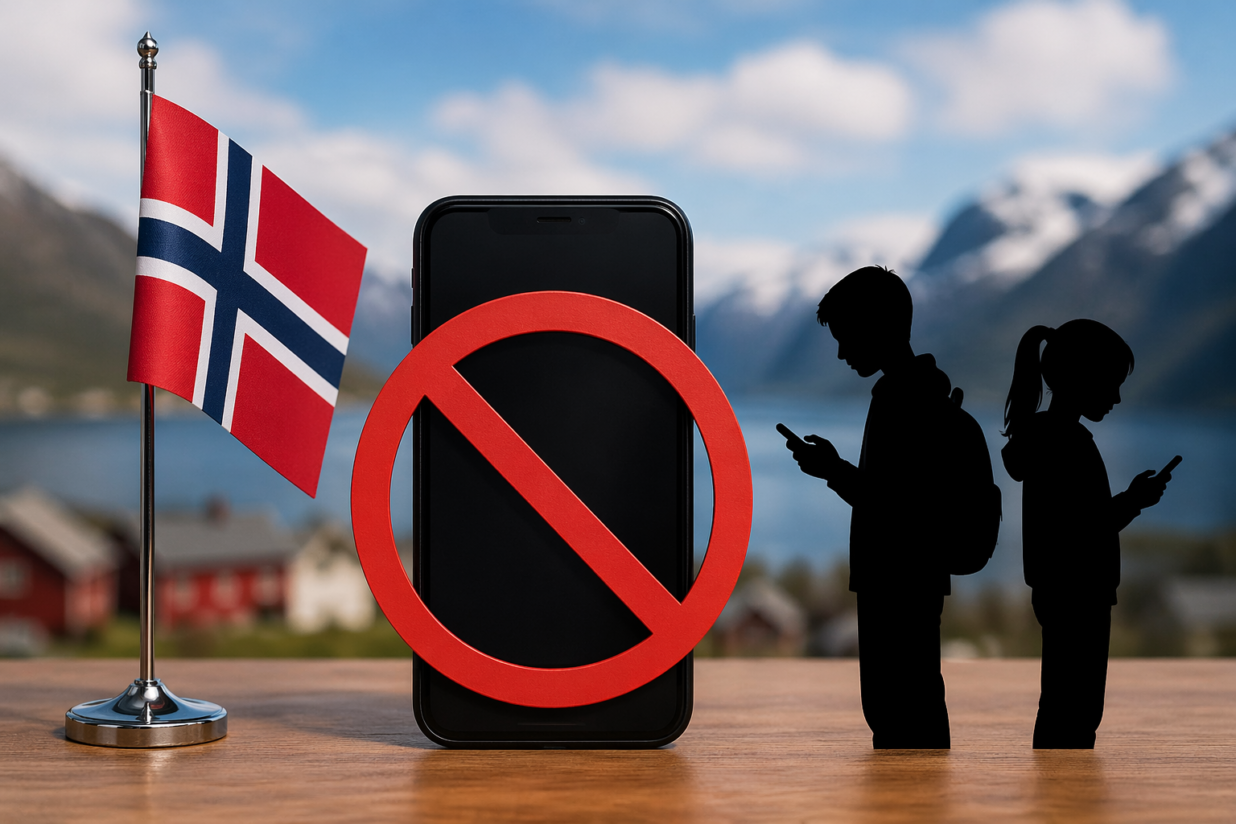
Norway Social Media Ban : Norway announced on Friday that it would introduce a measure in parliament before the end of the year to prohibit children from using social media until they reach the age of 16, and that technology companies would be responsible for age verification.
Several European countries are attempting to limit children’s usage of social media after Australia set the standard with a world-first ban on under-16s in December.
“We are introducing this legislation because we want a childhood in which children can be themselves,” Prime Minister Jonas Gahr Stoere said in a statement.
“Play, friendships, and ordinary life must not be dominated by algorithms and screens. This is a major step towards protecting children’s digital lives.”
The administration did not specify what applications will be targeted.
Norway is preparing a tight policy that could affect how children use the internet. The government intends to prohibit users under the age of 16 from using social media, in order to protect young brains. While the decision appears to prioritize safety, it has also sparked a debate about freedom and control.
Norway Social Media Ban for Children Under 16 Explained
The Norwegian government has revealed plans to enact legislation prohibiting children under the age of 16 from using social media platforms. The law is likely to reach Parliament by the end of 2026.
According to the plan, technology companies will be responsible for validating users’ ages. This means that platforms must prevent minors from creating accounts.
According to Prime Minister Jonas Gahr Støre, the purpose is to provide children with a safe and digitally-free environment. He emphasized that children should be about real-life experiences rather than screens and algorithms.
Strong Protection or Over-Control?
Supporters of the move believe it is an essential step. According to studies and assessments, social media can have an impact on young people’s mental health, sleep, and behavior. Governments across Europe are taking similar steps to protect youngsters.
However, others say that a complete ban may not be the best option. They fear that minors will continue to find ways to access platforms discreetly, making the system more difficult to monitor.
There are also worries regarding digital rights and whether such stringent regulations hinder learning and communication opportunities.
Global Trend: Not Just Norway
Norway is not alone in its decision. Countries such as Australia have already banned social media for under-16 users, and numerous European countries are considering similar legislation.
The growing tendency reflects increased worry about online safety, addiction, and hazardous content. Governments are gradually delegating responsibility to technology firms rather than parents alone.
What Happens Next?
If passed, the bill might go into force in the next years, possibly in 2027. Strong age verification mechanisms will be required, as well as tight platform monitoring.
For the time being, the plan has sparked a broader discussion about how to strike a balance between safety and freedom in the digital era.
Norway’s move may protect children, but it also poses a critical question: where should the line be set between safety and digital independence?
- Join our whatsapp channel for daily updates.
- Follow tazatimesnews Telegram Channel for latest news alerts.
- Follow TazaTimesNews on TruthSocial for exclusive updates
- Also reads : Strait of Hormuz Closure Could Last Up to Six Months, Pentagon Warns as Oil Costs Surge