US Think Tank Report :According to a recent analysis by the Washington, DC-based think tank Institute for the Study of War (ISW), recent pronouncements from Iranian leadership seem to represent a concerted response influenced by both external pressure from the United States and internal regime dynamics.
The think tank claimed, “US President Donald Trump’s messages have appeared to elicit a choreographed response by the Iranian regime that is directed both to regime factions and to the United States.”
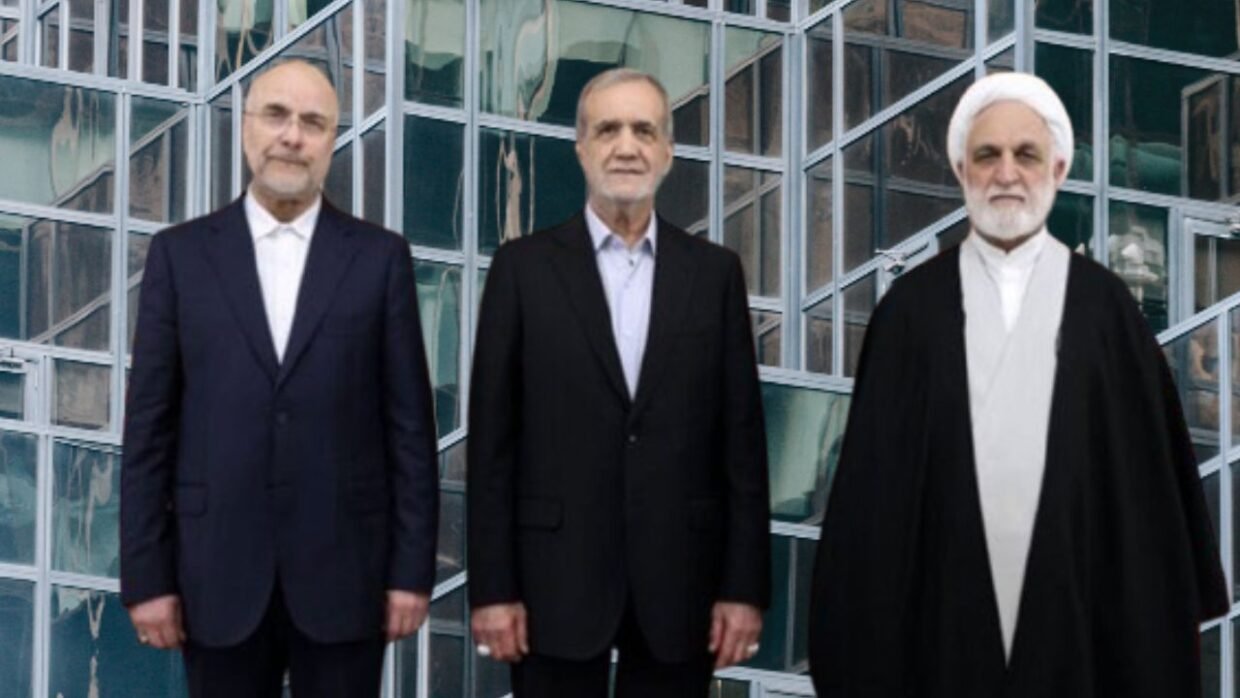
Furthermore, it said, “The heads of Iran’s three branches of government issued a series of statements likely aimed at defending themselves from accusations of ‘moderation’ in the Islamic Revolutionary context.”
Amid mounting global tensions, a new report by a US-based research tank reveals how Iran’s leadership is carefully displaying unity. While the message appears to be powerful and coordinated, analysts feel it may also be the result of outside pressure.
Iran Leadership Unity Strategy Under External Pressure
According to analysis, key Iranian authorities have issued similar statements to depict a cohesive front. This synchronized messaging is viewed as a purposeful attempt to refute accusations of internal conflict and disarray.
According to reports, prominent actors in Iran’s political system are synchronizing their language and actions to demonstrate power. The goal is clear: to send a signal to global powers that the country is stable and in control.
This comes at a time when tensions with the US and its allies are high, emphasizing the importance of strong internal messaging.
US Think Tank Report Flags Coordination, Not Just Confidence
According to the US-based think tank, such synchronous communication is not an accident. It demonstrates a systematic effort to manage perception during a vital moment.
According to experts, Iran’s leadership wants to avoid showing weakness. Even if internal conflicts exist, they are properly handled behind closed doors.
Public unity strengthens Iran’s position in talks and dispute resolution. It also reassures supporters in the nation.
Analysts point out that under pressure, political regimes frequently employ similar techniques to maintain control and trust.
Mixed Signals: Stability or Silent Struggle?
While official declarations emphasize unity, other sources suggest internal disputes. However, these distinctions are not apparent in public communication.
Iranian leaders have highlighted that all factions are working in the same direction. Statements that emphasize “one nation, one path” support this narrative.
At the same time, outsider voices, particularly US officials, continue to question the genuine level of cohesion among Iran’s elite.
Why This Matters Globally
This predicament is more than just internal politics. It has a larger worldwide impact. A united Iran can take stronger stances in regional conflicts and discussions.
However, if the unity is simply superficial, it may result in abrupt policy swings.
For now, the strategy appears to be working. Iran’s leadership is communicating a clear and consistent message of strength, unity, and resistance to pressure.
Whether this unity is lasting or transient remains a critical topic for global observers.
- Join our whatsapp channel for daily updates.
- Follow tazatimesnews Telegram Channel for latest news alerts.
- Follow TazaTimesNews on TruthSocial for exclusive updates
- Also reads : Hardik Pandya Sets Sights on Record-Breaking best 6th IPL Trophy with Mumbai Indians