
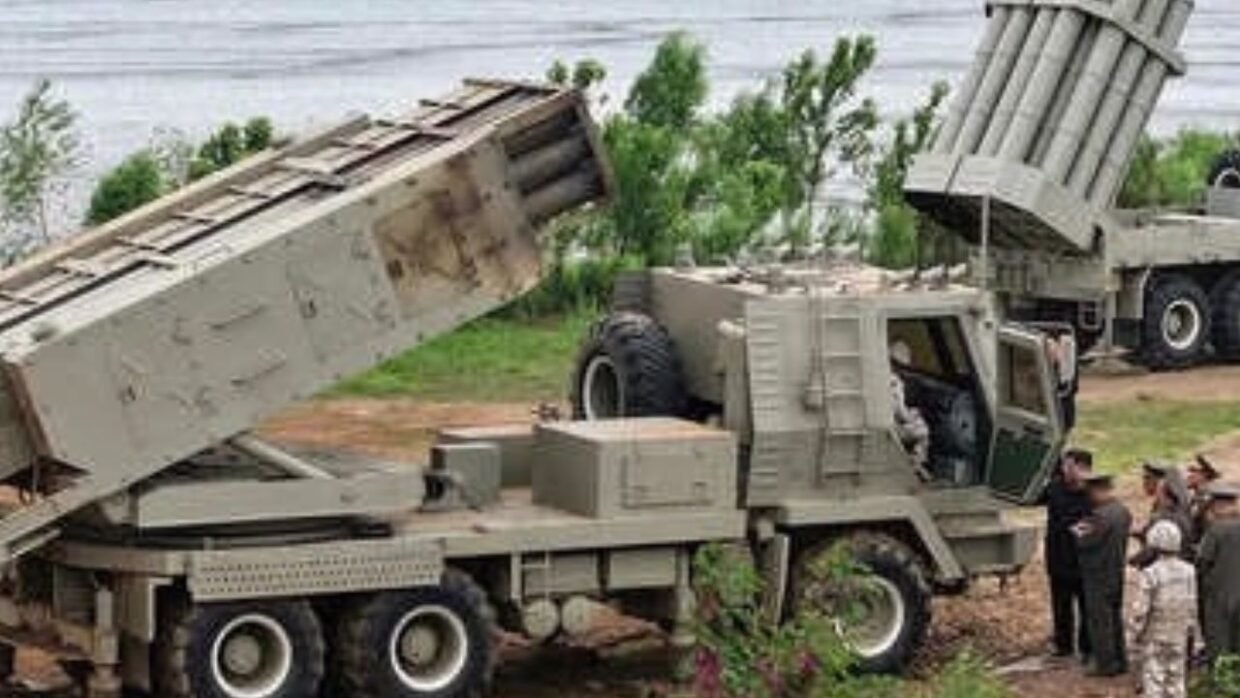
North Korea Missile Tests :North Korea has conducted another round of missile and weapons tests, demonstrating its expanding military capabilities and creating new concerns in Asia and beyond. The most recent launches featured upgraded missile systems, precision-guided missiles, and artificial intelligence-based targeting technologies, as the country modernizes its defense programs under leader Kim Jong Un.
According to North Korean state media and South Korean military officials, several rockets were fired toward waters off the Korean Peninsula. The tests were said to include tactical ballistic missiles, long-range artillery rockets, and precision-guided cruise missiles suitable for modern warfare.
According to military analysts, the most recent tests show North Korea’s persistent focus on improving short-range strike capabilities that may hit adjacent regions such as South Korea and parts of Japan. Experts say the government is attempting to improve the accuracy, mobility, and response time of its missile systems while also increasing deterrence against the United States and its allies.
Kim Jong Un reportedly oversaw the testing and hailed the advancement of new military technologies. According to North Korean media, the launches were effective in testing updated launch systems, navigation controls, and AI-supported guiding systems targeted at improving battlefield performance.
North Korea Missile Tests Increase Concerns Over Regional Security
The increased missile activity has heightened fears among neighboring countries already concerned about escalating military tensions in East Asia. The South Korean military verified the detection of many launches and said it will continue to closely watch North Korea’s weapons development.
Defense experts say North Korea has rapidly expanded its missile arsenal in recent years, creating weapons capable of transporting both conventional and nuclear warheads. Some of the newer weapons are thought to have advanced maneuvering capabilities that make them difficult to intercept with typical missile defense systems.
The deployment of AI-assisted targeting technology has sparked considerable interest among foreign observers. Analysts believe that artificial intelligence could increase missile accuracy by automatically recognizing targets and making real-time guidance adjustments during flight. While experts say it’s unknown how advanced the technology is, the tests demonstrate North Korea’s ambitions to incorporate contemporary warfare systems into its military strategy.
Several governments in the area, notably South Korea, Japan, and the United States, have condemned North Korea’s frequent weapons tests. International sanctions remain in place against Pyongyang for its nuclear and ballistic missile programs, but the regime has continued to conduct tests despite diplomatic pressure.
North Korea Missile Program Expands Amid Global Political Uncertainty
Political observers say North Korea is employing military demonstrations to bolster its bargaining position in the midst of global uncertainties and shifting geopolitical alignments. The government has recently boosted military cooperation with Russia and maintained stronger diplomatic ties with China, although relations with the West remain hostile.
Experts also cite lessons from recent battles around the world, where precision-guided weaponry, drones, and AI-powered systems are becoming increasingly crucial. North Korea appears to be motivated to modernize its military with similar technologies in order to maintain regional strategic dominance.
Despite international criticism, Kim Jong Un has frequently stressed the significance of improving national defense capabilities. Analysts fear that continued missile testing might lead to more military buildup in East Asia, putting additional strain on regional security partnerships in the coming years.
- Join our whatsapp channel for daily updates.
- Follow tazatimesnews Telegram Channel for latest news alerts.
- Follow TazaTimesNews on TruthSocial for exclusive updates
- Also reads : 10 methods to manage high blood pressure without medication.