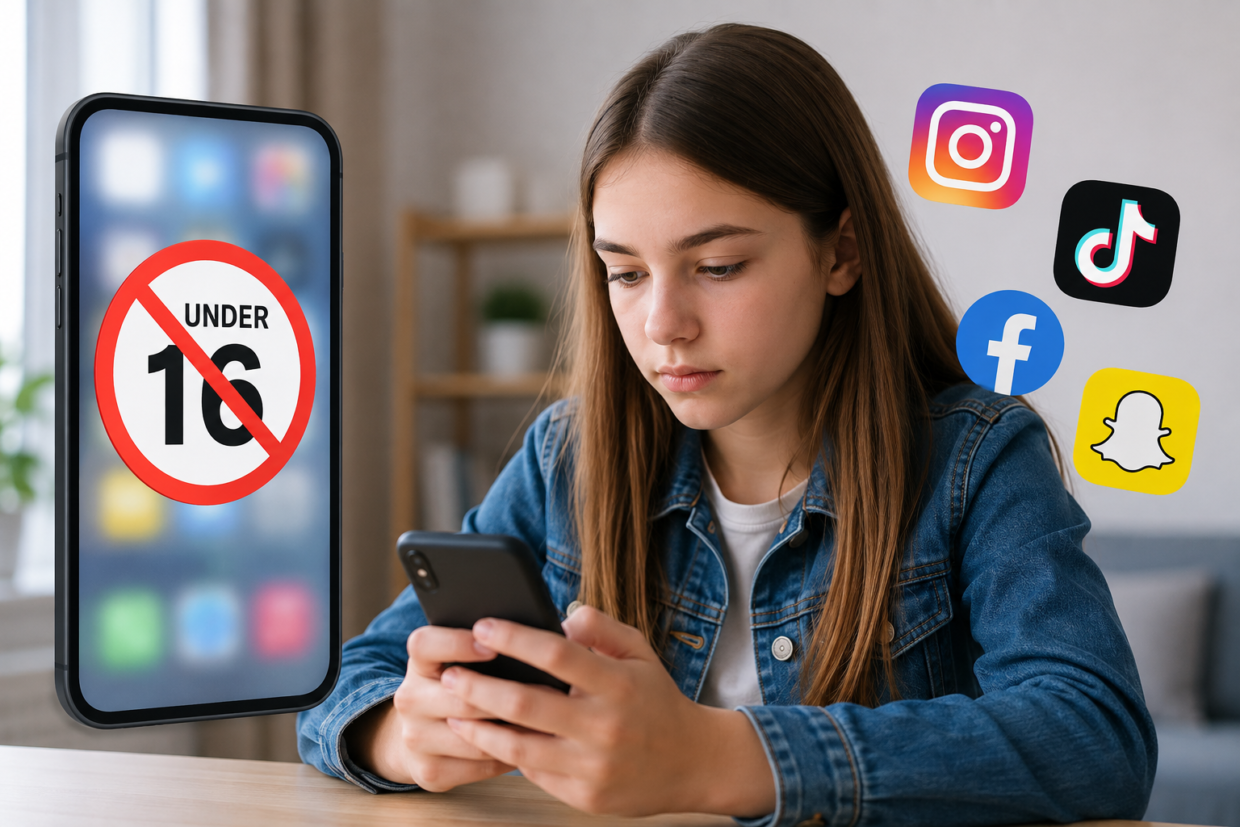
New Zealand is preparing to introduce a New Zealand social media ban for children under 16. Prime Minister Christopher Luxon said on Monday, August 24, that his party will put the proposed bill before Parliament. The plan would require social media companies to take steps to keep children below 16 off their platforms.
If corporations do to obey the regulations, they might face fines of up to 10% of their platform’s global revenue, according to the plan.
New Zealand Social Media Ban Would Require Age Checks
The proposed regulation would require social media businesses to take reasonable steps to validate the age of their users. The administration has proposed many solutions for this process.
Platforms could make advantage of existing user account information. They may also utilize face technology or digital identity documents to verify a person’s age.
As a result, the idea would shift a significant amount of accountability on social media businesses. Platforms would need to create methods to identify users under the proposed age limit.
However, the government does not expect the system to be faultless. Luxon admitted that some children could still get around the limits. Nonetheless, he stated that the government believes the matter is important enough to warrant an attempt.
Luxon Highlights Risks for Young People
Prime Minister Christopher Luxon has justified the proposed limitations, citing concerns about the effects of social media on minors.
According to Luxon, young people are exposed to hazardous content online. He also expressed concern about technology, which has the potential to encourage addictive social media use.
Furthermore, he stated that internet influences might have an impact on many aspects of a child’s life. These include family relationships, mental health, rest, and education.
The administration feels that the proposed age restriction will alleviate some of these worries. At the same time, the law would hold social media firms accountable for taking reasonable steps to enforce the limit.
Coalition Partner Opposes the Proposal
The bill could attract opposition in Parliament. New Zealand First, one of Luxon’s coalition partners, has stated that it will oppose the bill.
Winston Peters, the leader of New Zealand First and the country’s foreign minister, criticized the suggested course of action. He stated that his party is concerned about the legislation and where such restrictions may go.
Peters also referenced Australia’s experience with a similar strategy. In December, Australia became the first country to prohibit social media use among minors under the age of sixteen. The prohibitions in Australia apply to key platforms such as TikTok, YouTube, Instagram, and Facebook.
Peters referred to Australia’s legislation as a significant failure. He also claimed that parents should be responsible for keeping their children off social media.
Bill Faces Uncertain Future in Parliament
The objection from a coalition partner suggests that the proposed bill may not have enough support to pass. Its destiny will be determined by the parliamentary process and the level of support it can gather.
Luxon conceded that enforcing the proposed limits would be difficult. He speculated that some children may continue to discover methods around the rules. Nevertheless, the prime minister believes that the potential rewards justify the effort.
For the time being, the bill is only a proposal, not an operational nationwide ban. The next significant step will be its discussion in Parliament. The discussion will determine whether New Zealand goes closer to banning social media use for children under the age of 16.
- Join our whatsapp channel for daily updates.
- Follow tazatimesnews Telegram Channel for latest news alerts.
- Follow TazaTimesNews on TruthSocial for exclusive updates
- Also reads : Vivo S50 Pro Mini will come with an iPhone Air-like best style and cutting-edge functionality.