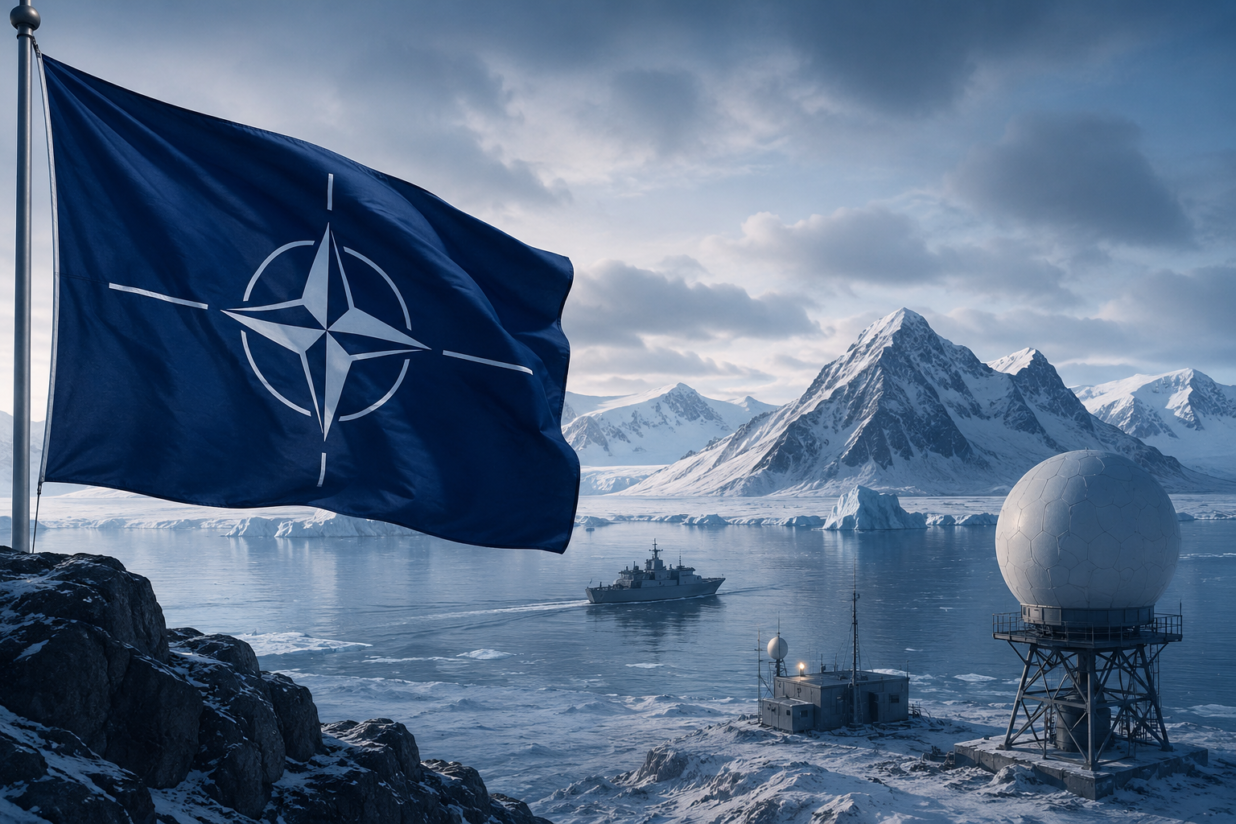
NATO Arctic Security : NATO partners have shifted their focus to securing the Arctic area after promising greater security measures, but significant hurdles remain as governments seek to translate commitments into real military capabilities. Because of rising competition among major powers, changing climate conditions, and increased military activity, the Arctic is emerging as a critical global security zone.
The conversation gathered traction after US President Donald Trump urged allies to take greater responsibility for Arctic security. NATO officials have stated that securing the High North necessitates greater coordination, better surveillance systems, and increased investment from member countries. However, scientists and authorities warn that developing a reliable Arctic defensive network will take time and large expenditures.
The region has grown in strategic importance as melting ice creates new shipping routes and increases demand for natural resources. Russia has established a significant military presence in the Arctic, including modern facilities and naval capabilities, raising concerns among NATO countries. The alliance is now attempting to increase readiness in one of the world’s most challenging operational settings.
Arctic Security Challenges Put NATO Allies Under Pressure
NATO’s initiatives include expanding military drills, strengthening intelligence sharing, and enhancing forces’ capacity to operate in extreme cold conditions. Thousands of NATO forces participated in Arctic-focused training exercises in early 2026, with the goal of increasing coordination and readiness.
Norway, Canada, the United Kingdom, Finland, and Sweden are among the countries focusing more on northern defense. New investments are projected in satellites, drones, naval patrols, and communication systems. These tools are deemed critical for monitoring a region where weather and geography present significant problems.
Despite these initiatives, NATO confronts challenges about whether its existing goals are adequate. Developing Arctic capabilities necessitates costly infrastructure, specialist equipment, and long-term military strategy. Analysts estimate that narrowing the capability gap will need significant investments over several years.
The security debate also comes during a period of changing relations between the United States and European allies. NATO Secretary General Mark Rutte has encouraged members to increase defense cooperation and spending, while discussions continue about how responsibilities should be shared across the alliance.
Arctic Security Cooperation Becomes Major NATO Priority
The Arctic is no longer regarded solely as a distant and frigid environment. It has become a focal point in a worldwide struggle between Russia, China, and Western nations. The area’s significance is likely to expand as climate change improves access to maritime routes and resources.
The problem for NATO is to strike a balance between immediate security needs and long-term planning. While partners have shown greater cooperation in Arctic defense, they must still translate political promises into real actions, such as increased equipment, stronger infrastructure, and a continual military presence.
Officials feel that collaboration between Arctic and non-Arctic NATO countries will be required to preserve the region. The future of Arctic security will rely on whether allies can maintain investment and coordination despite different national objectives.
The increased emphasis on the Arctic heralds a new era in global security, in which control of northern routes, technology, and military readiness will influence future geopolitical competition.
- you join our whatsapp channel
- you join our tazatimesnews Telegram Channel
- you join our tazatimesnews truthsocial.com Channel
- Also reads : Marco Rubio to Lead July 15 Summit on Political Violence