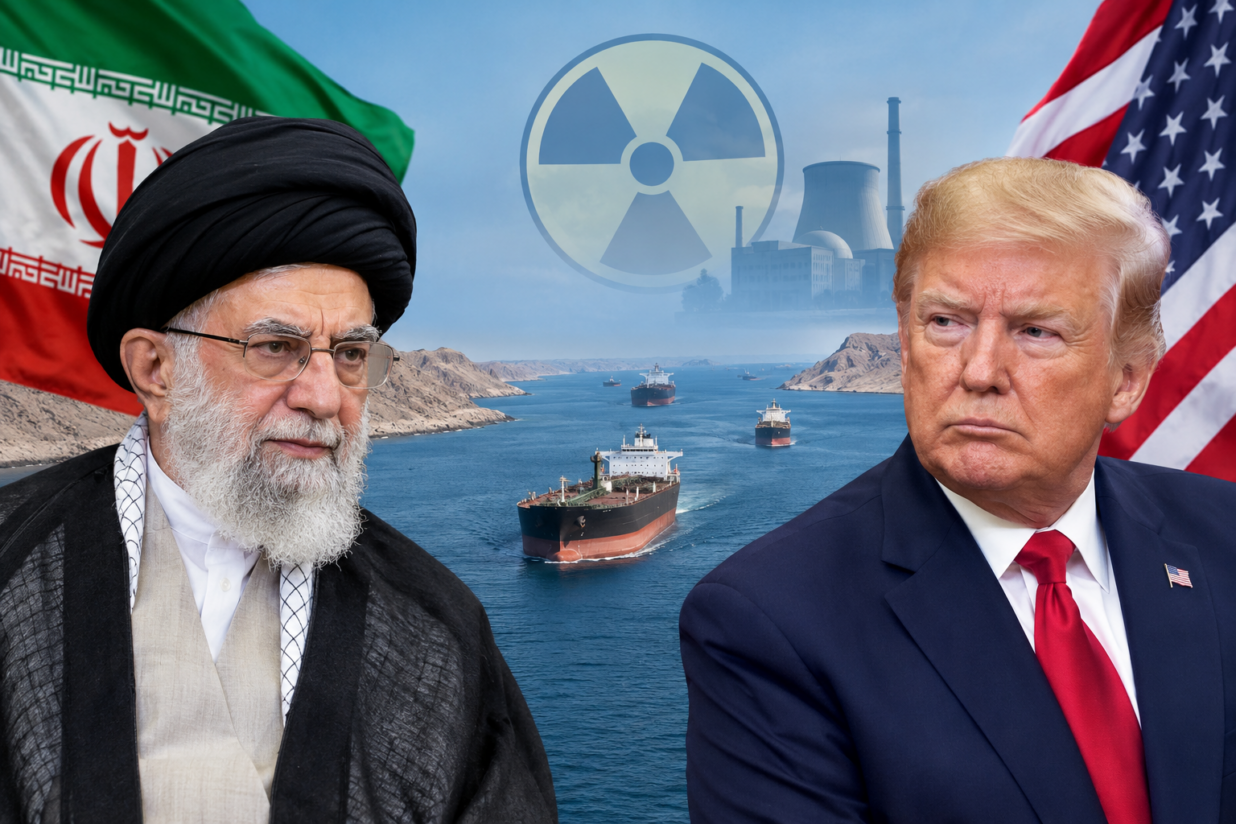
Iran has made it clear that it will not compromise on its Iran Nuclear Programme, even if the United States agrees to Tehran’s proposal to reopen the Strait of Hormuz. A senior Iranian official told Reuters on Friday that the waterway would remain closed until Washington accepts and carries out Iran’s demands.
The individual, who spoke anonymously, said Tehran will maintain the Strait of Hormuz blocked notwithstanding any compromise on the nuclear problem. This suggests that Iran is considering the canal and its nuclear programme as separate concerns in discussions with Washington.
Iran Nuclear Programme Remains a Key Demand
Iran’s proposal was given by Foreign Minister Abbas Araqchi on Thursday. Under the plan, Tehran would reopen the Strait of Hormuz within seven days provided the United States agrees to various conditions.
Those demands include halting the naval blockade of Iranian ports, repealing oil restrictions and freeing blocked Iranian cash. Tehran has also called for a stop to violence across the region, especially in Lebanon.
The Strait of Hormuz has been an essential aspect of the conversations between the two countries. Iran is seeking respite from US policies that have put pressure on its economy, while Washington wants shipping along the main oil route to return to normal.
Iranian President Masoud Pezeshkian said on Thursday that he believed Tehran and Washington could achieve an agreement before the US midterm elections on November 3. His comments occurred during a discussion with media on the margins of the United Nations General Assembly.
Iran has indicated that it is prepared to hold detailed talks about its nuclear programme. However, Tehran insists that conversations may continue forward only once the United States adopts its terms.
Tehran Says It Will Keep Its Nuclear Rights
The Iranian official said Tehran will not give up what it regards as its nuclear rights. These include uranium enrichment and retaining highly enriched uranium inside Iran instead of shipping it overseas.
The United States, Israel and other Western countries have long accused Iran of acquiring the potential to build nuclear weapons. Iran has repeatedly disputed those assertions and insists its nuclear programme is not designed for weapons.
International fears have intensified since Iran has enriched uranium to 60% purity. That is significantly beyond the amount normally employed for civilian nuclear operations and is closer to the nearly 90% level associated with weapons-grade uranium.
The International Atomic Energy Agency projected that Iran had 440.9 kilos of uranium enriched to 60% when Israel and the United States attacked Iranian nuclear facilities in June 2025. It is unknown how much of such stuff is still in Iran following the assaults.
Iranian authorities have previously stated that Tehran may consider diluting its most highly enriched uranium. Reuters also reported in May that Supreme Leader Mojtaba Khamenei had commanded that highly enriched uranium should not be transported out of Iran, citing two senior Iranian sources.
The current position emphasises the gaps between Tehran and Washington. With the Strait of Hormuz and the Iran Nuclear Programme now tightly interwoven in discussions, striking a larger deal might rely on how both parties respond to the other’s demands.
- Join our whatsapp channel for daily updates.
- Follow tazatimesnews Telegram Channel for latest news alerts.
- Follow TazaTimesNews on TruthSocial for exclusive updates
- Also Reads : Healthy Food Habits: Health Experts Explain Why Right Food Choices Matter Daily