
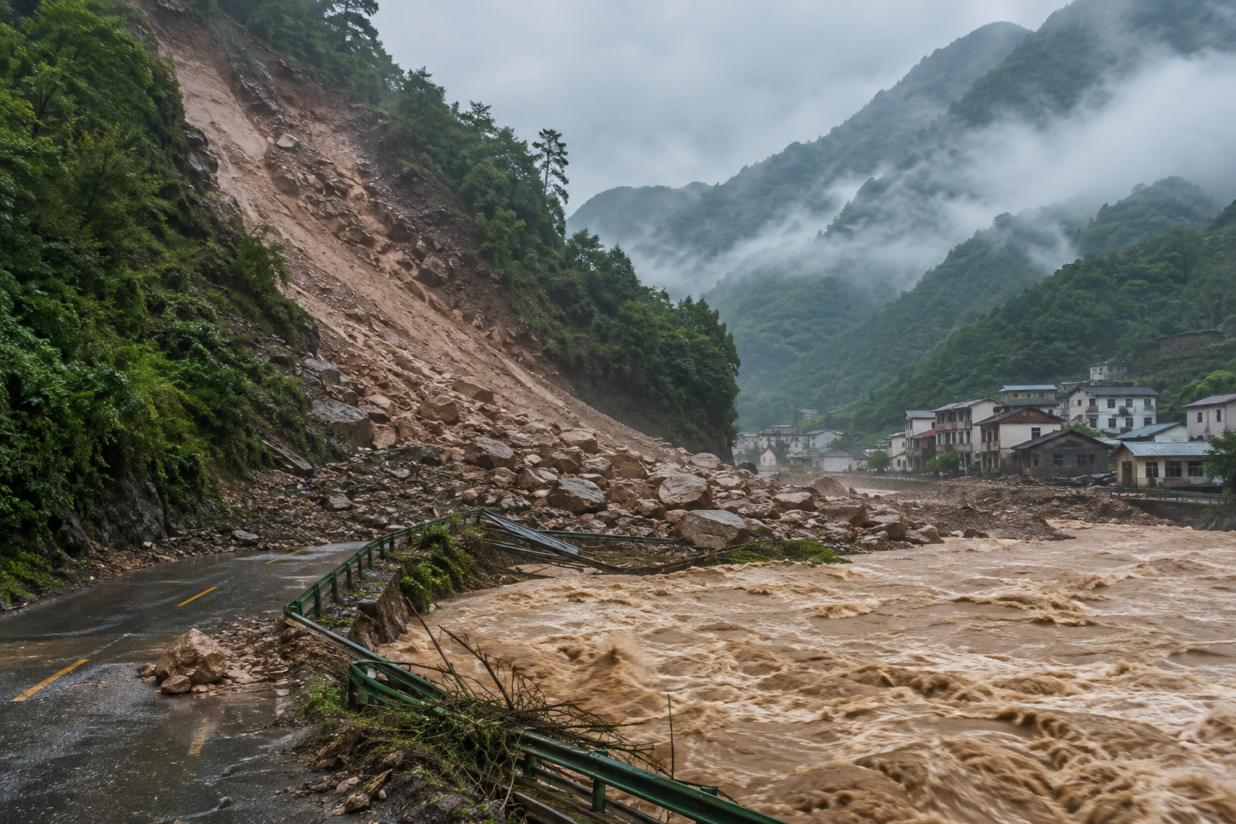
China Landslides and Floods : China is stepping up efforts to prevent landslides and floods as the country grapples with mounting weather-related hazards caused by climate change. The new policy seeks to improve catastrophe prevention, early warning systems, and geological risk monitoring in some of the nation’s most vulnerable areas.
Officials said the strategy is intended to lessen the impact of heavy rainfall, which has been increasingly common in recent years. Heavy rain has caused floods, mudslides, and landslides in several parts of China, resulting in deaths, property damage, and delays to transportation and local businesses.
According to Chinese state broadcaster CCTV, the Ministry of Natural Resources would prioritize preventing shallow landslides and debris flows triggered by heavy rain. These calamities frequently occur swiftly in hilly places, giving communities and emergency officials little time to respond.
China Landslides and Floods Plan Targets High-Risk Regions
The Chinese government has selected many priority regions where disaster prevention efforts would be intensified. These include the Yaxia Hydropower Project construction site, the Yanshan-Taihang mountain range, the Three Gorges Reservoir Area, and the Wumeng Mountains.
Officials feel that due to their terrain and significant sensitivity to excessive rains, these areas require additional monitoring. The government intends to expand monitoring and improve coordination among local emergency authorities.
As part of the policy, China will increase its use of aircraft remote sensing technologies to detect and monitor geological dangers. Satellite observations and improved monitoring systems will aid in the early detection of unstable slopes and other possible disaster areas.
The authorities expect that integrating contemporary technologies with increased local readiness will improve emergency response and prevent casualties. As weather patterns change, natural disasters become more unpredictable, making better risk assessment increasingly necessary.
China has already made significant investments in catastrophe prevention and emergency management in recent years. The country is continuing to develop flood-control infrastructure, boost weather forecasting capabilities, and modernize emergency warning systems in areas prone to severe weather.
China Landslides and Floods Challenge Grows with Extreme Weather
The latest declaration follows many weeks of hazardous weather across China. Heavy rains have hit several provinces, increasing the risk of flooding and landslides while also sparking emergency alerts and rescue operations.
Continuous rain produced flash floods and landslides in northwestern Gansu Province, killing dozens and injuring many more. While local officials continue to work on recovery, emergency teams are striving to rescue affected residents.
Officials have also cautioned that the remains of previous typhoons, combined with seasonal monsoon conditions, may cause extensive rainfall in southern and central China. Emergency officials have requested infrastructure inspections, stronger flood control measures, and the deployment of rescue workers to susceptible areas.
Scientists have consistently warned that climate change is increasing the frequency and severity of extreme weather occurrences worldwide. China has endured a succession of devastating floods, landslides, heatwaves, and droughts in recent years, putting further strain on disaster management infrastructure.
Chinese authorities hope to better protect people, infrastructure, and economic activity from future natural disasters by extending monitoring technology, focusing on high-risk areas, and strengthening disaster preparedness. Although these steps cannot completely remove the hazards posed by extreme weather, officials believe they will considerably improve China’s ability to respond to climate-related disasters in the coming years.