
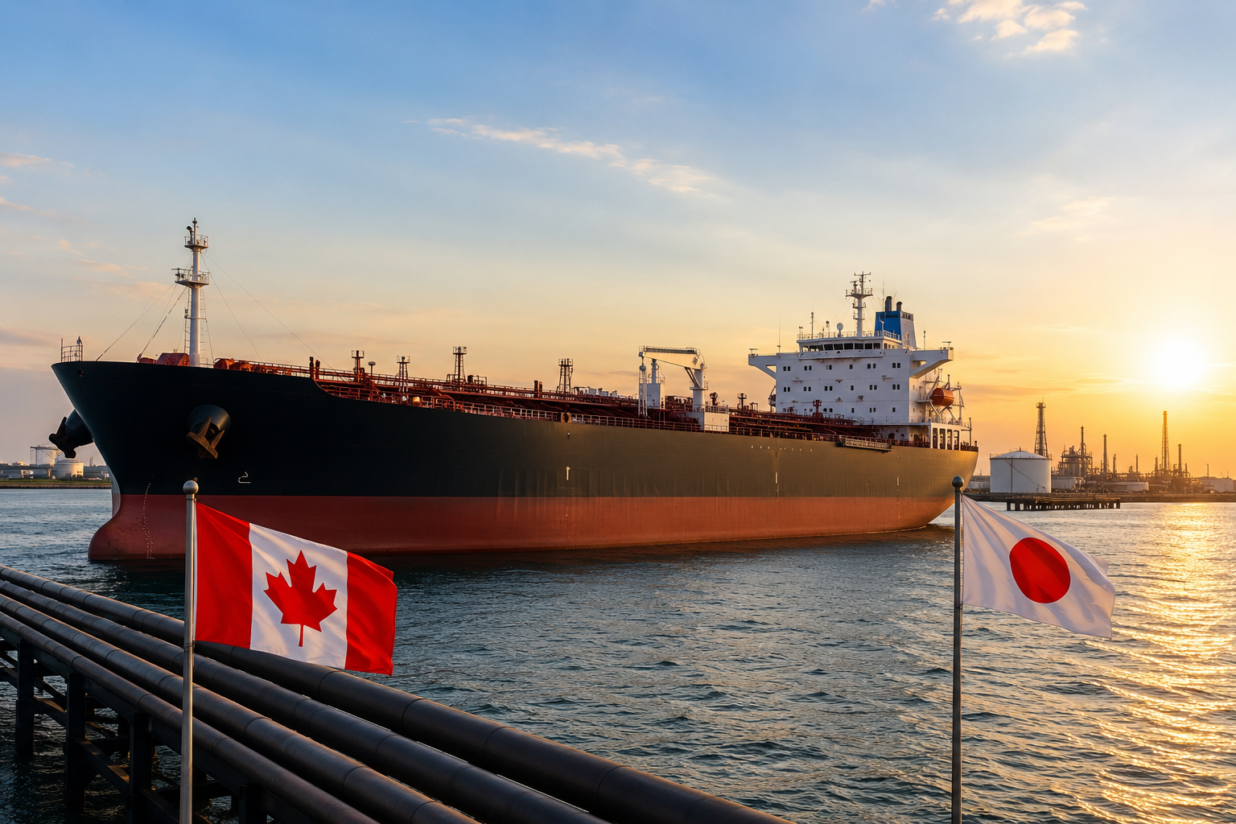
Canadian Oil : Japan will receive a cargo of Canadian crude oil for the first time since early 2025, signaling a significant shift in global energy trading. The supply comes as the war with Iran has constricted Middle Eastern crude supplies and raised concerns about Asia’s energy security.
The shipment, as recorded by shipping data released on July 29, demonstrates how global oil purchasers are shifting their purchasing strategy. As geopolitical conflicts continue to disrupt established supply channels, Japan and other Asian importers are seeking more stable sources of crude.
Canadian Oil Exports Expand as Japan Diversifies Crude Supply Sources
Japan imports the vast majority of its crude oil from the Middle East, making it particularly vulnerable to regional disruptions. With supply issues developing, Japanese refiners are broadening their supplier base and showing an increased interest in oil from non-Gulf countries.
Canada has long been regarded as a solid and reliable oil producer. However, exports to Asia have remained constrained due to high transportation costs and extensive shipping distances. The recent cargo indicates that current market circumstances have improved enough for Japanese importers to resume sourcing Canadian crude.
According to energy specialists, the decision demonstrates the necessity of supply diversity. Although Canadian oil is unlikely to replace Middle Eastern petroleum on a broad scale, it does provide Japan with an extra source of supply during periods of uncertainty.
The shipment also represents a larger shift in global energy trading, with purchasers increasingly ready to pay higher transportation costs in exchange for greater supply security.
Canadian Oil Trade Reflects Changing Global Energy Markets
The war involving Iran has prompted fears about the security of Middle Eastern crude oil supplies. Uncertainty surrounding major shipping routes has prompted dealers and refiners to reconsider their purchase methods and decrease reliance on a particular region.
Oil prices have reacted to the geopolitical scenario, with Brent oil and US West Texas Intermediate (WTI) rising sharply as markets priced in the possibility of tighter global supply.
Analysts predict that if tensions persist, countries that rely significantly on Middle Eastern oil may increasingly turn to producers in North America, Latin America, and elsewhere. This trend may open up new export options for Canadian producers while increasing the country’s position in Asian energy markets.
Although exporting Canadian petroleum to Asia remains more expensive than importing oil from the Middle East, many governments and refiners have prioritized energy security. In this time of geopolitical uncertainty, stable and reliable supply sources are becoming increasingly valuable.
As a result, the shipping to Japan consists of more than one commercial transaction. It indicates a broader shift in global oil commerce, with Asian customers looking for a broader range of suppliers to limit exposure to political and supply risk. If tensions in the Middle East remain high, Canadian oil shipments to Asia may increase in the coming months.