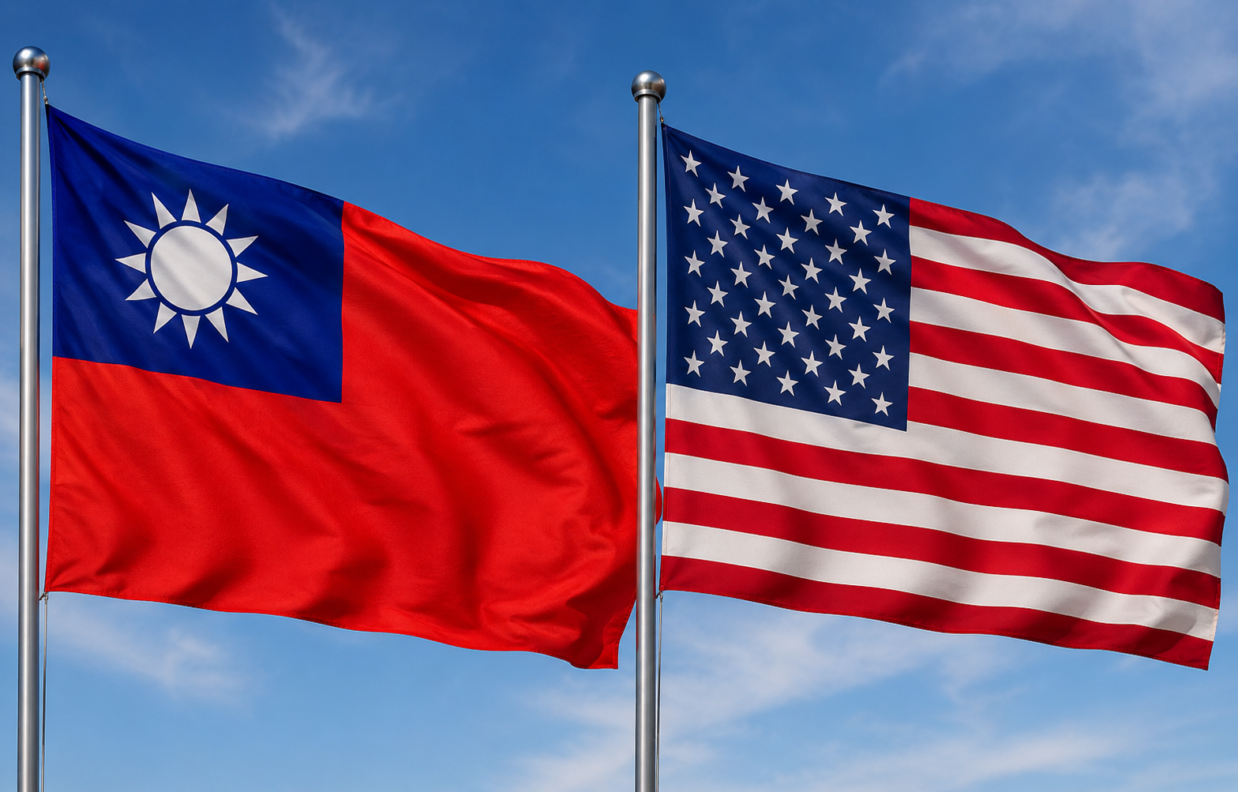
Taiwan-US Defence Ties :Taiwan has highlighted its increasingly close defense alliance with the United States, with officials claiming that military collaboration with the US Pacific Command is stronger than many people believe. The declaration comes as security worries in the Taiwan Strait continue to escalate, and China continues military pressure on the self-governing island.
Taiwan’s Defence Minister, Wellington Koo, stated that the island has been striving to expand military exchanges with the United States Pacific Command in order to improve battle preparedness and response to potential threats. He stated that these measures are critical to strengthening Taiwan’s overall defense capability.
The United States has no formal diplomatic relations with Taiwan, although it remains the island’s most major international sponsor and primary source of defensive weapons. Washington has frequently stated that maintaining peace and stability in the Taiwan Strait is critical to regional security.
Taiwan-US Defence Ties Strengthen Military Readiness
Speaking of the expanding alliance, Koo stated that Taiwan’s cooperation with the US military is more extensive than many observers realize. He pointed out that Taiwan is strategically located within the first island chain, making it a vital aspect of Indo-Pacific security planning.
Taiwan has continued to upgrade its armed forces while increasing military cooperation with friendly nations. Defence exchanges, planning conversations, and coordination initiatives are meant to boost readiness and deter potential military action.
Taiwan-US Defence Ties Face Pressure from China’s Military Activities
Koo’s remarks come amid increased Chinese military activity around Taiwan. Beijing regularly sends military aircraft and naval vessels near the island and has expanded coast guard operations in surrounding waters.
Taiwan has responded by increasing surveillance, conducting military drills, and enhancing armed force cooperation. The government claims that these measures are required to prepare for a wide range of security threats.
China believes Taiwan to be part of its territory and has never ruled out using force to seize control of it. Taiwan’s administration opposes Beijing’s sovereignty claims and says that only the Taiwanese people can decide the island’s future.
Taiwan-US Defence Ties Remain Central to Regional Security
Koo also addressed fears about a potential Chinese maritime blockade of Taiwan. He contended that such a move would have serious economic and political ramifications not only for Taiwan but also for China itself.
According to the defence minister, China’s economy is strongly reliant on international trade, and any blockade may disrupt global shipping while subjecting Beijing to international sanctions. He argued that if tensions remained high, these dangers would put enormous economic and political pressure on China.
Taiwan has recently increased military training to prepare for various conflict scenarios, such as possible blockades and attacks on essential infrastructure. The government has also made investments to improve supply chains, emergency communications, and military-civilian collaboration.
According to analysts, security in the Taiwan Strait remains one of the world’s most widely monitored geopolitical issues because to its significance in global trade and semiconductor manufacture. Any serious battle in the region has the potential to disrupt international shipping, financial markets, and economic stability in Asia and elsewhere.
As tensions rise, Taiwan’s government feels that closer cooperation with the United States, as well as ongoing military readiness, will be critical to maintaining stability and preventing conflict. At the same time, China continues to oppose foreign interference in what it calls its domestic affairs, keeping cross-strait relations under close international scrutiny.
- Join our whatsapp channel for daily updates.
- Follow tazatimesnews Telegram Channel for latest news alerts.
- Follow TazaTimesNews on TruthSocial for exclusive updates
- Also reads : Dandruff removal : Experts Share Simple Hair Care Tips for Naturally Removing Dandruff