
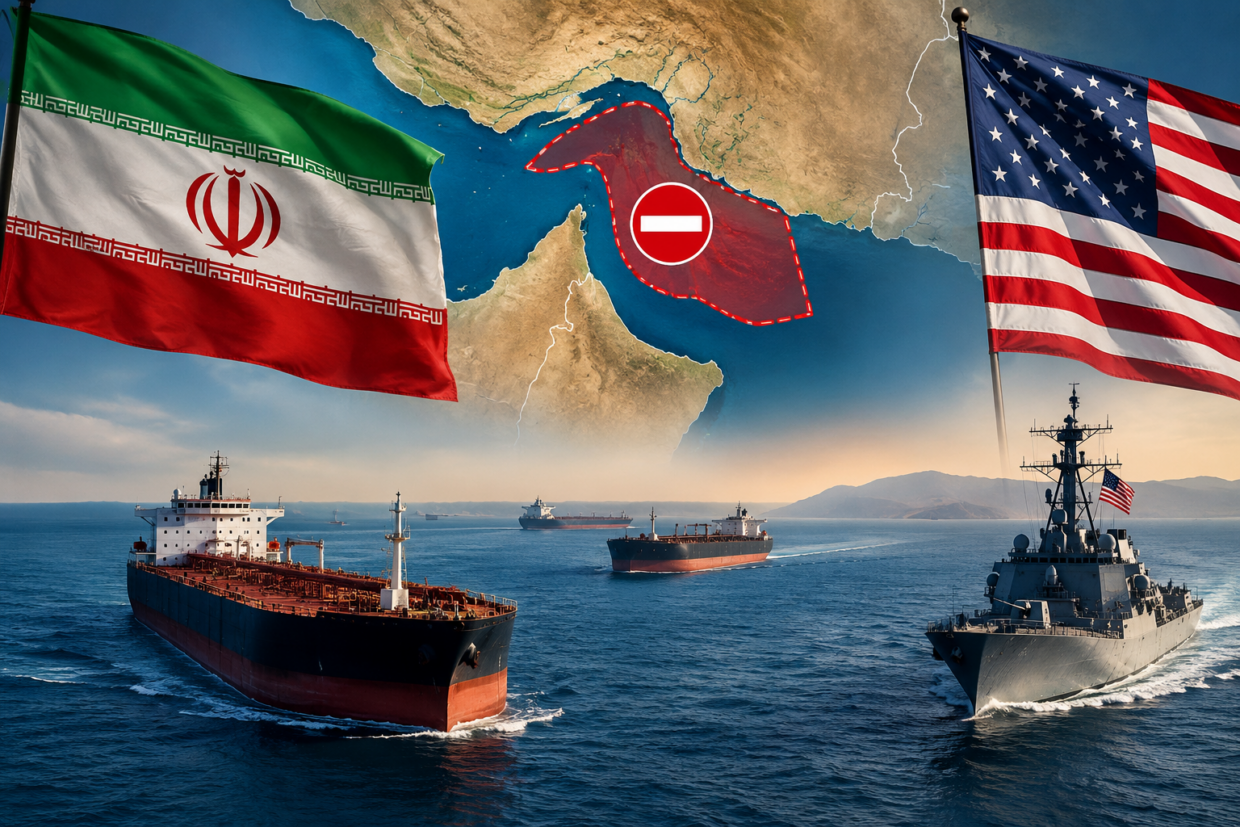
Iran is preparing to announce an Iran exclusion zone near the Strait of Hormuz as tensions with the United States continue to rise. Mohsen Rezaei, the newly appointed head of Iran’s Supreme National Security Council, said the proposed zone would cover vessels that Tehran believes are trying to pass through the strategic waterway.
Rezaei made his remarks on Iranian state television on Sunday. He did not specify how the new zone would be enforced or where its boundaries would be established.
The announcement came one day after the United States targeted three Iranian oil tankers. The attacks occurred after Iran launched ballistic missiles toward US warships. The recent missile attacks have sparked worry because Iran’s previous acts at sea had primarily affected commercial vessels.
Iran exclusion zone could stretch toward the Strait of Hormuz
Rezaei stated that Iran could announce the exclusion zone in the next days or weeks. He described the suggested area as beginning near the US naval blockade, expanding into the Strait of Hormuz, and ending in the Persian Gulf.
According to the strategy, vessels entering the area with the goal of crossing the strait may face sanctions from Iran if they are detected, Rezaei stated. However, it is still unclear where Iran feels the US ban starts.
In order to prevent Iran from exporting oil, the United States has focused its naval embargo on Iranian ports. According to the US Navy, around 20 vessels are assisting the operation. By Sunday, 92 commercial vessels had been redirected, with three disabled.
Fighting continues around the Strait of Hormuz
The Strait of Hormuz has emerged as a crucial pressure point in the conflict. Iran has continued to strike some vessels attempting to transit the river, while the US has kept military pressure on Iranian ports.
Iran said Sunday that it had hit an unmanned US warship attempting to enter the strait. The US military refuted the report, describing it as a “total lie.”
The current combat resumed last week, following nearly a month of relative quiet. US airstrikes have also targeted sites along Iran’s southern coast. Earlier this week, at least five individuals were killed in a US bombing, which refocused attention on a school that was hit during the war’s opening attacks.
Washington is applying both military and economic pressure on Iran. The Trump administration has also targeted foreign financial firms suspected of processing Iranian monies.
Iran’s authorities have stated that they are prepared to face additional pressure. Tehran has spent years devising ways to circumvent UN sanctions and continue selling its oil. According to Rezaei, Iran’s oil production and commerce have continued despite US pressure.
Iran questions failed talks with the United States
Rezaei also criticized how the failed Iranian-US negotiations were handled. An agreement reached by the two countries in mid-June fell apart within days, with both sides accusing the other of violating its provisions.
Iran had anticipated mediators, such as Pakistan, Qatar, and Oman, to intervene if either party breached the deal. Rezaei stated that Tehran now seeks more guaranties before resuming diplomatic relations.
The controversy arises while the Strait of Hormuz remains critical to global energy sources. Prior to the battle, the waterway was heavily used for international oil and gas shipments.
US Energy Secretary Chris Wright said Sunday that approximately nine million barrels of oil pass through the strait each day. He stated that regular exports could assist to keep global energy costs stable.
However, recent surveillance data indicated that the actual flow over the previous 28 days was lower than this figure. According to Wright, oil was also moving through regional pipelines, and total oil flows were likely at two-thirds or greater of pre-conflict levels.
- you join our whatsapp channel
- you join our tazatimesnews Telegram Channel
- you join our tazatimesnews truthsocial.com Channel
- Also reads : Newstracker24x7.com