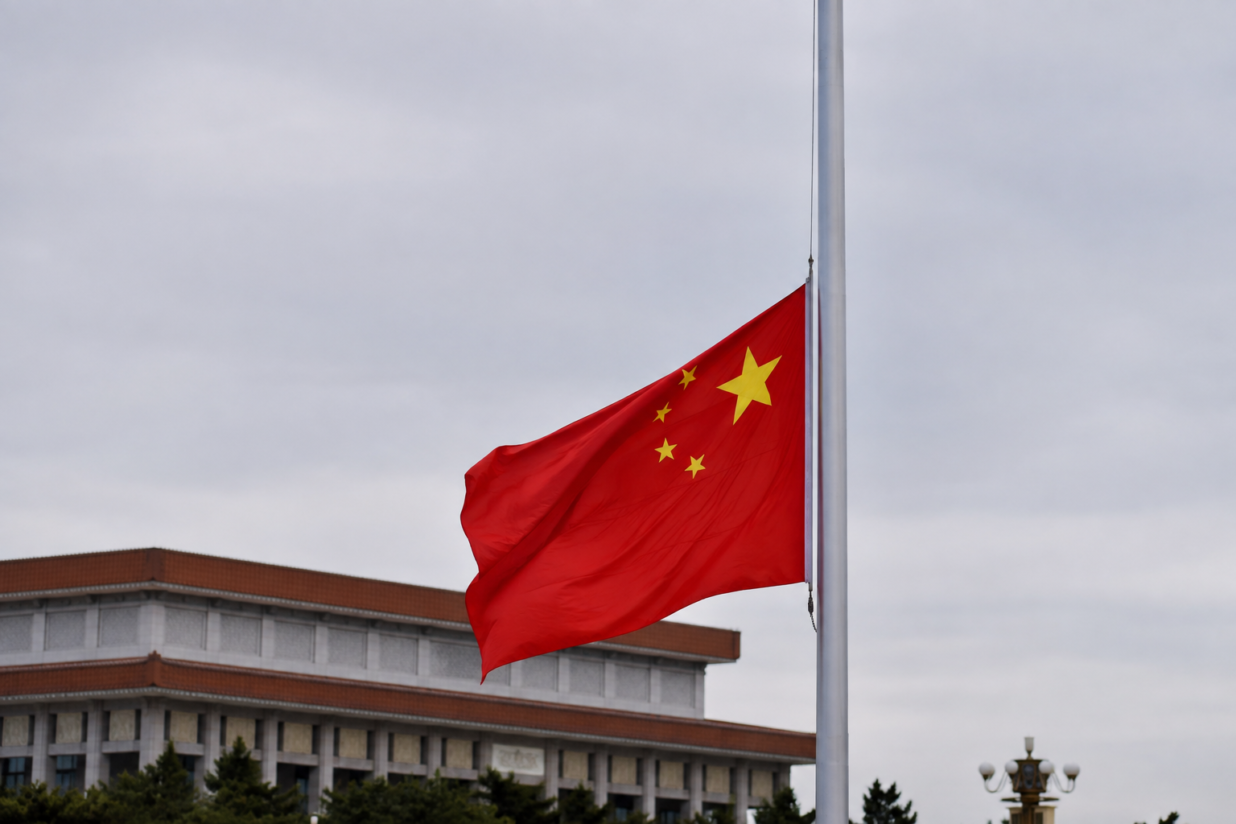
Zhu Rongji Funeral : China lowered national flags at government buildings on Tuesday in memory of former Premier Zhu Rongji, who died last week at the age of 97 years. Security was also reinforced in Beijing, notably around Tiananmen Square, as funeral preparations progressed.
During the 1990s, the former premier was a key proponent of China’s economic reform. His death has drawn increased attention to the economic improvements he advocated for, as well as his mixed political legacy.
Authorities maintained a significant security presence in Tiananmen Square, a major political monument in central Beijing. The region is also on the way to the Babaoshan cremation, where senior Chinese officials are cremated.
Zhu Rongji Funeral Highlights His Economic Legacy
Zhu Rongji was China’s vise premier from 1991 to 1998, when he took over as premier. He stayed in that role until 2003.
During his tenure in senior administration, Zhu was instrumental in substantial economic restructuring in China. His objectives centered on reducing inflation and strengthening the country’s tax and financial institutions.
He also advocated for major reforms in the state-owned sector. The reforms resulted in the restructuring of unprofitable state-owned enterprises, resulting in the loss of millions of jobs.
Zhu’s economic initiatives also contributed to China’s readiness for membership in the World Trade Organization. China joined the World Trade Organization (WTO) in 2001, marking a significant step toward tighter integration with the global economy.
His public image also reflected his reputation for independent thought. Before becoming premier, Zhu was Shanghai’s mayor. In a 1988 lecture to authorities, he emphasized the necessity of independent thought and expressing one’s actual opinions.
Zhu also mentioned a difficult phase early in his political career. He said that his Communist Party membership was withdrawn in the late 1950s following what he characterized as a reckless three-minute speech. His membership was reinstated around two decades later.
Zhu Rongji Funeral Takes Place Under Tight Security
The reaction to Zhu’s death has been quiet and carefully managed. Chinese social media exhibited considerable sadness, however Reuters reported that a smaller number of posts celebrated his death. Public demonstrations of grief have occurred amidst enhanced security, scrutiny, and restriction.
The authorities’ cautious response reflects the sensitivity that can surround the deaths of former top Chinese officials. Public grief has sometimes led to larger criticism or political demonstrations.
A significant example occurred in 1976, following the death of former Premier Zhou Enlai. Tens of thousands of people congregated in Tiananmen Square and the surrounding streets. The grief eventually developed into protests against the Cultural Revolution’s excesses and the officials who led it.
Zhu Rongji’s political career was unique in many ways, but his economic legacy is enormous. During the 1990s, he played a major role in China’s development by reforming state-owned enterprises, strengthening banking and tax institutions, and promoting international economic integration.
As China mourns the former premier, lowered flags and increased security in Beijing reflect the magnitude of his passing while also demonstrating the sensitivity surrounding public mourning of previous national leaders.
- Join our whatsapp channel for daily updates.
- Follow tazatimesnews Telegram Channel for latest news alerts.
- Follow TazaTimesNews on TruthSocial for exclusive updates
- Also reads : Trump Crypto Firm Faces Questions Over Venture Offering Chinese AI Models