
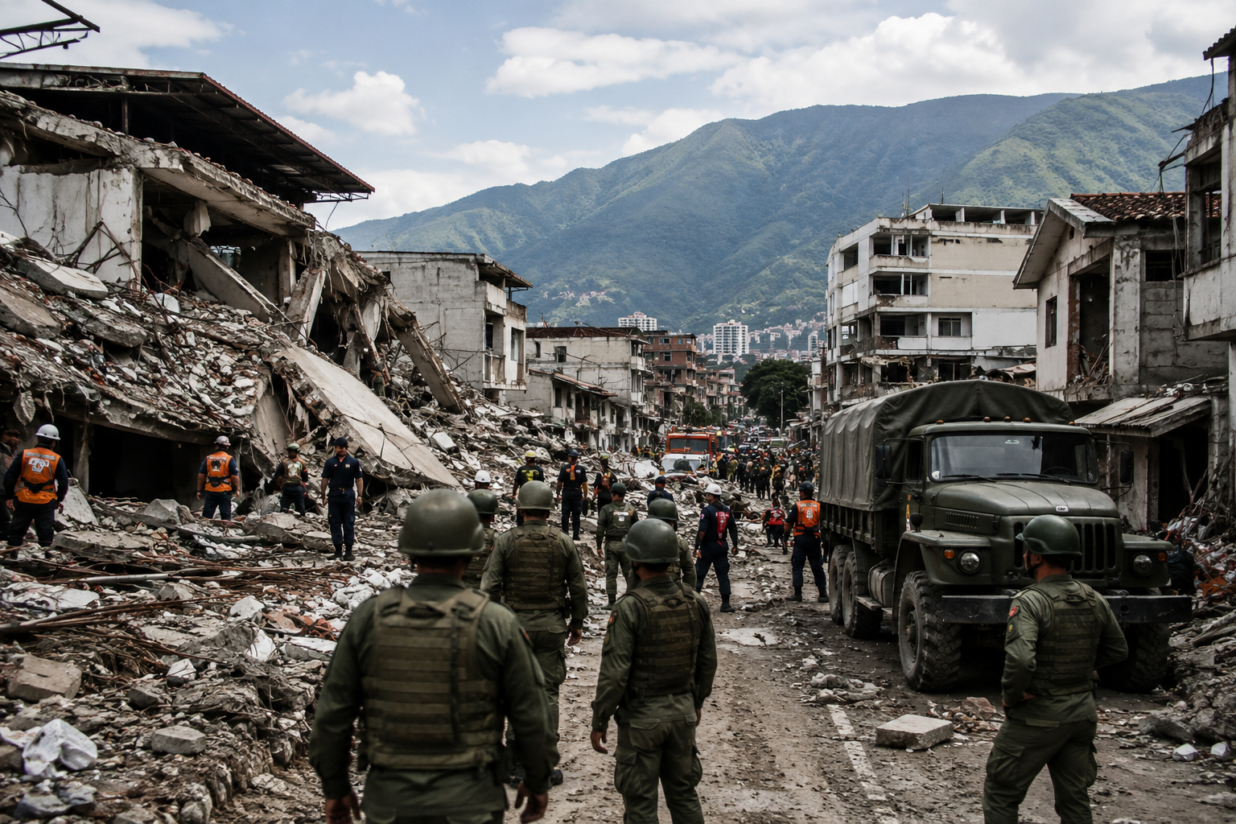
Delayed Venezuela Earthquake Response : Venezuela’s earthquake response has come under further criticism, with various sources claiming that delayed instructions, communication issues, and poor coordination hindered the military’s initial rescue attempts following the recent earthquake.
According to sources familiar with the reaction, emergency teams had difficulty during the critical early hours because deployment orders took longer than expected to reach military forces. According to sources, ambiguity about leadership roles made it difficult to arrange rescue operations rapidly.
The earthquakes caused substantial damage in several impacted locations, forcing emergency services to rush to help citizens trapped under collapsed structures and give immediate humanitarian aid. Local volunteers and first responders were among the first to launch rescue efforts while larger operations were still being planned.
Delayed Venezuela Earthquake Response Raises Coordination Questions
According to sources, uncertainty within the command structure caused delays in delivering military personnel to some of the most severely affected areas. While emergency personnel worked to respond, officials reportedly lost valuable time while awaiting instructions and clarification of roles.
Several persons familiar with the situation also mentioned a lack of transport vehicles, rescue equipment, and specialist planes, which hampered efforts to reach affected towns swiftly. These logistical issues apparently hampered rescue operations during the critical first phase of the disaster.
The revelations have reignited debate about Venezuela’s disaster preparedness and the effectiveness of emergency response during significant natural disasters.
Government Defends Venezuela Earthquake Response During Recovery
Acting President Delcy Rodríguez defended the government’s handling of the tragedy, stating that emergency personnel were sent quickly after the earthquakes and refuting charges that officials responded too slowly. Government authorities have also contested criticism of the overall reaction, claiming that rescue and relief activities were carried out as swiftly as feasible despite the tough conditions.
Recovery operations continue in the devastated regions, with officials focusing on restoring key services, assessing damage, and assisting affected communities. Humanitarian organizations and emergency teams continue to provide help as needed.
According to disaster management specialists, the events have underlined the need for clear communication, faster decision-making, and stronger cooperation among emergency organizations. They believe that evaluating emergency response processes will assist prepare for future natural disasters.
Despite criticism of the first response, rescue workers, volunteers, and relief organizations continue to help affected families and support continuing recovery efforts. Authorities have vowed to continue relief efforts while learning from the emergency response.
- Join our whatsapp channel for daily updates.
- Follow tazatimesnews Telegram Channel for latest news alerts.
- Follow TazaTimesNews on TruthSocial for exclusive updates
- Also reads : New Expressway: Beginning in February, vehicles on the Delhi-Dehradun Expressway will go at full speed.