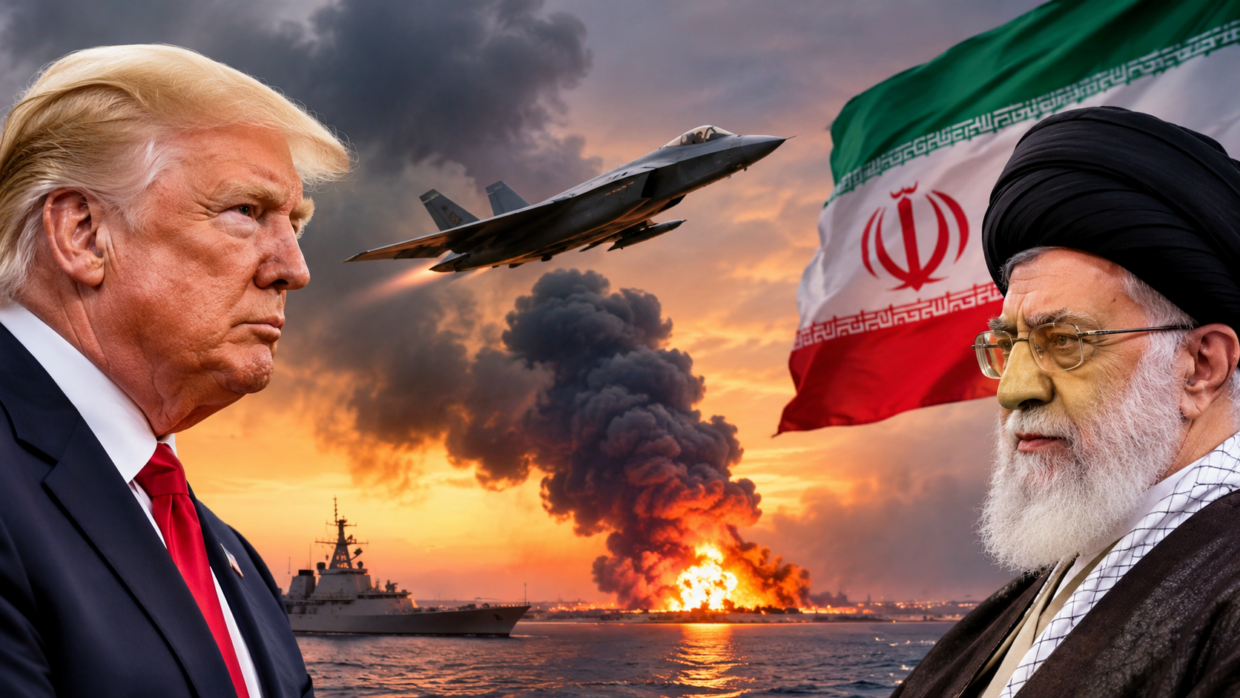
US Strikes on Iran : The US conducted more attacks on Iran early Saturday, striking air defense assets on Qeshm Island near the Strait of Hormuz. The move occurred as Tehran was reviewing Qatari suggestions aimed at reducing tensions and paving the way for nuclear talks with Washington.
President Donald Trump called the operation limited. Speaking to reporters in Florida on Friday evening, he said US soldiers destroyed an Iranian antiaircraft system in minutes.
Iranian state media reported two explosions on Qeshm Island’s Suza region. According to IRNA, two rockets impacted the island after an aircraft was heard overhead.
The revelations came after Iranian media claimed that on Friday nite, the Islamic Revolutionary Guard Corps shot down a US MQ-1 Predator drone over Qeshm.
The current attack was the first alleged US strike on Iran after the Republican Party suffered significant defeats in the US midterm elections. Voter unhappiness with the battle, as well as increasing gasoline prices, contributed to Republicans losing control of both chambers of Congress.
Earlier this week, the US military carried out so-called defensive strikes. Explosions have been recorded on the islands of Qeshm and Hengam, as well as near Bandar Abbas on the mainland.
US Strikes on Iran Continue as Nuclear Talks Face Conditions
While military operations continue, diplomatic attempts are also underway. Two Middle Eastern government officials claimed Qatar has made new approaches to Iran due to disagreements with the US over Tehran’s nuclear program.
However, Iran refuses to continue nuclear talks until Washington agrees to a number of conditions. These include relieving the blockade of Iranian ports, removing sanctions, freeing blocked Iranian assets, and compensating for war damage.
Tehran also wants to cease conflicts in the area, particularly Israeli military actions in Lebanon. Trump has already rejected some of Iran’s demands.
The White House did not respond to Qatar’s fresh suggestions. However, Trump stated that negotiations with Iran through intermediaries were still ongoing.
Regional authorities also suggested a possible interim accord intended to foster confidence before larger discussions began. According to the idea, the first two days would entail measures taken by both parties.
The US would withdraw the ban and release some of Iran’s blocked funds. In exchange, Tehran agreed to allow International Atomic Energy Agency inspectors to visit locations blasted by the United States and Israel.
On the second day, Iran would reopen the Strait of Hormuz under a modified agreement with Oman. The project has not obtained US approval. Officials said the arrangement would be temporary until a larger deal on the canal could be achieved with other Gulf states.
Following these measures, Washington and Tehran would engage in deeper conversations. These would include Iran’s stockpile of highly enriched uranium and other aspects of its nuclear program.
Iran claims its nuclear efforts are benign. The International Atomic Energy Agency reports that the country possesses 440.9 kilos of uranium refined to 60% purity. Weapons-grade uranium is typically enriched to 90%.
US Strikes on Iran Draw Fresh Diplomatic Calls
Diplomatic contacts have grown as fears mount about another military escalation. On Friday, US Defense Secretary Pete Hegseth met with Qatar’s defense minister, Sheik Saoud bin Abdulrahman Al Thani, discussing regional events.
Qatar also acknowledged a second phone chat between Trump and the country’s emir. Their talk centered on attempts to decrease tensions.
Abbas Araghchi, the Iranian foreign minister, spoke with his Iraqi and Tunisian colleagues. During his meeting with Iraqi Foreign Minister Fuad Hussein, he outlined Tehran’s position on beginning negotiations with Washington.
Badr Abdelatty, the Egyptian foreign minister, also spoke with Araghchi. He urged all sides to be flexible in order to reach a settlement and avoid further escalation. Abdelatty later reviewed the subject with UAE Foreign Minister Abdullah Bin Zayed Al Nahyan, emphasizing the importance of political dialog.
Meanwhile, the US Central Command offered a reward of up to $20 million, plus possible relocation, for intelligence regarding Iran’s nuclear program, facilities, equipment, and personnel.
The most recent strikes and diplomatic talks demonstrate that military pressure and discussions are taking place simultaneously. However, any move toward larger nuclear discussions will be contingent on Washington and Tehran reaching an agreement on Iran’s requirements and proposed efforts to reestablish confidence.
- Join our whatsapp channel for daily updates.
- Follow tazatimesnews Telegram Channel for latest news alerts.
- Follow TazaTimesNews on TruthSocial for exclusive updates
- Also Read : Iran Nuclear Proposal Sent to US Through Qatar, Talks Face Conditions