
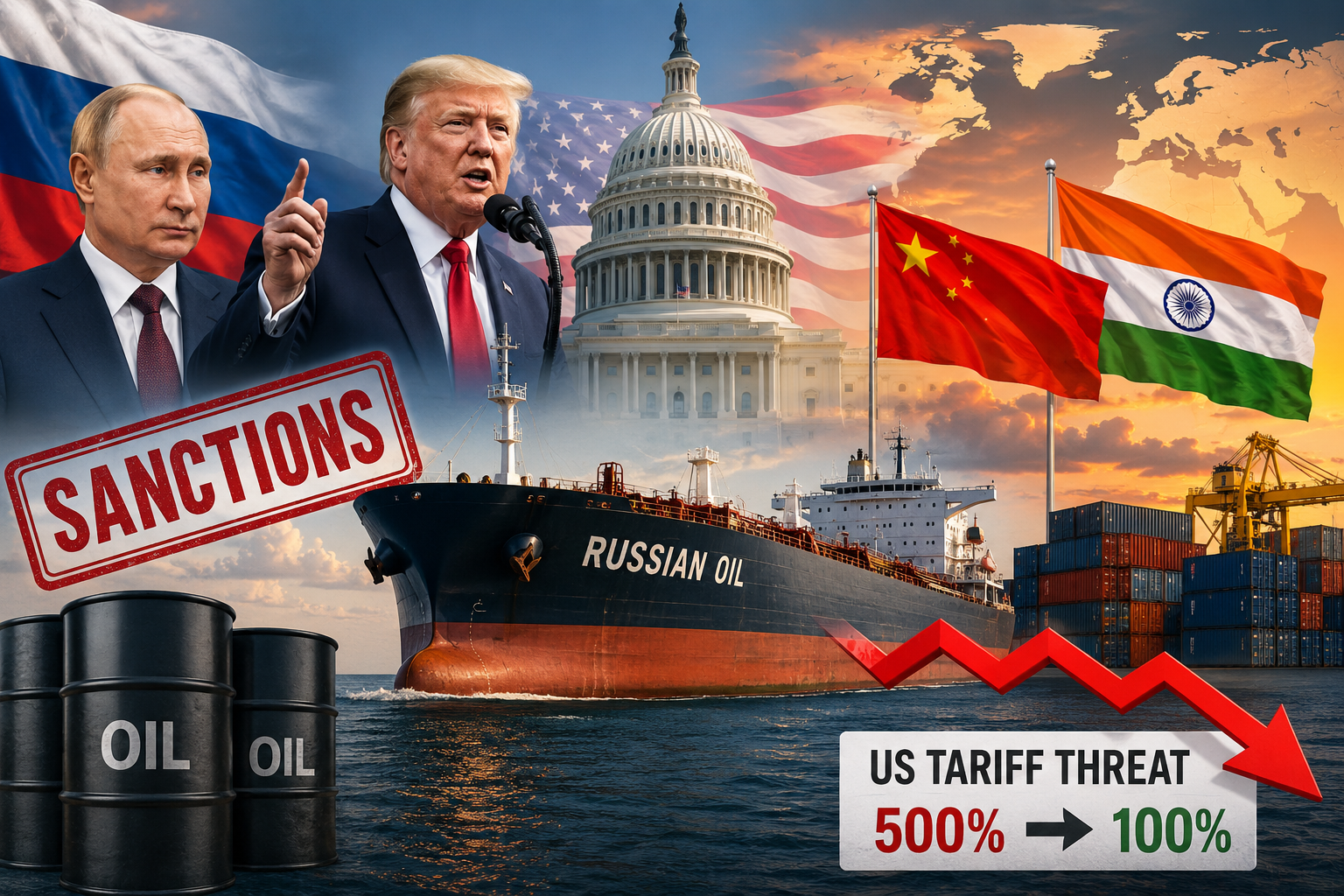
US Russia Oil Tariff : The US has reduced its proposed tariff plan against countries that continue to buy Russian oil and natural gas, delivering significant relief to key importers like India and China. A new bipartisan sanctions measure lowers the proposed maximum tariff from 500% to 100%, while maintaining economic pressure on Russia over the ongoing Ukraine conflict.
Republican Senator Lindsey Graham and Democratic Senator Richard Blumenthal sponsored the legislation. It intends to reduce Russia’s energy income by deterring other countries from relying too much on Russian oil and gas.
Although the amended proposal is less severe than the original, President Donald Trump would still be able to slap tariffs of up to 100% on Russia’s largest energy buyers if needed.
Why the US Russia Oil Tariff Matters for India and China
The amended sanctions measure differs significantly from the previous draft, which called for a blanket 500% levy on countries acquiring Russian energy. That idea sparked worry in India and China, the world’s two largest buyers of Russian crude oil.
The new draft reduces the maximum proposed tariff to 100% for Russia’s major consumers of crude oil. According to lawmakers, the new approach maintains pressure on Moscow while lowering the risk of upsetting global commerce and diplomatic relations.
The Act also provides an exception for nations that import less than 15% of Russia’s natural gas exports, as long as they make significant measures to minimize such imports. This clause may assist countries like Japan, France, Hungary, and Belgium.
In addition to tariff measures, the bill proposes sanctions against Russian government officials, financial institutions, the Central Bank of Russia, major energy projects such as Yamal LNG and Arctic LNG, and Russia’s so-called “shadow tanker fleet” that transports oil outside of Western monitoring systems.
Revised US Russia Oil Tariff Bill Continues Pressure on Moscow
Despite decreasing the proposed tariff ceiling, US lawmakers believe the bill’s principal goal remains the same: to reduce Russia’s financial ability to pay its military assault in Ukraine.
Supporters think that reducing Russia’s energy income will drive Moscow to seek a diplomatic solution, while also making the proposal more feasible and likely to gain bipartisan support in Congress.
Another crucial clause empowers President Donald Trump to temporarily waive sanctions if he believes it would benefit US national interests, allowing the administration additional flexibility in responding to shifting geopolitical and economic events.
The amended approach alleviates India’s immediate fear of an exceptional 500% tax while still allowing for ongoing energy and trade conversations with Washington. India has consistently said that its energy imports are influenced by national economic interests and energy security concerns.
China, which continues to be one of Russia’s top energy buyers, is also anticipated to closely examine the legislation. Analysts believe the amended proposal alleviates immediate trade issues while demonstrating Washington’s intention to restrict Russia’s energy income.
The plan is gaining bipartisan support in the United States Senate, but it still needs to go through the legislative process before becoming law. If authorized, it has the potential to change future trade relations with big Russian energy customers while also increasing economic pressure on Moscow.
- Join our whatsapp channel for daily updates.
- Follow tazatimesnews Telegram Channel for latest news alerts.
- Follow TazaTimesNews on TruthSocial for exclusive updates
- Also reads : Hero Xtreme 160R 4V Combat Edition Uncovers What’s Inside