
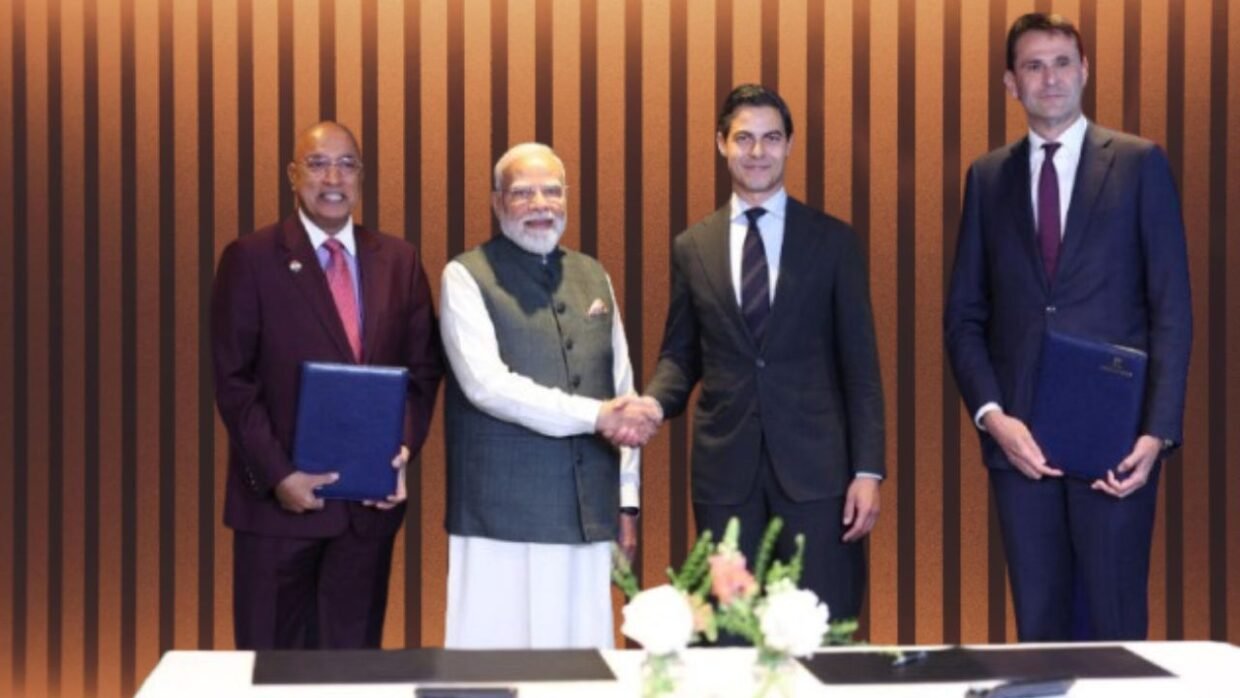
Tata Electronics and Dutch technology giant ASML signed a key agreement for the future semiconductor facility in Dholera, Gujarat, giving India a significant boost in its bid to become a worldwide semiconductor manufacturing hub. The alliance is regarded as a historic step forward for India’s electronics industry, but analysts warn the country still faces stiff global competition and supply chain issues in the semiconductor business.
The Memorandum of Understanding (MoU) between Tata Electronics and ASML was signed during Prime Minister Narendra Modi’s visit to The Netherlands. Officials from both sides said the agreement will enable India’s first commercial 300 mm semiconductor production factory, which is currently being created in Dholera with a large investment of over ₹91,000 crore.
ASML is a renowned manufacturer of semiconductor equipment, best known for its sophisticated lithography techniques used in chip fabrication. Through this collaboration, the Dutch company will assist Tata Electronics in establishing sophisticated manufacturing procedures and providing technical solutions required for successful semiconductor production in India.
Tata ASML semiconductor partnership strengthens India chip mission
The Dholera semiconductor facility is expected to be one of India’s most important technological initiatives. According to company comments, the plant will manufacture chips for artificial intelligence, mobile devices, vehicles, power electronics, and communication systems.
According to industry experts, this project has the potential to lessen India’s reliance on imported chips. Currently, the majority of modern chips used in electronics are manufactured in Taiwan, South Korea, and the United States. Under the “Semicon India” plan, India has attempted to create its own semiconductor ecosystem through massive investments and government incentives.
The Tata-ASML partnership will also prioritize the development of competent local personnel and the enhancement of the supply chain ecosystem surrounding semiconductor manufacture. Both corporations stated that training and research support will be critical to the Dholera project’s long-term success.
Prime Minister Narendra Modi characterized the pact as a significant milestone in India’s technological future. During discussions with Dutch politicians and business executives, he urged multinational corporations to invest in India’s high-tech industrial sectors.
Tata ASML semiconductor deal faces global market pressure
Despite the encouraging advancements, analysts warn that semiconductor production is still one of the world’s most complex sectors. Against the backdrop of escalating geopolitical tensions and global trade restrictions, countries in Asia, Europe, and North America are investing billions of dollars to secure their semiconductor supply chains.
India also has infrastructure issues, the need for a highly qualified workforce, and competitiveness in technology. Semiconductor production factories require reliable power, ultra-clean conditions, and long-term investment support. According to experts, developing a robust ecosystem could take several years before India can compete with established global chip makers.
Nonetheless, the Tata Electronics project has sparked enthusiasm among industry executives and investors. Gujarat is already establishing itself as a key semiconductor hub, with several chip-related projects approved by India’s semiconductor mission. New initiatives are expected to provide thousands of skilled employment while also attracting additional global technology corporations to the region.
The Tata-ASML relationship is now regarded as one of India’s most significant technical alliances for future industrial objectives. If successful, the Dholera facility might help India break into the global chip competition and improve its position in the rapidly expanding digital economy.