
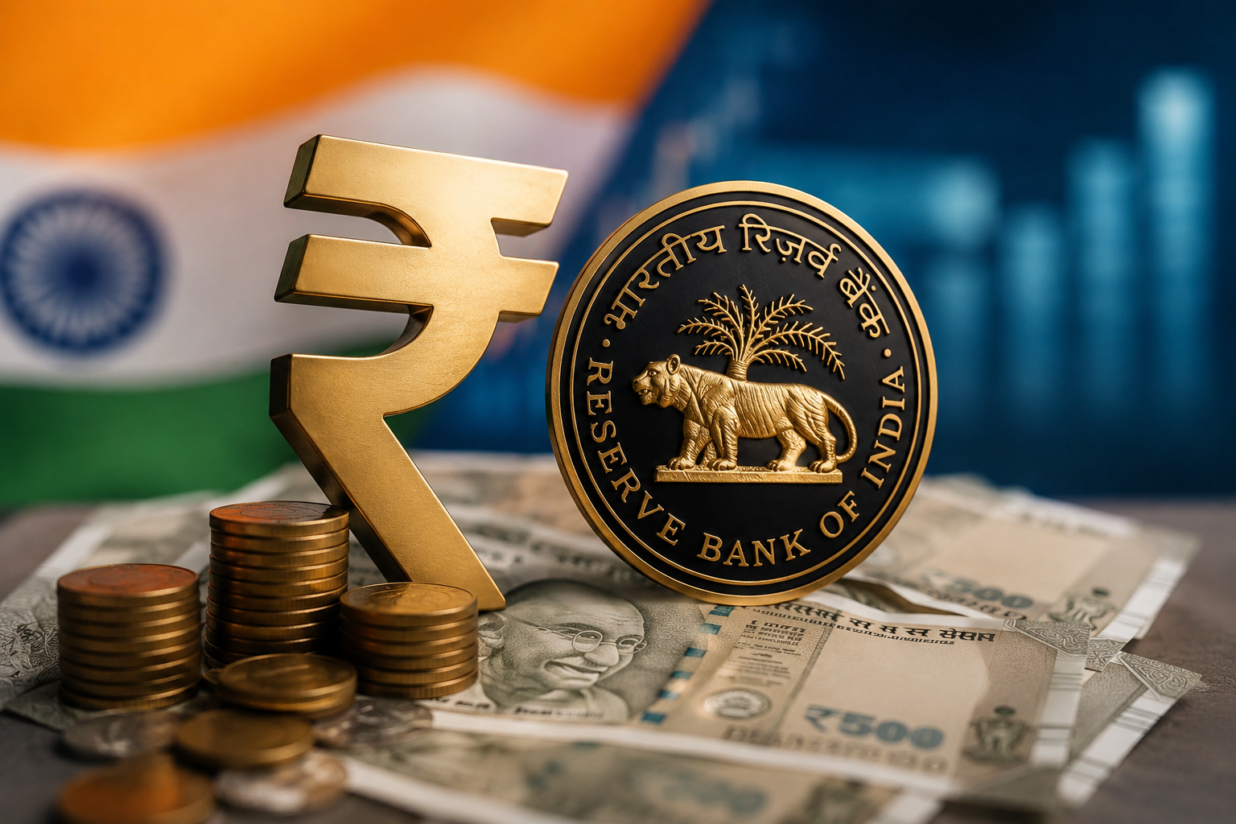
RBI Support for Rupee : On Wednesday, August 12, 2026, the Indian rupee remained largely constant versus the US dollar, with traders predicting that the Reserve Bank of India (RBI) will intervene in the foreign exchange market to strengthen the currency. The purported involvement occurred as uncertainty around the Iran war kept global oil prices high, putting pressure on oil-importing economies such as India.
According to some dealers, the RBI was probably active in the currency market during the session. Although the central bank does not publicly disclose particular market actions, its presence is frequently viewed as a means of reducing excessive volatility and preventing rapid fluctuations in the rupee.
The rupee was trading at around 95.41 per U.S. dollar, compared with 95.4350 at the previous session’s close. During the session, it moved within a narrow range of 95.40 to 95.4325, suggesting that the currency remained relatively stable despite ongoing external pressure.
RBI Support for Rupee Comes as Oil Prices Stay Elevated
The purported RBI support for the rupee arrives at a difficult time for the Indian currency. Concerns over the Iran war and broader geopolitical tensions in the Middle East have kept global crude oil prices elevated.
India imports a considerable share of its crude oil consumption, making worldwide oil prices an important determinant in the rupee’s value, inflation, and trade balance. Brent crude prices increased 0.3% on Wednesday, reaching roughly $89.20 per barrel.
Higher oil prices raise India’s import cost because refineries and energy corporations want more US dollars to pay for crude purchases. This increases demand for the dollar, perhaps putting downward pressure on the rupee.
The latest market movement highlights the difficult balancing act facing policymakers. A weaker rupee can make imported goods and fuel more expensive, while sharp currency fluctuations can create uncertainty for businesses involved in international trade.
Previously, the RBI used its foreign exchange reserves and market activities to reduce excessive currency volatility. Analysts typically assume that the central bank’s goal is to prevent chaotic movements rather than to preserve the rupee’s fixed exchange rate.
Rupee Stability Offers Relief but Risks Remain
For now, the rupee’s minimal fluctuation provides some respite to businesses and financial markets. A generally stable currency allows importers, exporters, and companies with foreign currency obligations to better manage costs.
However, pressure on the currency may persist if crude oil prices remain high. The Iran war and broader Middle Eastern tensions remain significant dangers to global energy markets, and any further disruption might drive oil prices much higher.
The rupee’s trajectory in the following days will be determined by a number of factors, including crude oil prices, worldwide demand for the US dollar, foreign investment flows, and geopolitical developments.
The alleged RBI assistance for the rupee implies that Indian officials are still concerned about currency pressures. While intervention can help prevent rapid and turbulent fluctuations, long-term stability may become more challenging if oil prices continue to increase or global investors become more wary of emerging-market assets.
These developments are critical for Indian consumers and businesses because sustained rupee weakening, along with high crude oil prices, might eventually raise expenses across multiple sectors of the economy.
- Join our whatsapp channel for daily updates.
- Follow tazatimesnews Telegram Channel for latest news alerts.
- Follow TazaTimesNews on TruthSocial for exclusive updates
- Also reads : Trump Iran Threat: President Says Secret Service Ordered Plane Switch in Turkey