
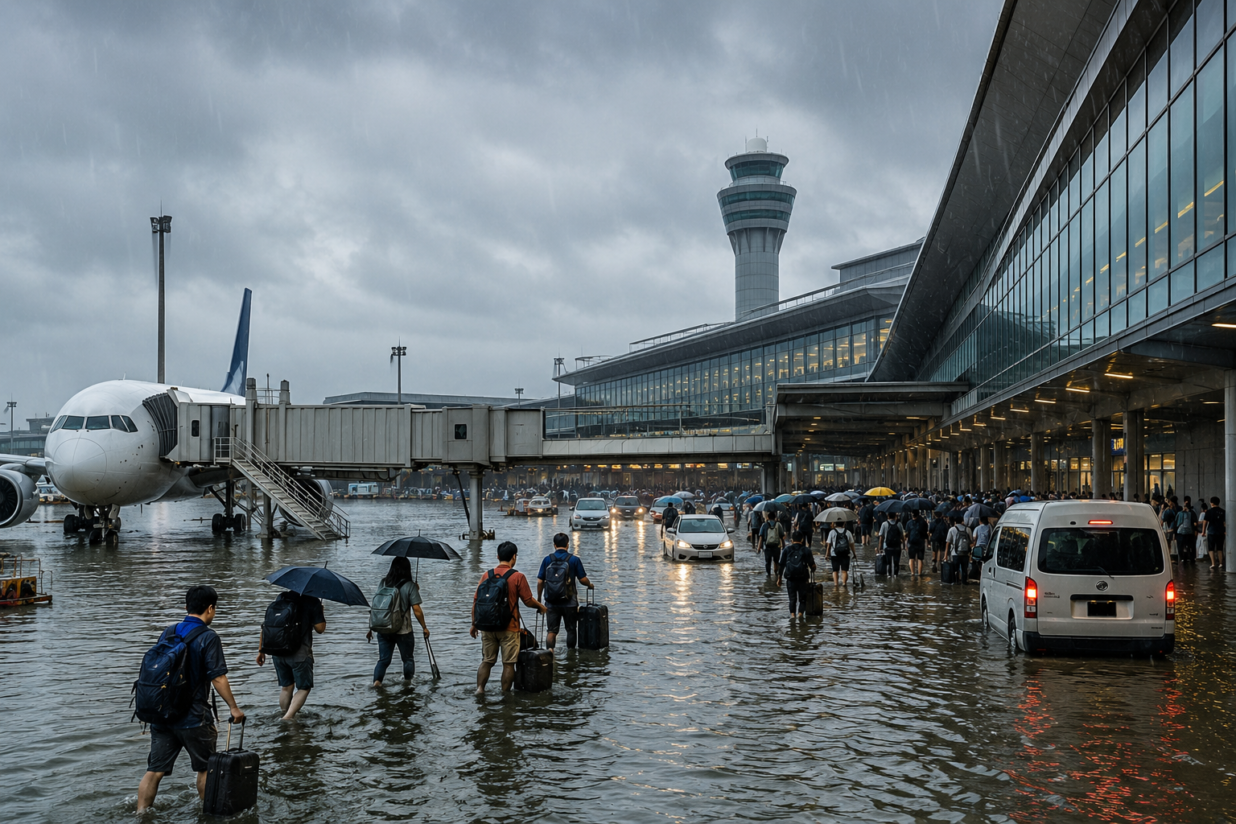
On Thursday, August 13, record rainfall triggered severe flooding in Japan, stranding thousands of passengers at Narita Airport and affecting road and train services throughout Chiba Prefecture.
At least four people died as a result of the terrible weather, and thousands of travelers had major transportation issues during one of Japan’s busiest holiday seasons.
Chiba, east of Tokyo, experienced more than 360 millimeters of rain in 24 hours. Heavy rains inundated roads and railroad lines, disrupting power supplies to over 25,000 households.
Extreme weather prompted a large emergency response. Soldiers were dispatched to impacted areas to aid in rescue and relief efforts, while authorities tried to assist citizens and control widespread flooding.
Governor of Chiba, Toshihito Kumagai, described the scenario as exceedingly rare. He stated that the amount of rain was extraordinary, even considering Japan’s historical meteorological standards.
Narita Airport Disruption Leaves Thousands Stranded
The severe rain posed significant challenges for travelers utilizing Narita International Airport, one of Japan’s largest international aviation hubs.
An airport official stated that around 7,000 individuals were stranded at the facility due to flooding and transportation issues that made it difficult for passengers to leave or arrive at the airport.
Despite the disturbance in the surrounding area, officials said flights were expected to resume regularly on Thursday. Japan Airlines also cautioned that certain flights could be delayed, however no cancelations were expected at the time.
The most difficult difficulty for travelers was ground transportation.
Several major Chiba highways remained closed, including crucial roads connecting Narita with central Tokyo. Motorists were compelled to seek alternate routes due to the restrictions, resulting in high traffic and lengthy delays.
Rail transportation was also impacted. Several rail services were suspended Thursday morning, however several links between Narita and Tokyo have reopened.
The transportation issues added to the pressure on travelers, who were already coping with long waits and restricted transit options.
The disruption was especially significant because the torrential rain fell during Japan’s peak holiday season, when many people traveled across the country.
Flooding and Power Outages Add to Japan’s Weather Crisis
The effects of the downpour went far beyond the airport and transportation network.
Floodwaters inundated roadways and impacted villages around Chiba. Power interruptions exacerbated the problems encountered by local residents.
According to authorities, four people died as a result of the harsh weather. At least one individual was apparently trapped inside a submerged car.
Emergency teams and soldiers were dispatched to the affected areas as officials assessed the damage and continued relief efforts.
The flooding showed how rapidly significant rainfall can damage a highly populated area with important transportation ties.
Chiba’s proximity to Tokyo means that interruptions can swiftly affect commuters, tourists, businesses, and foreign travelers.
Travellers Face Delays as Recovery Efforts Continue
Passengers at Narita Airport’s top priority was finding safe methods to continue their journeys.
Although aircraft were scheduled to operate, getting to the airport proved challenging due to damaged or flooded roads and affected rail services.
Authorities continued to strive to reopen transportation routes and help those affected by the water.
Travelers were warned to expect delays as road and train services gradually restored to normal.
The incident also underscores the difficulties Japan faces when abnormally heavy rains hit major urban and transportation hubs.
Japan has significant disaster preparedness systems, but the speed and intensity of the downpour demonstrated how rapidly floods can put a strain on highways, railroads, airports, and other infrastructure.
Rescue and recovery efforts continue as authorities analyze the damage and try to restore normal services throughout Chiba.
- Join our whatsapp channel for daily updates.
- Follow tazatimesnews Telegram Channel for latest news alerts.
- Follow TazaTimesNews on TruthSocial for exclusive updates
- Also reads : China Inflation Eases in July with Factory-Gate Prices at 3-Month Low