
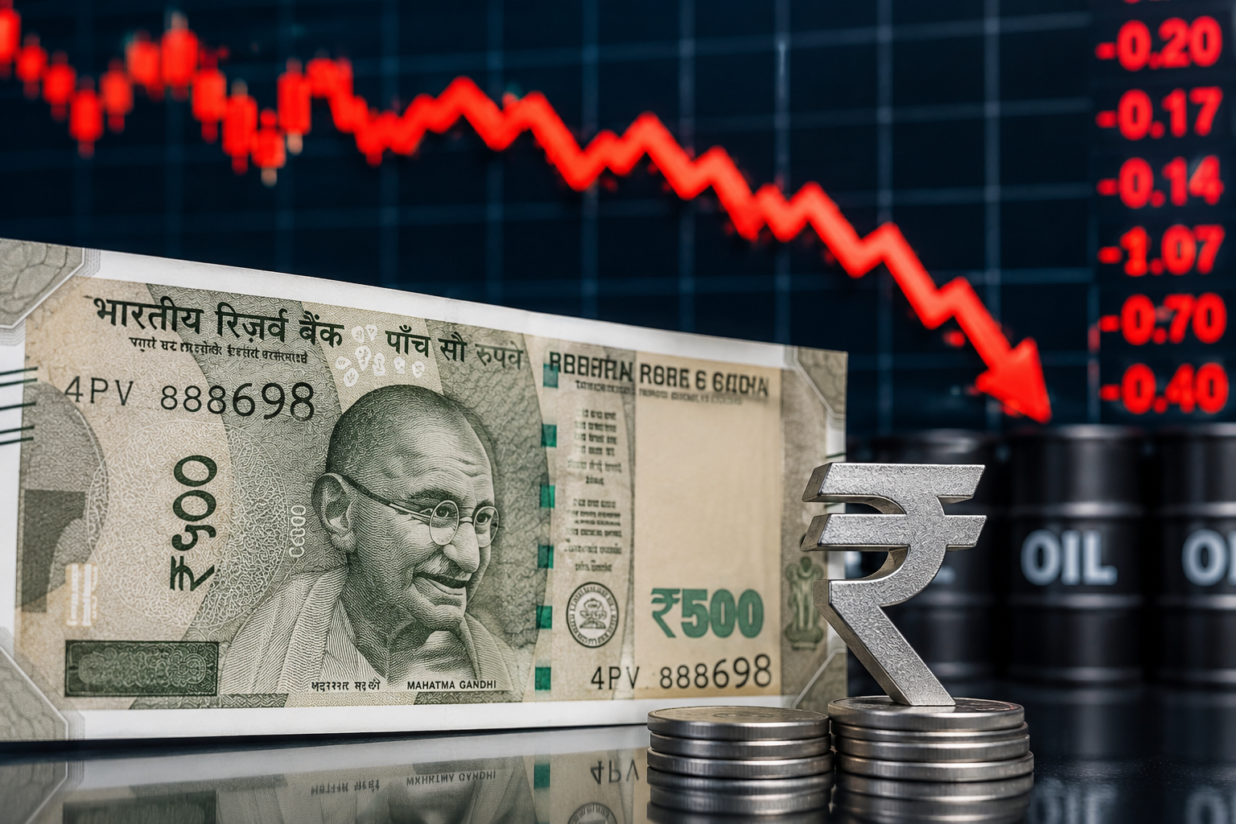
The Indian rupee is projected to open down versus the US dollar on Tuesday, August 11, 2026, as rising crude oil prices continue to pound the domestic currency. Traders are keeping a close eye on the Reserve Bank of India (RBI), which is expected to play an important role in minimizing any currency depreciation.
The Indian rupee finished Monday at 95.30 per US dollar. Currency dealers forecast it to open in the 95.35-95.40 area on Tuesday, implying that the currency may continue under pressure in the early trading session.
The fundamental cause for the downturn is a dramatic increase in global crude oil prices, as well as increased uncertainty surrounding US-Iran peace talks. Because India imports a large amount of its crude oil requirements, increasing oil prices raise the country’s import bill and increase demand for US dollars, which frequently lowers the rupee.
Indian Rupee Remains Under Pressure Despite RBI Intervention
Recent sessions have seen the Indian rupee move in a narrow but weak range. Over the last three trading days, it fluctuated between 95.10 and 95.30 per dollar, with continuous dollar demand preventing a major recovery.
Market participants believe the RBI intervened again on Monday, selling dollars near the 95.25 level to stabilize the rupee. Despite these attempts, the rupee closed the session lower.
According to a currency trader at a bank, the RBI has routinely sold dollars in the market. The dealer believes that if the central bank had not intervened, the dollar-rupee exchange rate may have risen well above 95.50.
Indian Rupee Outlook Depends on RBI Support and Oil Prices
The Indian rupee’s short-term future will be largely determined by two factors: crude oil prices and the RBI’s response to sustained dollar demand.
Oil prices rose substantially on Monday as speculation about a possible US-Iran peace deal grew. Brent crude increased by around 5%, while concerns about the reopening of the strategically crucial Strait of Hormuz fueled market nervousness.
The Hormuz Strait is one of the world’s most vital oil shipping routes. Because the waterway transports a substantial portion of international energy supply, any disruption can have an immediate impact on global petroleum prices.
Brent crude rose closer to $88 a barrel in Asian trading on Tuesday, putting more pressure on oil-importing countries like India. Higher energy prices typically result in increased demand for foreign currency, which might further weigh on the rupee.
So far, the RBI’s intervention has managed to avoid a significantly harsher collapse. However, traders believe the central bank will have to continue selling dollars if crude oil prices remain high.
Indian Rupee May See More Volatility as U.S.-Iran Tensions Persist
Another major factor influencing the Indian rupee is the future of US-Iran discussions. On Monday, US President Donald Trump reacted to Iran’s demands for a peace pact with his own set of requirements, injecting more uncertainty to global energy markets.
Investors are eagerly monitoring these events since any movement toward a deal might boost oil supply expectations and potentially lower crude prices. On the other side, protracted tensions may keep energy costs high, putting pressure on oil-importing economies like India.
Currency traders are also keeping an eye on US Treasury yields, which have increased in tandem with rising oil prices. Higher US yields generally benefit the dollar and might put additional pressure on emerging market currencies like the Indian rupee.
For now, traders expect another cautious trading session. Crude oil prices, U.S.-Iran developments, and RBI dollar sales are likely to remain the key factors influencing the direction of the Indian Rupee in the coming sessions.
- Join our whatsapp channel for daily updates.
- Follow tazatimesnews Telegram Channel for latest news alerts.
- Follow TazaTimesNews on TruthSocial for exclusive updates
- Also reads : Gold Prices Ease After Seven-Week High as US Inflation Data Takes Center Stage