
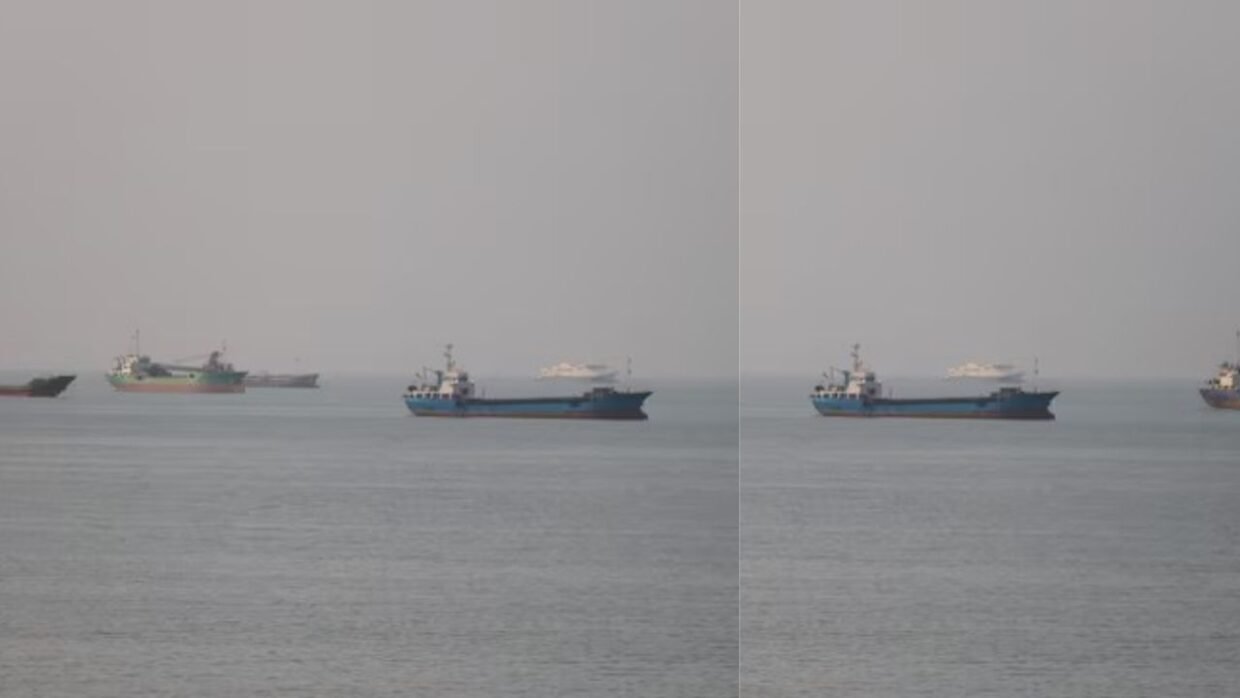
Strait of Hormuz : Shipping through the Strait of Hormuz has slowed considerably after Iran claimed that it had once again closed the crucial waterway, raising new concerns for global trade and energy markets. The action has placed pressure on foreign shipping companies and prompted concerns about the potential disruption of Gulf oil supplies.
The Strait of Hormuz is one of the world’s most vital sea passages, linking the Persian Gulf to the Gulf of Oman. This tiny river transports a huge portion of global energy exports, thus any disruption is a big worry for governments, businesses, and fuel markets.
According to maritime data, traffic via the strait has reduced dramatically since Iran’s statement. According to data from marine analytics firm Kpler, only five vessels passed through the channel on Sunday, down from 26 the day before. Among the vessels were big crude carriers transporting millions of barrels of Saudi oil and fuel.
Strait of Hormuz Shipping Disruption Raises Global Market Concerns
Iran claimed that the new blockade was caused by violations of a temporary peace agreement by the US and Israel. The declaration comes after a brief period of improved shipping activity following diplomatic efforts between Tehran and Washington.
The decision has generated uncertainty for ship operators, many of whom are hesitant to send vessels through the area. Some businesses are waiting for more concrete security guarantees before fully resuming normal operations. According to previous reports, shipping companies expected a lengthier time of uncertainty before returning to the route with confidence.
The United States has challenged Iran’s claim that the waterway is totally closed, claiming that commercial movement continues. However, market data revealed that the news had an immediate impact on shipping movement and raised anxiety among energy merchants.
Gulf oil-producing countries are likewise dealing with the uncertainty. To maintain exports despite shipping constraints, several regional suppliers have provided flexible loading alternatives.
The decline comes at a critical time for the global energy markets. A lengthy disruption in the Strait of Hormuz might have global implications for crude oil prices, transportation costs, and supply chains. Businesses that rely on fuel imports are keeping a careful eye on developments as tensions escalate.
Iran Hormuz Closure Impact on Oil Trade and International Relations
The prolonged closure has put additional strain on Iran’s already weak diplomatic relations with the United States. Talks to reduce tensions have resumed, but differences over regional conflicts and other matters continue to impede progress.
The Strait of Hormuz has become a source of contention since it grants Iran great control over a crucial global trade route. Any further restriction could pose economic issues not only for Gulf countries, but also for markets in Asia, Europe, and other regions.
Shipping companies are increasingly monitoring security circumstances before making future journey plans. Some vessels may continue to operate, while others may avoid the passage until the situation clears.
According to energy specialists, the impact will be determined by the length of the disruption and the success of diplomatic measures to restore calm shipping conditions. A rapid settlement could soothe markets, but a prolonged closure could put additional pressure on fuel prices and global supply networks.
The situation emphasizes the vulnerability of major marine routes, as well as the link between geopolitical crises and the global economy. As governments continue to negotiate, businesses around the world are looking for signals that shipping through the Strait of Hormuz will resume normal operations.
- Join our whatsapp channel for daily updates.
- Follow tazatimesnews Telegram Channel for latest news alerts.
- Follow TazaTimesNews on TruthSocial for exclusive updates
- Also reads : Germany Pension Reform Plan: Proposal Suggests Raising Retirement Age