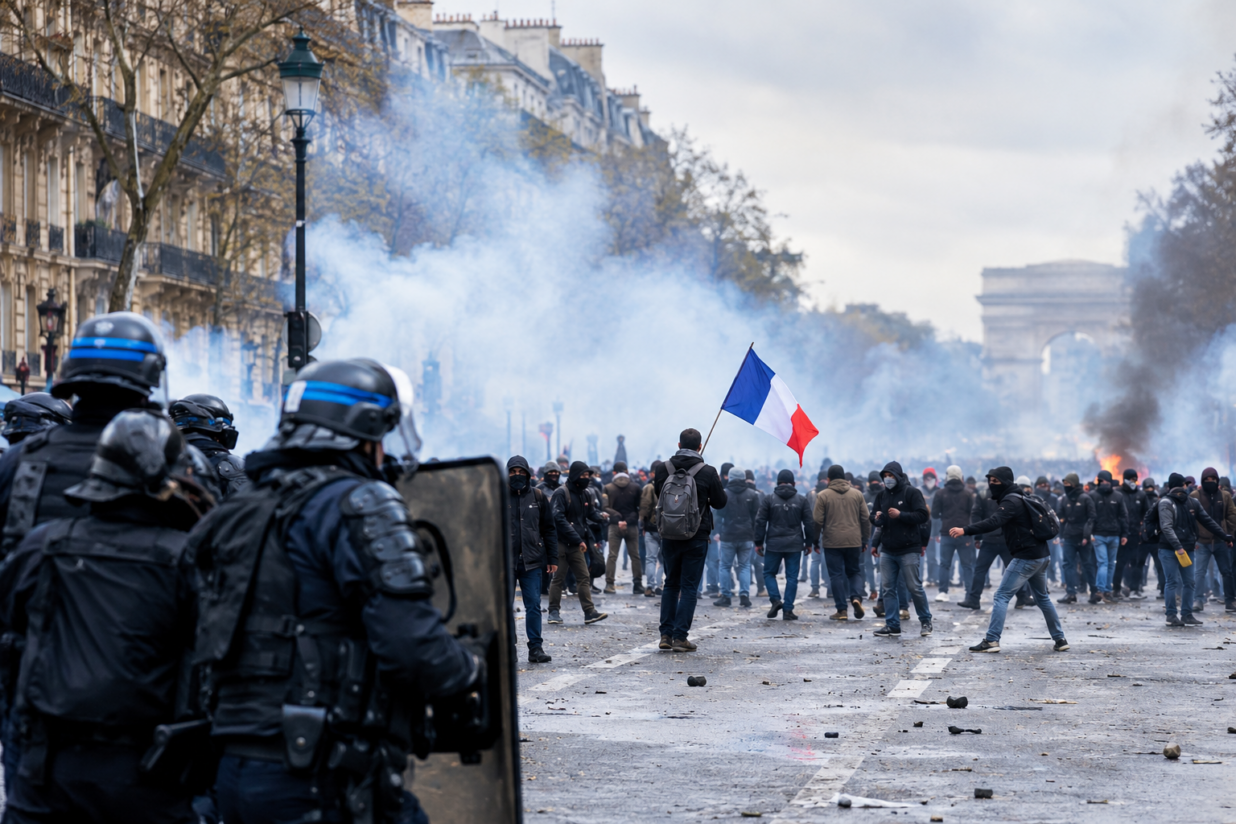
On Saturday, France was rocked by widespread unrest as protests over growing living costs and public service funding became violent. Interior Minister Laurent Nunez said approximately 1,000 people had been arrested, and warned that the figure may rise as police operations continued.
Protests were held in Paris, as well as Lyon, Lille, Marseille, Montpellier, Nantes, and Toulouse. In areas where clashes erupted, police fired tear gas and water cannons to disperse people.
Students, trade unions, political organisations, and others participated in the demonstrations. What began as a movement focused on education and school conditions has evolved into a broader campaign against rising living costs and public service concerns.
France Protests Spread Across Major Cities
The French authorities projected that approximately 410,000 people participated in demonstrations across the nation. The organisers put the figure far higher, at almost 800,000.
Nunez compared the latest arrest numbers to those from the previous Saturday, when police had made 385 arrests by the same time. He stated that the current figure was close to 1,000 and could climb more.
In Paris, authorities announced that the demonstration on the Cours de Vincennes had been dissolved following conflicts between demonstrators and police near the march’s back. Police stated more than 500 persons who they classified as rioters were present near the end of the event.
A gendarmerie helicopter was sent to help authorities on the ground and search for any remaining gangs. After objects were hurled at them, police responded with tear gas grenades and water cannons.
Other cities also witnessed clashes. In Lyon, riot police sprayed tear gas on a group of roughly 150 demonstrators attempting to block a main road in an area where protests were restricted.
Despite prohibitions on meetings in central Lyon, local authorities believe that about 10,000 people participated in the protests. According to officials, groups wandered across the city throughout the afternoon without a clear direction.
Local officials in Toulouse reported that 26,000 people participated in the demonstrations. Political leaders, unions, students, activists, and non-governmental groups, such as Amnesty International, all took part in the demonstration.
France Protests Draw Political Reactions
Jean-Luc Melenchon, the left-wing party France Unbowed’s leader and presidential candidate, denounced the police response in Paris. In X writings, he claimed authorities and television coverage of portraying the events in a way that fuelled resentment toward the protest movement.
Melenchon also questioned the deployment of tear gas and how people were handled at the march’s rear. He asked the public to examine events independently rather than relying entirely on television coverage.
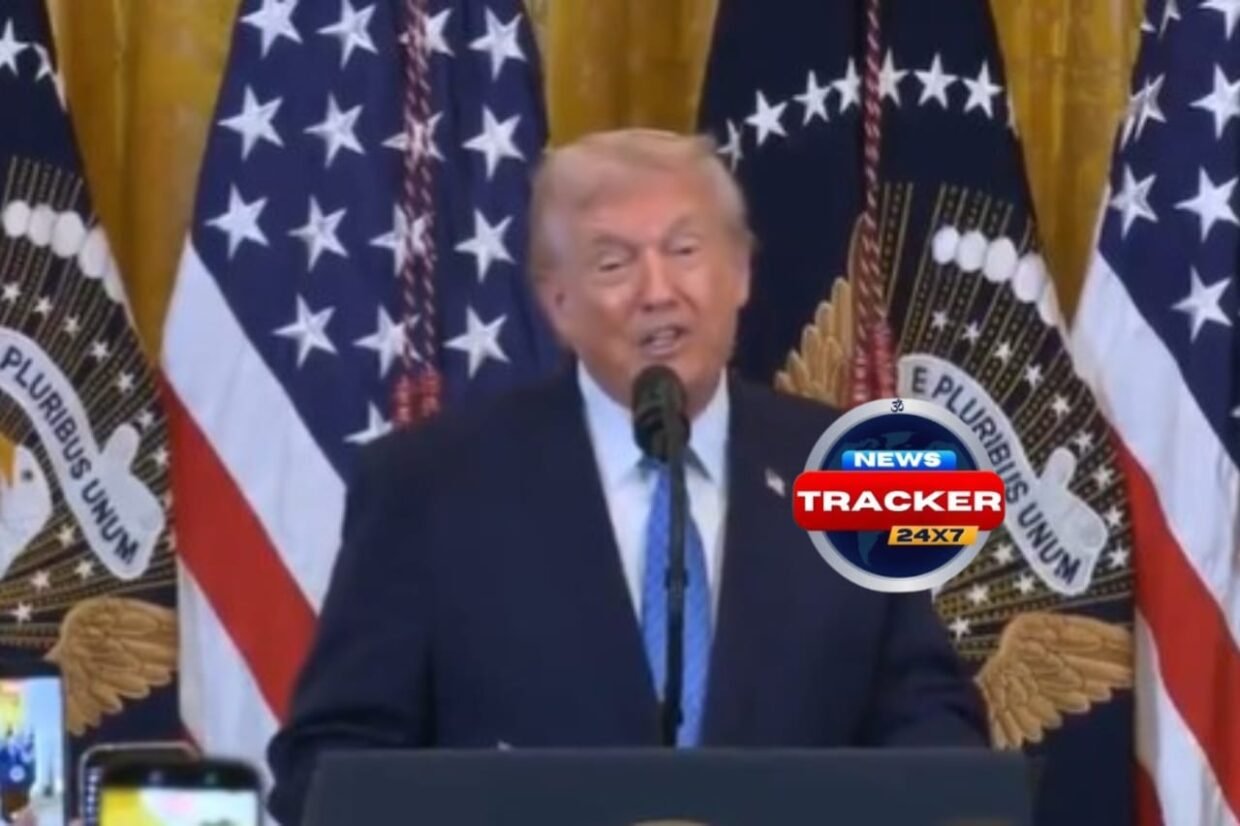
The turmoil also fuelled political discussion in the United States. President Donald Trump slammed France’s immigration policies during a rally for Republican candidates in Perry, Georgia, on Saturday local time. He linked the crisis in France to immigration, criticising those entering the nation.
The demonstrations have grown beyond the student protests that started more than a month ago. These early initiatives concentrated on high school conditions, teacher shortages, school timetables, and the disparities between public and private education.
Trade unions, civil society organisations, and the Yellow Vests movement have all joined the larger mobilisation. The most recent conflicts came after violence broke out during cost-of-living rallies the previous week.
With around 1,000 arrests and demonstrations reported in many cities, the protests have become a national challenge for French authorities. As police activities continue, the immediate priority is on regulating public gatherings and responding to any future unrest.
- Join our whatsapp channel for daily updates.
- Follow tazatimesnews Telegram Channel for latest news alerts.
- Follow TazaTimesNews on TruthSocial for exclusive updates
- Also read : Finland FM Criticises US Move on Russian Oil, Urges Visa Curbs