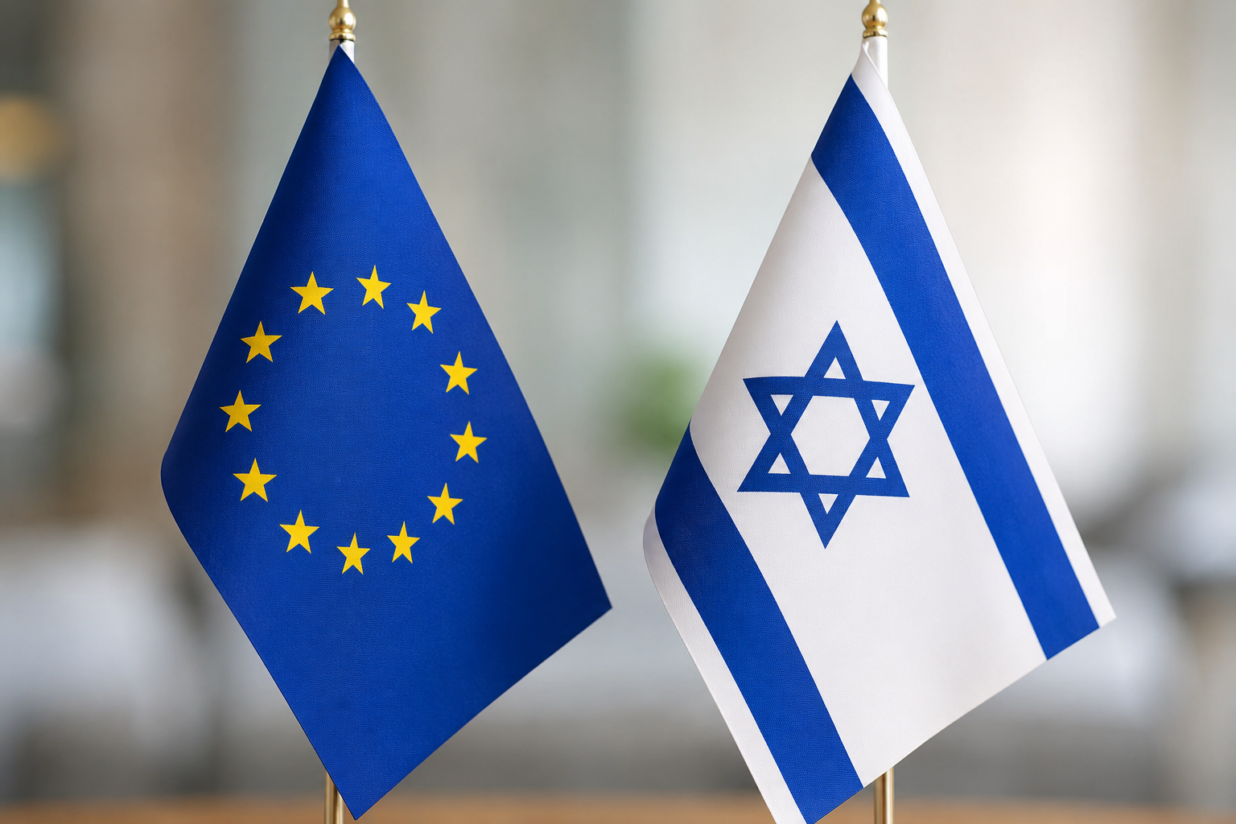
EU Israeli Settlements : Foreign ministers from the European Union will meet to consider whether to tighten trade restrictions on items produced in Israeli settlements in the occupied West Bank. While the debate indicates a rising call for stronger action, major divisions among EU member states make a speedy conclusion improbable.
The discussion comes as the world community becomes increasingly concerned about violence in the West Bank, the continuous construction of Israeli settlements, and legal issues surrounding trading with territory largely considered as occupied. Diplomats expect the meetings to explore potential policy choices rather than reach a final agreement.
EU Israeli Settlements Debate Focuses on New Trade Restrictions
According to European diplomats, ministers will review a confidential document created by the European Commission outlining three potential measures to limiting trade with Israeli settlements. The options include establishing a specific import license system, imposing hefty tariffs on settlement products, or outright prohibiting imports from such locations.
The recommendations come as numerous EU states urge a firmer response to the ongoing settlement development in the occupied West Bank. Many European officials feel that settlement activity undermines efforts to reach a two-state solution and raises tensions in the region.
The subject has received renewed attention following the International Court of Justice (ICJ)’s 2024 advisory opinion, which declared that Israeli settlements in occupied Palestinian territory are unlawful under international law. Although the ICJ’s ruling is not legally enforceable, it has fueled calls in Europe for policies that distinguish between Israel and settlements outside its internationally recognized borders.
Israel adamantly denies that the settlements are unlawful and maintains historical and security claims to the territory. Israeli officials have persistently fought international efforts to prohibit trade with settlement towns.
EU Israeli Settlements Discussions Highlight Political Challenges
Despite increasing support for stiffer sanctions, diplomats fear achieving an agreement will be difficult. The European Union has long had internal disagreements over Middle East policy, with member states frequently taking opposing viewpoints on relations with Israel and the Palestinian territories.
One key legal question is whether new trade restrictions can be adopted with a qualified majority vote or if all EU member states must agree. That uncertainty is expected to be a focal point of the ministers’ discussions.
Earlier this year, the European Union slapped fines on persons involved in significant human rights violations related to settler violence in the West Bank. These policies mirrored growing concern inside the bloc, but they did not specifically target trade involving settlement goods.
Analysts say any future limits might have a political and economic impact on EU-Israel relations, which are one of the bloc’s most important business partnerships. Supporters say that separating settlement products from commodities produced within Israel’s internationally recognized borders will bring EU trade policy more in line with international legal standards.
Officials expect Monday’s meeting to be primarily a political debate, rather than the start of immediate penalties. Even without a definitive conclusion, the debate demonstrates how the European Union is under increasing pressure to explain its position on Israeli settlements as tensions in the Middle East persist.
- Join our whatsapp channel for daily updates.
- Follow tazatimesnews Telegram Channel for latest news alerts.
- Follow TazaTimesNews on TruthSocial for exclusive updates
- Also reads : Goldman Sachs Says Japan Leads Asia’s Buyout Opportunities as Private Equity Activity Grows