
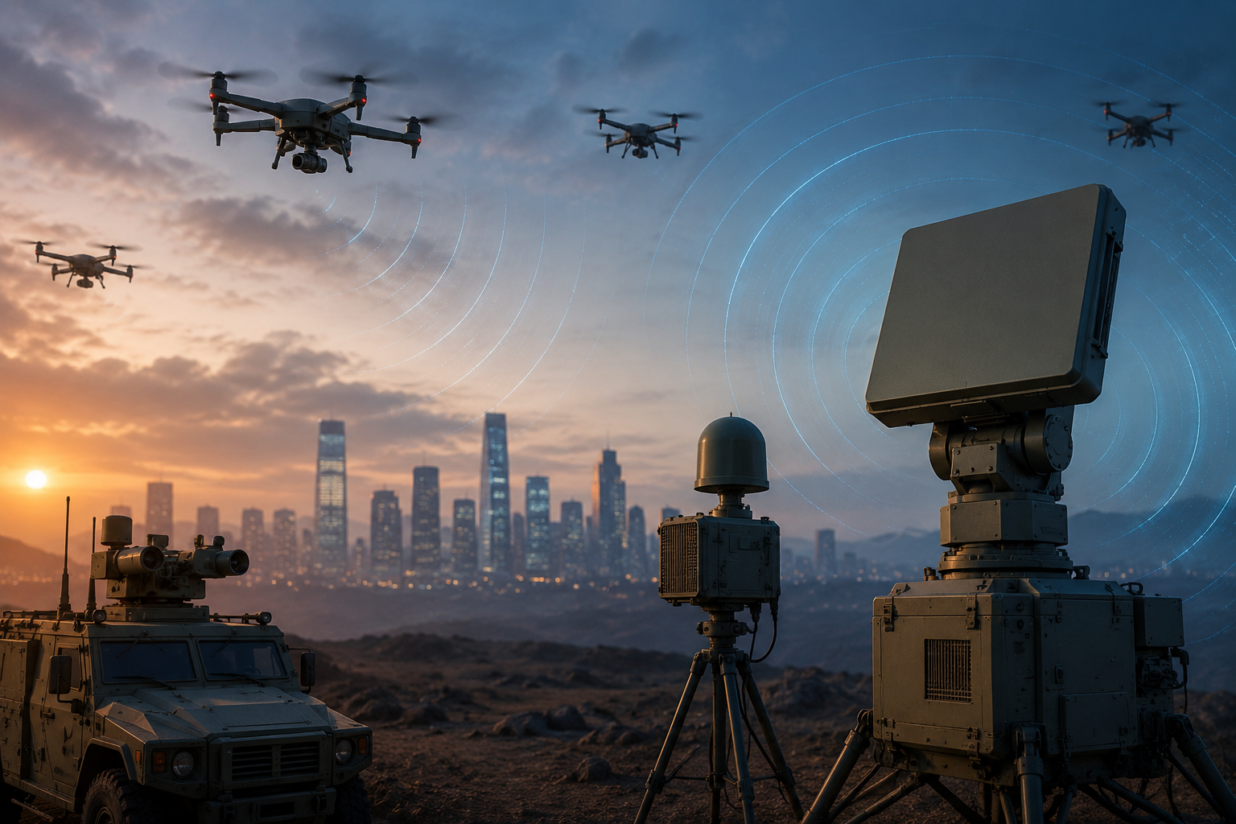
Drone Strikes :The global market for anti-drone technology is rapidly expanding as drone-related incidents spread beyond traditional battlefields to include airports, energy facilities, maritime routes, and public infrastructure. While drones have become valuable tools in both the military and civilian sectors, their increased use has raised new security issues, prompting governments and corporations to invest extensively in systems to identify, track, and halt unwanted aircraft.
Recent conflicts in Eastern Europe and the Middle East have demonstrated the viability of low-cost drones in modern warfare. These incidents have also shown how difficult it is to protect against swarms of small unmanned aircraft. As a result, security agencies and commercial businesses are looking for innovative solutions that can detect emerging threats before they cause significant impact.
Anti-Drone Technology Market Expands Amid Security Concerns
Industry researchers predict that the worldwide anti-drone sector will expand dramatically during the next decade. According to market projections, investment on drone defensive systems might more than triple by 2030, as enterprises seek improved security against unwanted airborne activity. Radar networks, radio-frequency sensors, electronic jammers, and specialist interceptor drones are all becoming increasingly popular technology.
Major defense and technology corporations are creating new devices to detect and neutralize threats. Some solutions utilize electrical interference to impair drone communications, whereas others employ artificial intelligence to detect suspect flying patterns. In numerous nations, airports and critical infrastructure operators have already begun to construct dedicated drone detection networks to increase security.
The rising emphasis on drone defense is also driving investment in next-generation autonomous aircraft. Defense industries are developing advanced unmanned systems that can work alongside traditional military capabilities to identify and defeat hostile drones. These innovations are becoming an important aspect of future security planning in Europe and other places.
Future of Anti-Drone Technology Faces Regulatory Challenges
Despite robust global growth, experts warn that the anti-drone business continues to confront significant challenges. Many countries have strong laws in place for the use of electronic jamming devices and kinetic interception systems, especially in densely populated areas. Authorities must strike a compromise between public safety and the necessity to stop harmful drone operations.
Another difficulty is the quick rate of drone innovation. New aircraft are become faster, smaller, and more resilient to electronic countermeasures. Security experts describe the scenario as a never-ending race between drone developers and those developing solutions to stop them. Technologies that are functional now may need considerable modifications in a few years.
Non-defense industries are also joining the market. Energy industries, shipping companies, transportation networks, and hotel organizations are all concerned about the impact that unlicensed drones may have on operations. A single occurrence near an airport, refinery, or major event location might result in substantial financial losses and public safety issues.
As drone activity grows around the world, experts predict that demand for dependable counter-drone technologies will stay high. However, the sector’s success will be determined not only by technological innovation, but also by regulatory permission, price, and the ability to respond to quickly changing threats. The future years will determine which organizations can lead a market that is rapidly expanding into one of the fastest-growing parts of the global security industry.
- Join our whatsapp channel for daily updates.
- Follow tazatimesnews Telegram Channel for latest news alerts.
- Follow TazaTimesNews on TruthSocial for exclusive updates
- Also reads : Sara Tendulkar Stuns in Simple Salwar Suit Look Without Makeup in Viral Video