
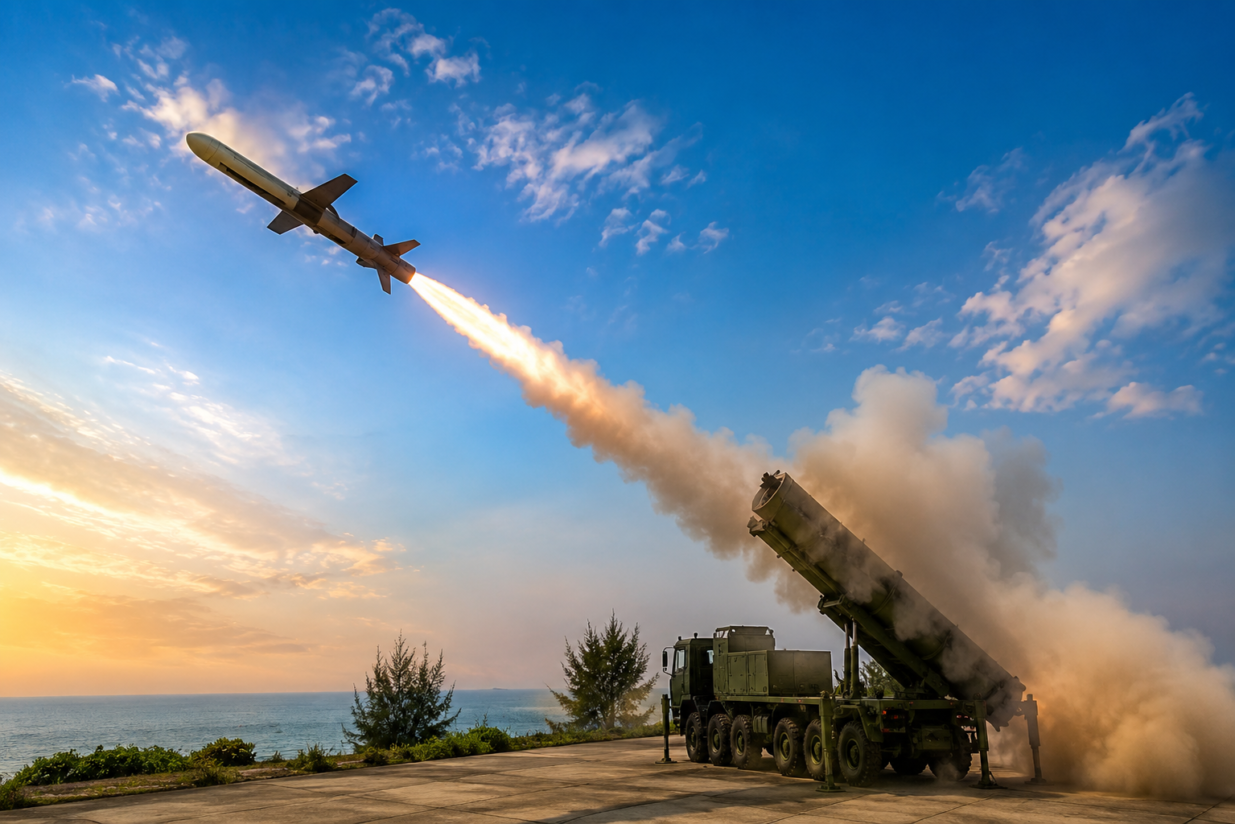
DRDO Successfully Tests : India has reached another significant milestone in its indigenous defense program with the successful flight test of the Long Range Land Attack Cruise Missile (LRLACM) off the coast of Odisha. The successful trial improves India’s developing long-range attack capabilities while also attracting the attention of regional security observers who are tracking the country’s military modernization activities.
The missile was fired from Dr. APJ Abdul Kalam Island, a crucial testing location off Odisha’s coast. According to the Ministry of Defence, the trial met all of its objectives, with tracking and monitoring systems confirming the missile’s functioning throughout the flight. The result represents yet another step forward in India’s efforts to create superior defense technologies through indigenous research and manufacturing.
Officials said the missile was tested in its operational condition, proving vital technology needed for long-range precision attacks. The aircraft was tracked using radar systems, electro-optical tracking devices, and telemetry stations stationed along the way to collect performance data.
Long Range Land Attack Cruise Missile Strengthens Indigenous Defence Capabilities
The Long Range Land Attack Cruise Missile is regarded as one of India’s most ambitious indigenous missile projects. Defence specialists define it as a strategic weapon capable of accurately striking targets over long distances while flying at low altitudes to avoid detection risks. According to reports, the missile can engage targets more than 1,000 kilometers away, considerably increasing India’s conventional strike range.
DRDO officials noted that the most recent test validated various innovative technologies built inside the system. The impressive performance highlighted India’s growing capability in missile guidance, navigation, propulsion, and precise targeting systems. The project also reflects the government’s “Aatmanirbhar Bharat” initiative, which aims to increase self-reliance in defence manufacture.
Rajnath Singh, the defence minister, commended the project’s scientists, engineers, and industry partners. He hailed the successful trial as a significant accomplishment that strengthens the country’s defense preparedness and technological skills.
According to military analysts, developing cruise missiles in-house decreases reliance on foreign suppliers and increases the armed services’ operational flexibility. Such technologies can be deployed across numerous platforms and are widely seen as essential components of current military strategy.
DRDO Successfully Tests : Long Range Land Attack Cruise Missile Signals India’s Strategic Ambitions
The recent breakthrough comes as India is quickly expanding its defense research programs and testing a number of modern missile weapons. Recent DRDO breakthroughs include ballistic missile defense interceptors, anti-ship weapons, and next-generation precision-guided weaponry. These developments aim to improve national security and preserve credible deterrent capabilities.
Security experts believe that the LRLACM program will eventually be a valuable asset to the Indian Army, Navy, and Air Force. Its long-range precision strike capabilities gives the military more options in future combat scenarios, while also aiding India’s goal of developing a stronger local defense ecosystem.
While the successful test has been hailed as a technological milestone, observers warn that additional trials and evaluations will be required before full operational deployment. Nonetheless, the current milestone demonstrates India’s consistent progress in advanced weapons research and strengthens its place among countries that invest extensively in indigenous defense innovation.
- Join our whatsapp channel for daily updates.
- Follow tazatimesnews Telegram Channel for latest news alerts.
- Follow TazaTimesNews on TruthSocial for exclusive updates
- Also reads : New Expressway: Beginning in February, vehicles on the Delhi-Dehradun Expressway will go at full speed.