
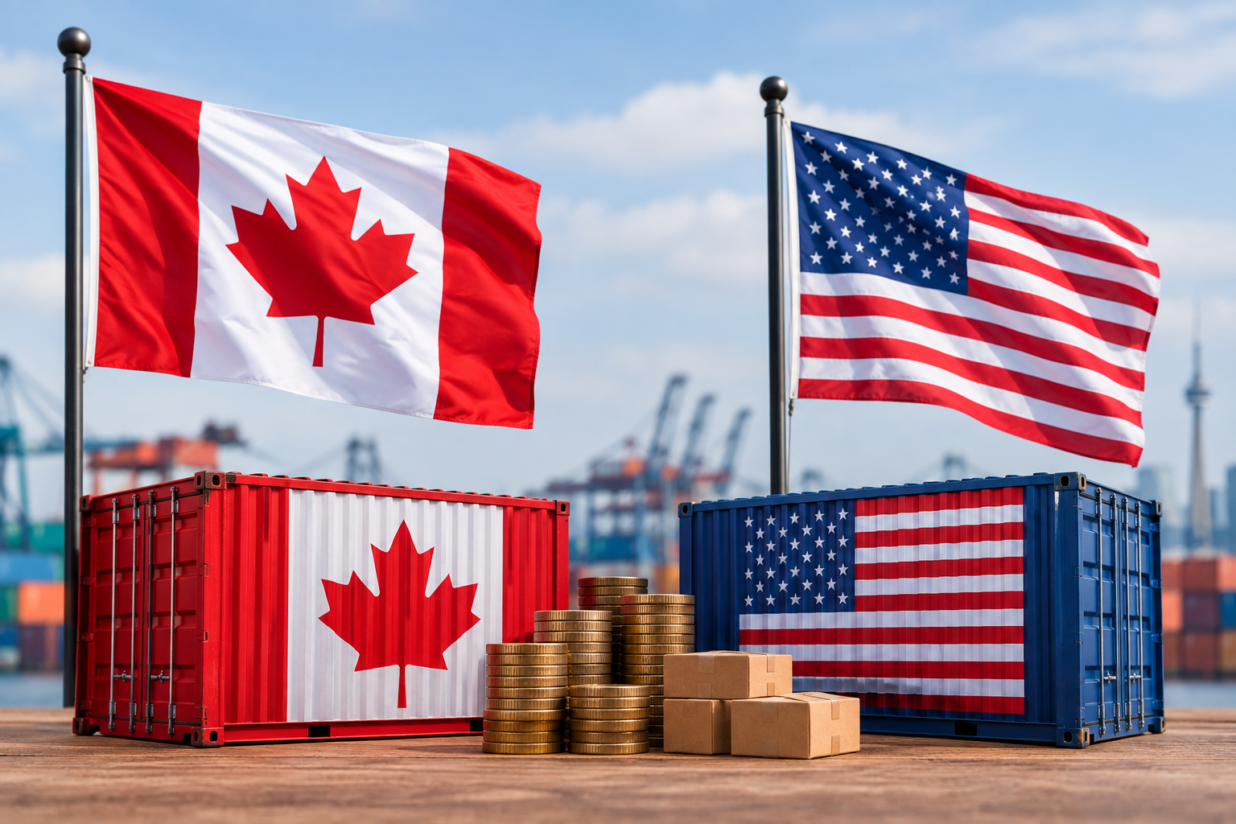
Canada tariffs on U.S. goods came into force shortly after midnight on Tuesday, increasing pressure on the United States as trade talks between the two countries remain stalled. Prime Minister Mark Carney’s government has imposed the new duties after negotiations broke down last month.
The retaliatory measures cover approximately $20 billion in US products. Steel, furniture, apparel, and electronics are all subject to tariffs ranging from 15% to 50%.
Canada Tariffs Add Pressure to US Trade Relations
The additional levies are in direct response to U.S. tariffs placed on Canadian goods last month. The measures have heightened tensions between the two neighboring countries, with officials on both sides blaming one another for the failure to reach an agreement.
Michael Harvey, executive director of the Canadian Agri-Food Trade Alliance and a member of Carney’s advisory committee on U.S. economic relations, cautioned that the conflict may worsen.
Harvey said Canada must find ways to put pressure on Washington, but he also cautioned against letting the situation to spiral into an increasing cycle of additional taxes and counter-tariffs.
The additional steps come as concerns rise about the future of the USMCA free trade agreement. After US President Donald Trump declined to renew the pact for another ten years, it will be reviewed on an annual basis.
US Tariffs Have Hit Key Canadian Industries
Last month, the United States imposed tariffs on various Canadian businesses, including wine, furniture, dairy products, cement, clothes, fishing rods, and hockey equipment.
The restrictions affect around $20 billion, or 5%, of Canada’s exports to the United States. According to Canadian and US government figures, about 68% of Canada’s total exports this year went to the United States.
Due to USMCA exemptions, over 80% of the exports were duty-free. These safeguards have served to mitigate some of the economic effects of the disagreement.
However, the most recent US tariffs were imposed under a Depression-era law, and Ottawa does not benefit from the same USMCA exclusions.
Uncertainty is also influencing fears about future investment and economic growth. Canada is in a disagreement with an economy that is approximately 13 times larger.
No New Talks Between the Two Governments
Last week, Carney stated that Canada is committed to reaching a trade agreement that benefits both countries. However, a Canadian government source stated that no negotiations are currently taking place between ministers or government officials from both sides.
Trump also warned last month that tariffs on Canadian autos, trucks, and auto parts might rise to 50% starting January 1. He also signed an executive order redesignating Lake Ontario as Lake America.
According to polls, Carney remains popular with Canadians, but political watchers anticipate that support will diminish as the economic effects of the trade war become more obvious.
According to a Reuters/Ipsos poll, only 20% of Americans favor President Trump’s tariffs on Canadian exports.
Harvey advised Canada to maintain open lines of contact with Washington and avoid overreacting to American criticism. He suggested that Ottawa wait for the American decision-making process to return its focus to economic matters.
- you join our whatsapp channel
- you join our tazatimesnews Telegram Channel
- you join our tazatimesnews truthsocial.com Channel
- Also reads : Newstracker24x7.com