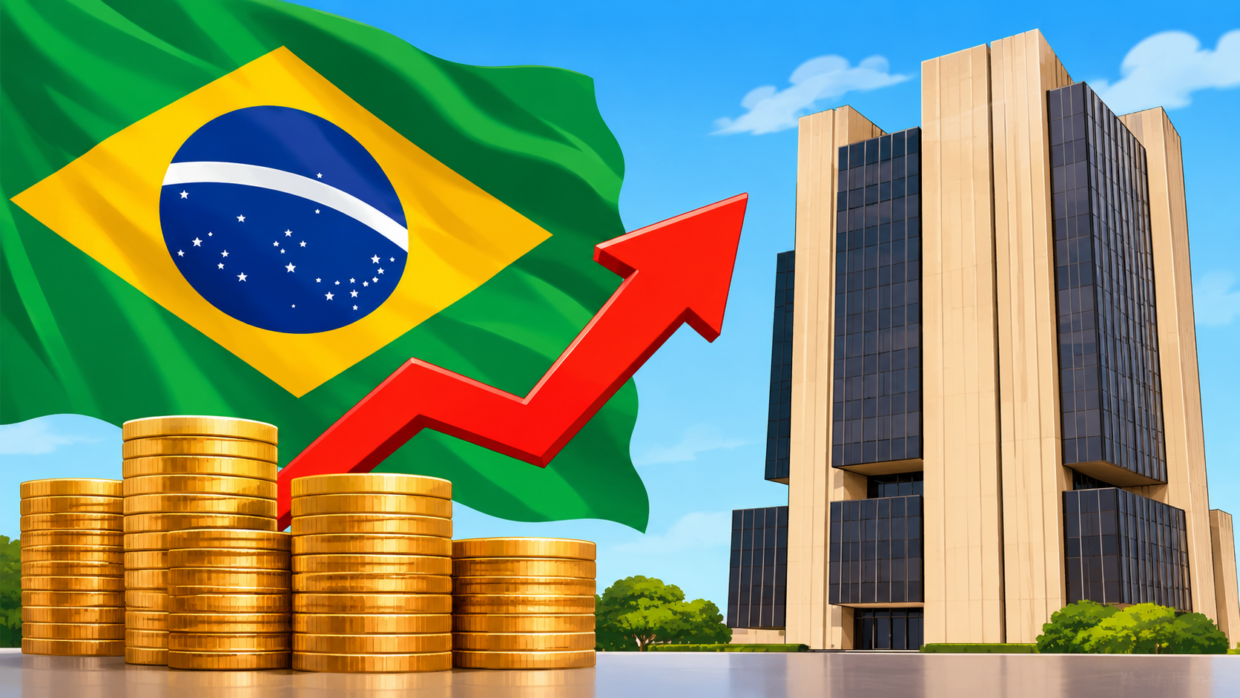
Brazil Central Bank Holds Interest Rates : Following President Luiz Inacio Lula da Silva’s re-election victory, Brazil’s central bank suspended interest rate reduction, leaving the benchmark Selic rate at 13.75%. The decision brings an end to a sequence of cutbacks that began in March, as authorities weigh the danger of greater inflation and changes in the country’s economic outlook.
Copom members voted unanimously to keep the current Selic rate. The decision mirrored market expectations, with 33 of the 48 analysts polled by Reuters expecting borrowing prices to remain steady.
The move indicates a reversal in market expectations following Lula’s stunning victory over Senator Flavio Bolsonaro in the October 25 election runoff. Following the result, Brazil’s currency and stock market plummeted.
Brazil Central Bank Keeps Selic Rate Unchanged
Before to the election, financial markets had widely anticipated the central bank to keep cutting interest rates. Investors predicted two straight 25-basis-point cuts, one in November and the other in December.
However, expectations shifted with the election results. On Wednesday, options contracts sold on the Brazilian market suggested that investors expected no change in borrowing prices.
Copom’s most recent ruling reinforced that shift. Rather than continue the rate-cutting cycle, officials decided to keep the Selic rate at 13.75%.
When the next rate change could occur was not made apparent by the committee. It emphasized the necessity of maintaining monetary policy that is sufficiently restrictive to return inflation to the objective.
This makes it unclear where interest rates will go in the future. The benchmark rate has not been lowered or raised by the central bank.
Brazil Central Bank Warns of Inflation Risks
Policymakers identified many difficulties to the Brazilian economy. They reported that the balance of inflation risks had swung to the positive, implying that price pressures remained a major concern.
At the same time, the committee forecasted a further decrease in domestic economic activity. This creates a challenging scenario for policymakers, who must weigh inflation while judging the rate of economic growth.
The central bank stated that the situation necessitated “serenity and caution” while determining the next steps in monetary policy. It also restated its commitment to maintaining adequately restrictive financial conditions until inflation reaches its objective.
The current move comes after a period of uncertainty in financial markets following Lula’s electoral win. The steep decrease in Brazil’s currency and stock market has led to shifting views about the country’s economic future.
Investors had previously expected additional decreases in borrowing costs, but the election result altered their expectations. The options market’s stance prior of Wednesday’s announcement indicated that traders were no longer expecting quick rate cuts.
For the time being, Brazil’s benchmark Selic rate stays at 13.75%, marking the conclusion of a sequence of decreases that began in March. The central bank has left its next step open, with inflation fears and slowing domestic economy affecting its policy choices.
Copom’s most recent ruling reinforced that shift. Rather than continue the rate-cutting cycle, officials decided to keep the Selic rate at 13.75%.
When the next rate change could occur was not made apparent by the committee. It emphasized the necessity of maintaining monetary policy that is sufficiently restrictive to return inflation to the objective.
- Join our whatsapp channel for daily updates.
- Follow tazatimesnews Telegram Channel for latest news alerts.
- Follow TazaTimesNews on TruthSocial for exclusive updates
- Also read : Michigan Senate Election 2026: Abdul El-Sayed Scores Historic Win