
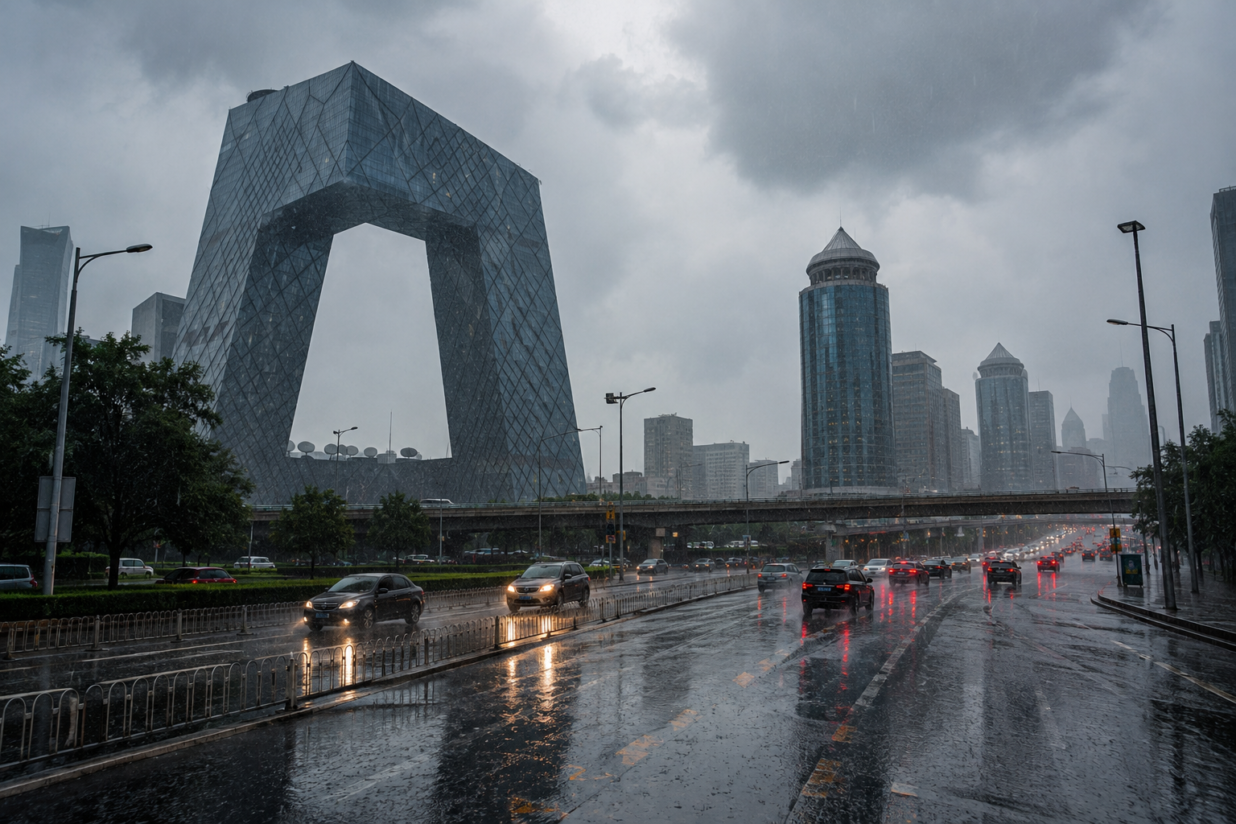
On Wednesday, August 12, 2026, the remnants of Typhoon Dolphin poured torrential rain to Beijing and portions of central China, creating additional concerns about flooding despite the storm’s severe weakening. The weather system traveled almost 6,000 kilometers before going inland, transporting a substantial amount of tropical moisture into northern and central China.
Forecasters have warned that Beijing might get more than one-third of its typical yearly rainfall in only 24 hours. The unusually intense rainstorm has put further strain on the capital’s transportation networks, drainage systems, and flood-control equipment.
As the rain fell, authorities halted many bus routes and issued an orange rainstorm warning. Officials also encouraged residents in low-lying and vulnerable locations to be cautious as flood threats increased.
Typhoon Dolphin Brings Torrential Rain and Flood Risk
Although Typhoon Dolphin weakened as it moved inland, its leftovers continued to cause dangerous weather throughout China. The storm’s circulation drew moisture from the tropics into northern and central regions, causing heavy rain to continue well beyond its original landfall location.
Henan and Hubei provinces were among the worst-affected. According to Reuters, Wugang in Henan received 209.5 mm of rain, while Xiangyang in Hubei received 169.1 mm, both exceeding local August rainfall records.
The heavy rainfall has raised the risk of flash floods, waterlogging, and landslides, especially in locations where rivers, reservoirs, and drainage systems are already overburdened.
Previously, Typhoon Dolphin inflicted significant damage along China’s eastern shore. More than a million people were evacuated before the storm reached landfall, and torrential rain and flooding interrupted flights, public transportation, and other critical services.
Typhoon Dolphin Highlights China’s Growing Extreme Weather Threat
The recent rains has brought to the forefront the growing threat of extreme weather events in China. Scientists and meteorologists have cautioned that climate change could lead to more intense rainfall and stronger weather systems, however individual storms are influenced by a variety of factors.
China has also increased its use of modern weather forecasting technologies, such as artificial intelligence tools that can analyze enormous volumes of atmospheric data and detect severe rainfall patterns more immediately.
The current scenario is especially significant since heavy rains can have a rapid impact on transportation, agriculture, building, and industrial activity. Flooding can destroy roads and infrastructure, interrupt businesses, and result in significant losses for farmers and local communities.
Typhoon Dolphin’s impact, therefore, continues beyond the storm. Even after the system’s greatest winds have passed, the moisture it transported can continue to produce deadly rain hundreds, if not thousands, of kilometers away.
Authorities in Beijing and other impacted regions are now concentrating on monitoring rainfall, protecting vulnerable areas, and mitigating flood threats. The ongoing downpour serves as a warning that a weakened tropical storm can still cause significant damage even after its fiercest winds have dispersed.
- Join our whatsapp channel for daily updates.
- Follow tazatimesnews Telegram Channel for latest news alerts.
- Follow TazaTimesNews on TruthSocial for exclusive updates
- Also reads : China Inflation Eases in July with Factory-Gate Prices at 3-Month Low