
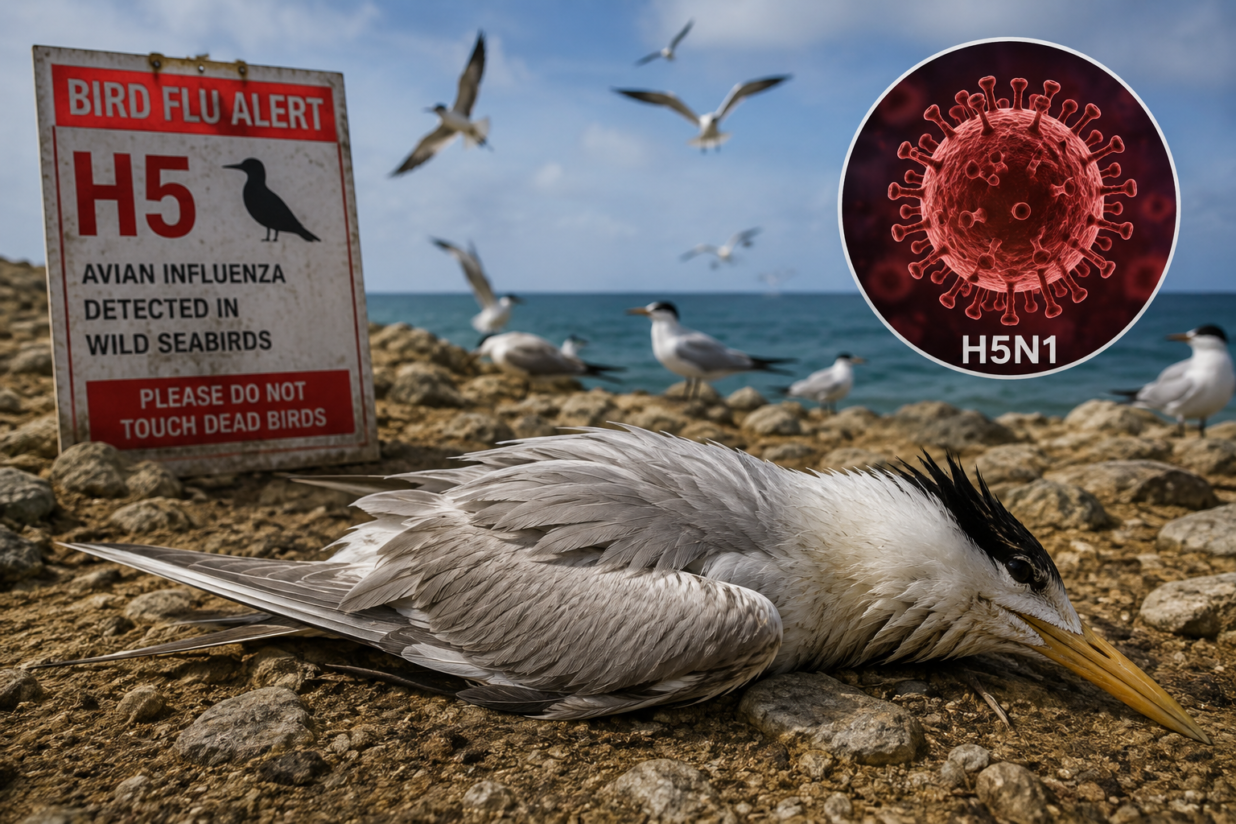
Australia H5 Bird : Australia has identified its first large-scale native seabird mortality event caused by the highly virulent H5 bird flu virus, signaling a significant shift in the country’s response to avian influenza. The outbreak has infected a huge number of greater crested terns in South Australia, but experts say there is no evidence that the virus has moved to commercial poultry farms or the wider agricultural industry.
The confirmation came on Monday, after authorities discovered H5 bird flu in a large number of dead and sick greater crested terns at Baudin Rocks, near Cape Jaffa in South Australia. Wildlife specialists have expressed alarm about the virus’s possible impact on Australia’s native bird populations and coastal ecosystems.
Australia discovered the extremely pathogenic H5N1 strain in wild seabirds in June 2026. Since then, health and agriculture officials have expanded surveillance and testing efforts as more instances have been detected in many Australian states.
Australia H5 Bird Flu Outbreak Reaches a Critical Stage
Agriculture Minister Julie Collins stated that the recent findings mark Australia’s first documented mass mortality episode caused by H5 bird flu in native seabirds. Authorities have now verified 74 H5 bird flu cases in Australia, but officials have stressed that the outbreak is limited to wild birds.
There is no proof yet that commercial poultry farms, cattle, or Australia’s food production systems have been affected. Biosecurity precautions are in place throughout the chicken business, and officials continue to constantly monitor the situation.
Experts believe the virus spreads spontaneously among wild seabirds that congregate in vast breeding colonies along the coastline. Wildlife experts have warned that diseased birds may die as they migrate between breeding and foraging locations.
The Australian government has advised residents not to touch ill or deceased birds. Instead, the public is being requested to report any sightings to local authorities so that trained professionals can collect samples and monitor the spread.
Officials also highlighted that the risk to the general public is negligible. Human infections with H5 bird flu are uncommon and typically develop after intimate contact with infected birds. Australia has recorded no community transmission related to the current wildlife outbreak.
Australia H5 Bird Flu Response Focuses on Wildlife Protection
The outbreak has spurred intensified surveillance of coastal areas where migratory and resident seabirds congregate. Veterinary specialists and wildlife authorities are still testing dead birds and following the virus’s migration through various ecosystems.
Government authorities are also collaborating with conservation groups to study the effects on native bird species. Greater crested terns have been among the birds most affected thus far, and researchers are keeping an eye on surrounding colonies for any future symptoms of illness.
Despite the fact that H5 bird flu has been found in several Australian jurisdictions, officials continue to assure customers that poultry products are safe to eat. To prevent the virus from spreading to domestic bird populations, strict biosecurity precautions are being implemented throughout the country’s poultry industry.
In recent years, Australia has increased its readiness for avian influenza by expanding disease surveillance, strengthening laboratory testing, and coordinating response efforts between the federal and state governments. These procedures aim to detect epidemics rapidly and decrease the danger of transmission to commercial poultry.
The confirmation of Australia’s first large-scale native seabird fatality episode underscores the mounting worldwide threat posed by H5 bird flu. While the immediate impact is primarily noticed by wild birds, authorities warn ongoing monitoring, public awareness, and strong biosecurity measures will be critical in protecting wildlife, agriculture, and public health in the coming months.