
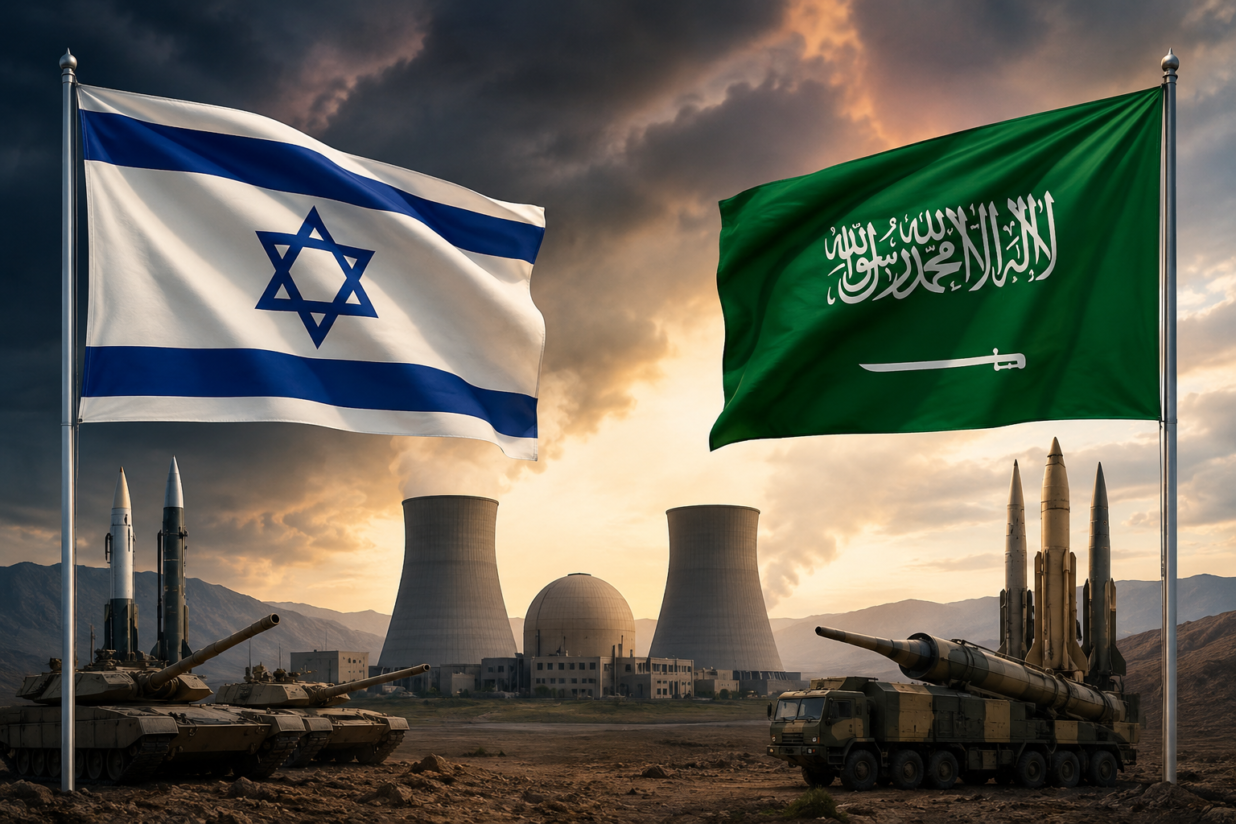
Saudi Nuclear Deal : A new civilian nuclear accord between the United States and Saudi Arabia has generated controversy throughout the Middle East. Supporters believe the agreement will improve energy security and increase strategic collaboration between the two countries.
However, the pact has sparked some concerns in Israel. Several opposition leaders and senior security officials warn that it may spark a new regional scramble for sensitive nuclear technologies.
The deal, announced on July 22, authorizes Saudi Arabia to develop a civilian nuclear energy program with US assistance. It also facilitates uranium enrichment under certain conditions. That provision has been the most contentious aspect of the pact.
Saudi Nuclear Deal Raises Israeli Security Concerns
Saudi Arabia claims that the project will help create more power, reduce carbon emissions, and save oil for export. Officials further maintain that the nuclear program is designed solely for peaceful civilian reasons.
Despite this, many Israeli security professionals remain cautious. They think that uranium enrichment will pose new security challenges in the region. Although enriched uranium is frequently used to generate nuclear electricity, it can also be utilized to support military programs if the enrichment level is significantly increased.
Former Israeli Prime Minister Naftali Bennett has condemned the accord. He regarded it as a strategic loss and cautioned that other Middle Eastern countries may seek similar nuclear rights in the future.
Meanwhile, the Israeli government has not issued an official comment regarding the arrangement. Nonetheless, analysts expect Israeli leaders to closely monitor the argument as the agreement progresses through the US clearance process.
Saudi Nuclear Deal Faces Global Debate
The agreement states that the United States will assist Saudi Arabia in establishing civilian nuclear reactors. Future developments are likely to include participation from American companies such as Westinghouse. Before the deal goes into effect, the US Congress must conduct a 90-day review.
Unlike several past US nuclear accords, this one does not feature the so-called “gold standard.” That standard permanently prohibits domestic uranium enrichment. Furthermore, Saudi Arabia is not compelled to adopt the International Atomic Energy Agency’s Additional Protocol, which allows for broader international inspections.
Supporters claim the accord adheres to US non-proliferation rules. They also believe it will increase American influence in the area and decrease Saudi Arabia’s reliance on countries like China and Russia.
Critics argue that the pact may undermine long-term efforts to limit the proliferation of sensitive nuclear technologies. They believe other countries may now seek similar nuclear agreements.
Saudi Arabia maintains that its nuclear goals are based on energy security and economic development. At the same time, Crown Prince Mohammed bin Salman has already indicated that if Iran develops nuclear weapons, Saudi Arabia will want them. That declaration continues to have an impact on regional security discussions.
Overall, the Saudi nuclear deal is one of the most keenly watched diplomatic moves in the Middle East. While advocates anticipate economic and energy gains, detractors continue to worry that the pact will change the region’s security situation and promote nuclear competitiveness.
Follow TazaTimesNews
- Join our whatsapp channel for daily updates.
- Follow tazatimesnews Telegram Channel for latest news alerts.
- Follow TazaTimesNews on TruthSocial for exclusive updates
Also reads
Trump Air Force One to Receive ‘Maxed Out’ Upgrades After Qatar Aircraft Deal