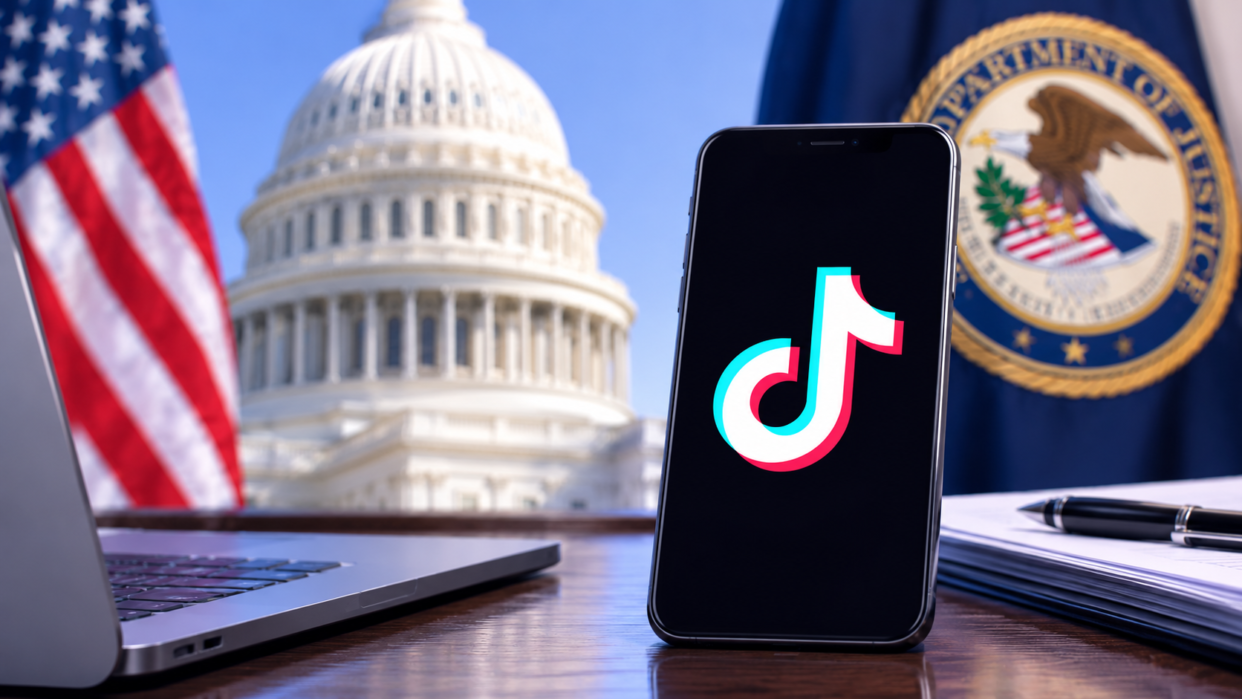
TikTok Government Devices : The United States government has declared that federal employees can now download and use TikTok on government-issued devices, signaling a dramatic reversal of security limitations imposed in 2022. The decision is being hailed as a significant development for the popular social media site, while also reigniting debates over national security, data privacy, and foreign technology regulation.
The United States Department of Justice (DOJ) stated that the policy shift comes after important ownership and security adjustments that it believes have considerably addressed the issues that prompted the federal prohibition.
TikTok Government Devices Policy Changes After DOJ Security Review
TikTok has been banned on most US federal government devices since late 2022, after senators expressed fears that its Chinese parent business, ByteDance, could possibly leak sensitive user information to the Chinese government. As a result, Congress prohibited the app’s usage on government-issued phones, tablets, and computers for federal employees.
Following an exhaustive security examination, the DOJ has concluded that the platform’s altered ownership and operational structure provides improved protections for American users and government data. According to the department, TikTok’s U.S. operations are now managed by a new joint venture called TikTok USDS. Around 80.1% of the venture is held by American and international investors, with ByteDance holding a 19.9% minority interest.
Officials also stated that Oracle’s cloud infrastructure situated in the United States now holds and protects American customer data, application systems, and other key technology. The Justice Department thinks that these steps significantly decrease the national security dangers that originally prompted the restrictions.
As a result, federal personnel can now install and use TikTok on government-issued smartphones as long as agency standards allow it.
TikTok Government Devices Decision Revives Privacy and Security Debate
Despite the regulatory adjustment, cybersecurity experts and numerous lawmakers remain concerned about the platform’s long-term security ramifications. Critics believe that applications with past foreign ownership should be subject to tight government control, especially when used on official government devices that may contain sensitive information.
The Trump administration also declined to enforce a 2024 legislation that would have obliged ByteDance to completely relinquish TikTok’s U.S. operations. Instead, officials recognized the company’s altered ownership structure and enhanced security promises as adequate to meet previous national security concerns.
TikTok remains one of the world’s most popular social media sites, with almost 200 million members in the United States. Despite years of legal and political uncertainty, its impact among corporations, educators, government organizations, and content creators remains strong.
The White House and TikTok did not immediately issue a public statement in response to the DOJ revelation. According to ByteDance, the new organizational structure is meant to increase privacy protections, improve cybersecurity standards, and provide TikTok’s US company with greater operational independence.
According to industry experts, the recent policy shift has the potential to affect future discussions about digital privacy, technological regulation, and foreign investment in American technology companies. Lawmakers are also expected to continue monitoring TikTok’s adherence to its security obligations to guarantee that government material is secured.
The ruling is one of the most significant changes in technology policy in the United States this year. While federal employees are regaining access to TikTok on government-issued devices, the larger argument over balancing innovation, user privacy, and national security is set to persist.
- Join our whatsapp channel for daily updates.
- Follow tazatimesnews Telegram Channel for latest news alerts.
- Follow TazaTimesNews on TruthSocial for exclusive updates
- Also reads : New Zealand Fiji Partnership Renewed for Five More Years to Boost Trade and Regional Security