
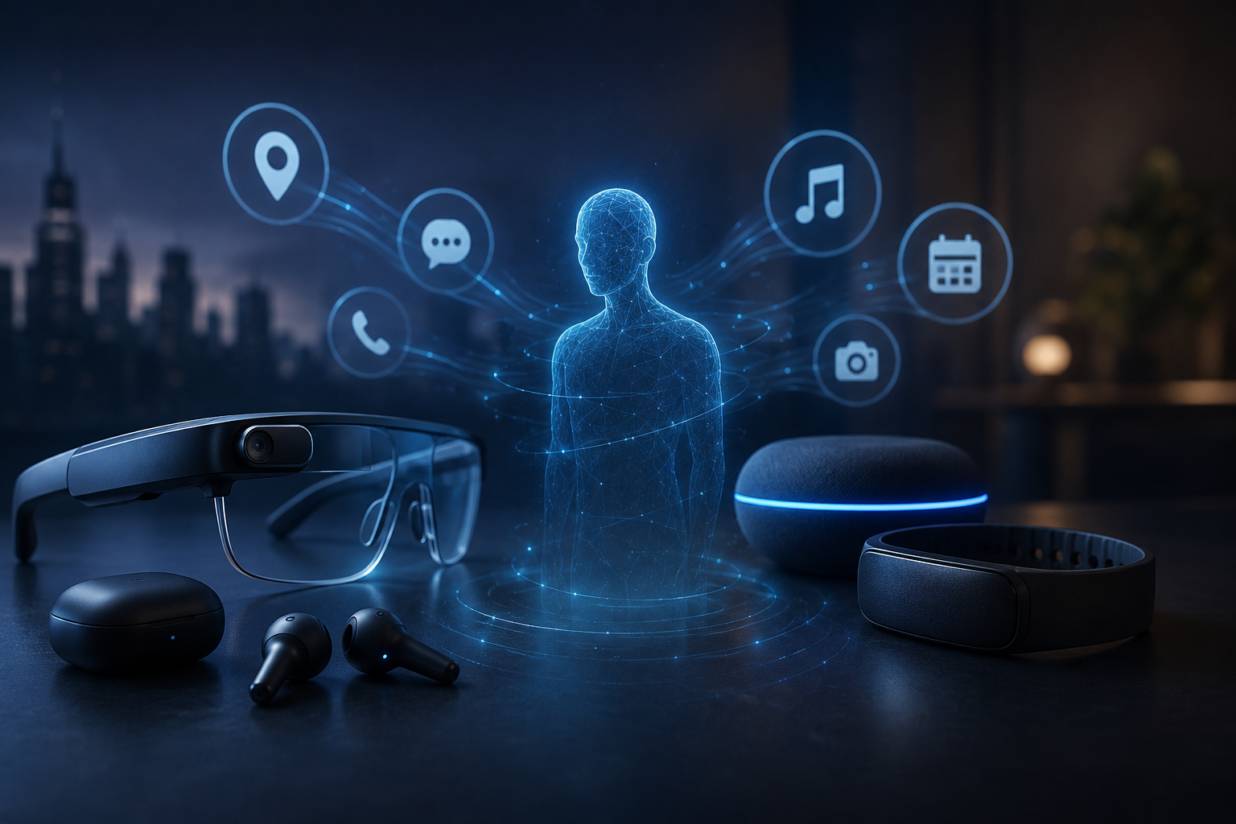
Screenless Technology : Technology companies are preparing for a future where people may spend less time staring at smartphone screens. Instead of relying on traditional displays, many firms are investing in artificial intelligence (AI), smart glasses, voice assistants, and wearable gadgets that can deliver information without requiring users to constantly look at a phone. While the vision promises greater convenience and healthier digital habits, experts warn it could introduce fresh concerns over privacy, surveillance, and dependence on AI.
Smartphones have been central to daily digital life for more than a decade. People use them for communication, shopping, navigation, leisure, banking, and employment. However, rising public awareness of excessive screen time has prompted technology businesses to reconsider how users interact with digital services.
Industry executives now predict that the next generation of computing will move beyond handheld screens. AI-powered assistants are supposed to recognize a user’s surroundings, respond to questions instantaneously, and accomplish activities via voice commands or wearable gadgets.
AI, Screenless Technology, Future Devices
Several companies are developing solutions that might cut the number of times consumers have to unlock their phones each day, potentially hundreds. Smart glasses, AI-powered earphones, wearable cameras, and context-aware assistants are among the technologies in development.
Supporters argue that these advancements could make technology feel more natural. Instead of constantly reading notifications or typing messages, users might get voiced updates, real-time translations, navigation aid, or reminders without disrupting their daily tasks.
Developers suggest that this strategy could increase productivity while allowing consumers to focus more on the people and environments around them. Some people feel that limiting visual distractions can lead to healthier digital habits and less screen fatigue.
However, experts warn that replacing screens does not always imply reduced technology use. In many circumstances, AI-powered wearables may improve the amount of time individuals stay connected by making digital services available practically anywhere throughout the day.
AI, Screenless Technology, Privacy Challenges
Privacy specialists say the shift toward screenless computing creates new challenges that deserve careful attention.
Many wearable devices use microphones, cameras, sensors, and GPS tracking to determine the user’s surroundings. This ongoing collecting of data raises concerns about how personal data is handled, processed, and secured.
Critics are also concerned that persons around may be recorded without their knowledge. Wearable gadgets, unlike smartphones, can function silently in the background, making it difficult for others to detect whether cameras or microphones are engaged.
Another problem is the increased reliance on AI assistance. As these systems improve their ability to make suggestions, manage calendars, and complete daily tasks, users may begin to rely on them for more significant decisions. According to experts, as these technologies advance, companies must provide transparency, security, and user control.
Despite these worries, many observers believe that screenless technology is a significant step in the evolution of personal computing, rather than the death of smartphones. Phones are predicted to be beneficial for activities that need large displays, such as watching films, editing documents, gaming, and creative work.
The coming years will determine whether people accept AI-powered wearables as useful companions or merely as more gadgets. Success will most likely be determined by striking a balance between convenience and robust privacy safeguards, dependable performance, and evident benefits that really improve daily living rather than introducing another layer of digital dependence.