
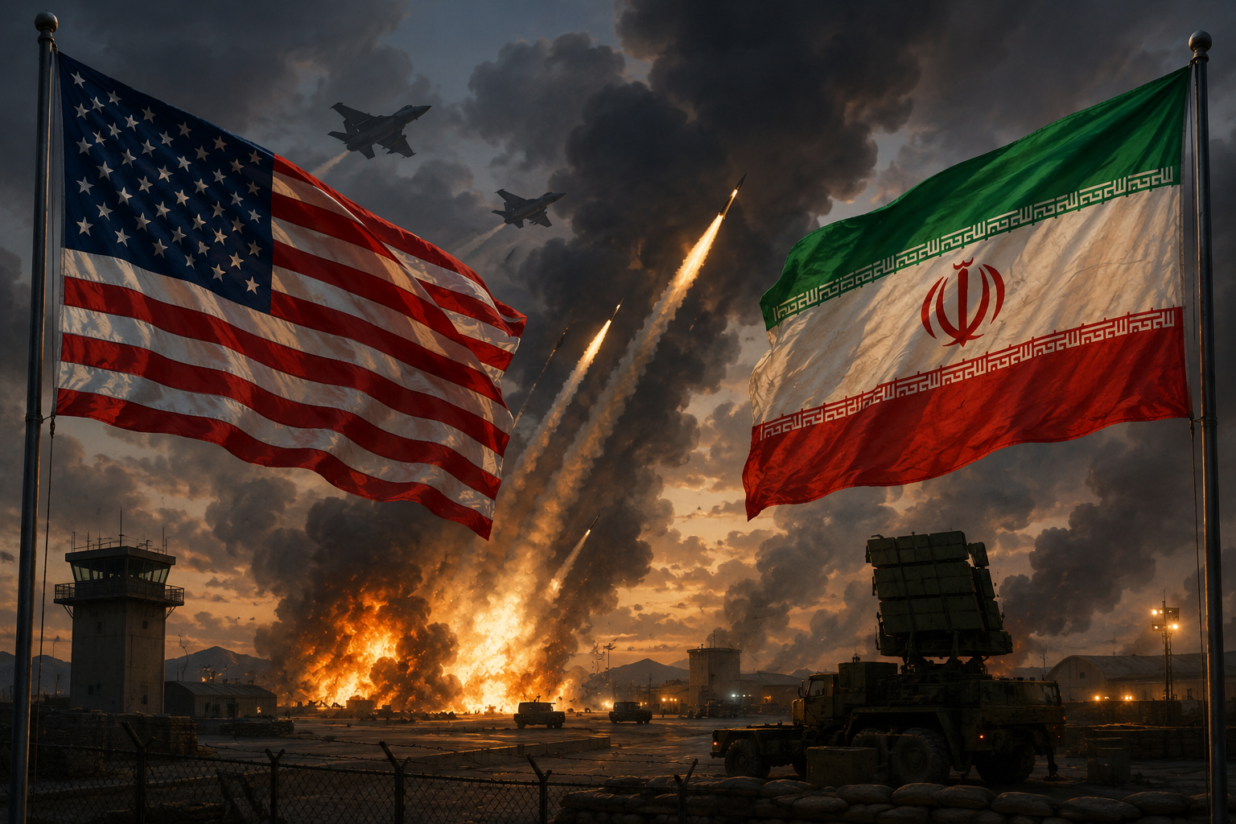
US Iran War : A new surge of military tensions between the United States and Iran has sparked worries of another major Middle Eastern confrontation. Iran apparently attacked an American military base in response to recent US strikes near the southern Iranian city of Bandar Abbas. The incident raises concerns about regional security, global oil supply, and the future of ongoing peace talks.
According to reports, Iran’s Islamic Revolutionary Guard Corps (IRGC) claimed responsibility for targeting a US base in response to what it called American aggression near Bandar Abbas airport. Iranian officials warned that any future assaults by the US would result in a “stronger and more decisive” response. The actual site of the American station has not been officially verified, but regional military sources say security personnel around the Gulf are on high alert.
The US previously conducted attacks against what officials described as Iranian military positions and drone-control infrastructure. American officials claimed the action was defensive and intended at preventing threats to US soldiers and commercial ships transiting the Strait of Hormuz, one of the world’s most critical oil transportation routes.
Rising “US Iran War” fears increase pressure on Gulf region
The most recent conflict has sparked new concern in the Gulf area. Several countries have reinforced their air defense systems and tightened security around military facilities and energy infrastructure. Experts believe that if tensions in the Strait of Hormuz continue to rise, it will have an impact on international oil markets.
According to reports, American fighter jets stopped a number of Iranian drones before to the recent strikes. US officials insisted that Washington continues to support diplomatic talks and does not want a wider war. However, Iran accused the United States of breaking prior cease-fire agreements and increasing military pressure during crucial negotiations.
Political observers believe the dispute is becoming more perilous as both sides attempt to demonstrate military strength while avoiding a full-fledged war. The rising antagonism has also alarmed global investors, who fear that any disruption in Gulf shipping channels will have an impact on gasoline prices and worldwide trade.
Global reaction to “US Iran War” conflict remains divided
International reaction to the issue has been divided. Some Western allies supported America’s right to protect its forces in the region, while others encouraged both governments to promptly resume negotiations. The United Nations urged moderation, warning that another big battle in the Middle East may disrupt the world economy.
Oil traders are closely monitoring developments because the Strait of Hormuz transports about one-fifth of the world’s oil. Any military escalation near Bandar Abbas might cause significant disruptions to global energy supplies. Financial markets in Asia and Europe also responded carefully to tales of retribution and drone interceptions.
Meanwhile, inhabitants in various Gulf countries expressed anxiety about growing regional instability. Airlines and shipping businesses are allegedly evaluating security protocols as military action in the Persian Gulf escalates.
Despite the rising tensions, diplomatic channels between the US, Iran, and regional mediators remain open. However, the most recent round of strikes has demonstrated how rapidly delicate peace attempts can crumble. With neither side willing to back down fully, the coming days could be vital for Middle Eastern stability.
- Join our whatsapp channel for daily updates.
- Follow tazatimesnews Telegram Channel for latest news alerts.
- Follow TazaTimesNews on TruthSocial for exclusive updates
- Also reads : 10 methods to manage high blood pressure without medication.