
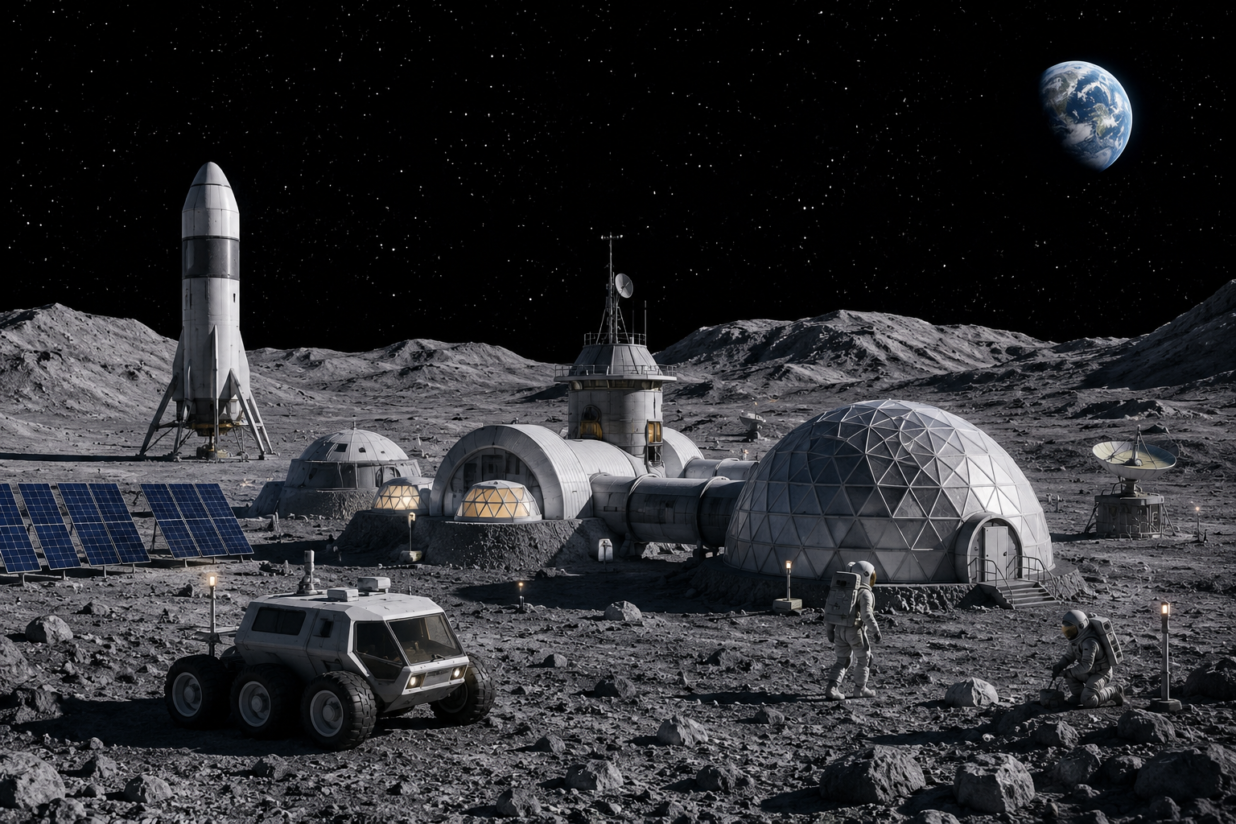
NASA has proposed a huge new plan to establish a permanent human presence on the Moon, one of the most ambitious space exploration programs since the Apollo era. The US space agency unveiled a detailed strategy for establishing a long-term lunar community near the Moon’s south pole over the next decade.
The project is part of NASA’s Artemis program, which aims to return men to the Moon and prepare for future missions to Mars. Officials stated that the lunar colony would facilitate scientific research, the testing of new technology, and ongoing human activities beyond Earth.
NASA Permanent Moon Base Plan Begins With Robotic Missions
According to NASA, the strategy will be implemented in three major phases. The first phase, which runs from 2026 to 2028, will concentrate on robotic missions, cargo deliveries, and the testing of equipment required for lunar living. Several private firms, like Blue Origin, Astrolab, and Lunar Outpost, are expected to assist with transporting vehicles and technology to the lunar surface.
NASA officials claimed the Moon’s south pole was chosen because it may contain frozen water and receives more sunlight, making it ideal for solar power generation. Future missions are expected to include lunar rovers, communication devices, and power stations for astronauts.
The agency also stated that astronauts could return to the Moon by 2028 as part of the Artemis III and Artemis IV missions. These missions are intended to help test early living systems and surface activities prior to the construction of larger habitats.
NASA Permanent Moon Base Plan Faces Cost and Technology Challenges
While the announcement sparked enthusiasm among scientists and space firms, analysts cautioned that the project could face significant technical and financial challenges. Building a permanent settlement on the Moon will necessitate safeguards against radiation, severe temperatures, and hazardous lunar dust. Before humans can live there for an extended period of time, reliable food, water, and energy systems must be built.
According to reports, the project might cost billions of dollars over several years. NASA anticipates that foreign partners and commercial firms will share some of the load. The organization believes that the Moon outpost could one day serve as a training ground for future human expeditions to Mars.
NASA Administrator Jared Isaacman described the initiative as a long-term vision for humankind’s future in space. He noted that the government intends to establish a long-term presence rather than making brief visits like the Apollo missions did decades ago.
The news comes at a time when global competition in space exploration is heating up, with countries like China also developing lunar research programs. NASA’s most recent roadmap indicates that the competition to establish a permanent human presence on the Moon is entering a new phase.
- Join our whatsapp channel for daily updates.
- Follow tazatimesnews Telegram Channel for latest news alerts.
- Follow TazaTimesNews on TruthSocial for exclusive updates
- Also reads : UAE President Receives Diplomatic Call From Qatar Emir